Tagged: Twitter

Per Axbom reply Twitter

↪ Replying to @MetaMikeBiggs

@MetaMikeBiggs Will do!

@MetaMikeBiggs It's honestly so bad I'm crying.. this should be compulsory reading for all Americans... in short the bulk of mentally ill patients are in jail, deprived of competent care, because there are no other beds. Will do a writeup when I'm done but it's hard to know where to begin...

@MetaMikeBiggs My writeup will likely more focus on how many illnesses, and the rulesets for diagnosing each of them, came about through the consensus of a group of white men, with very little science to back them up.
🔗 Originally posted on Twitter

Per Axbom Twitter

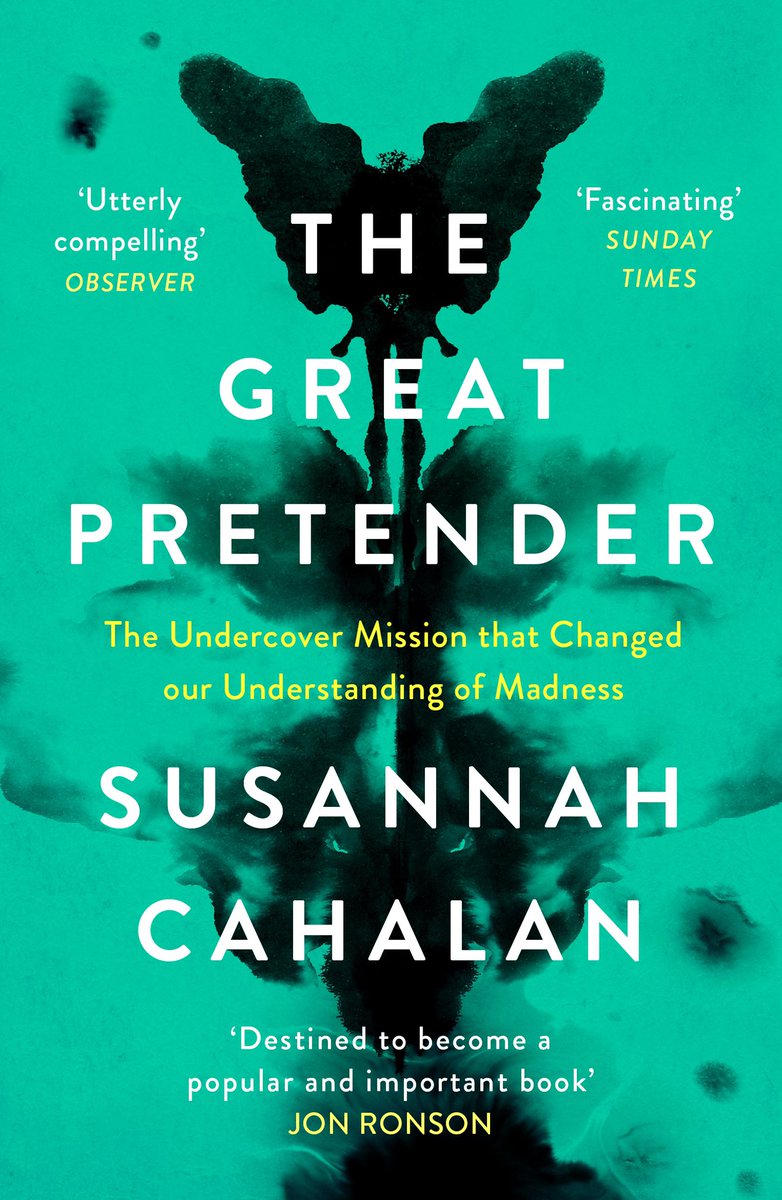
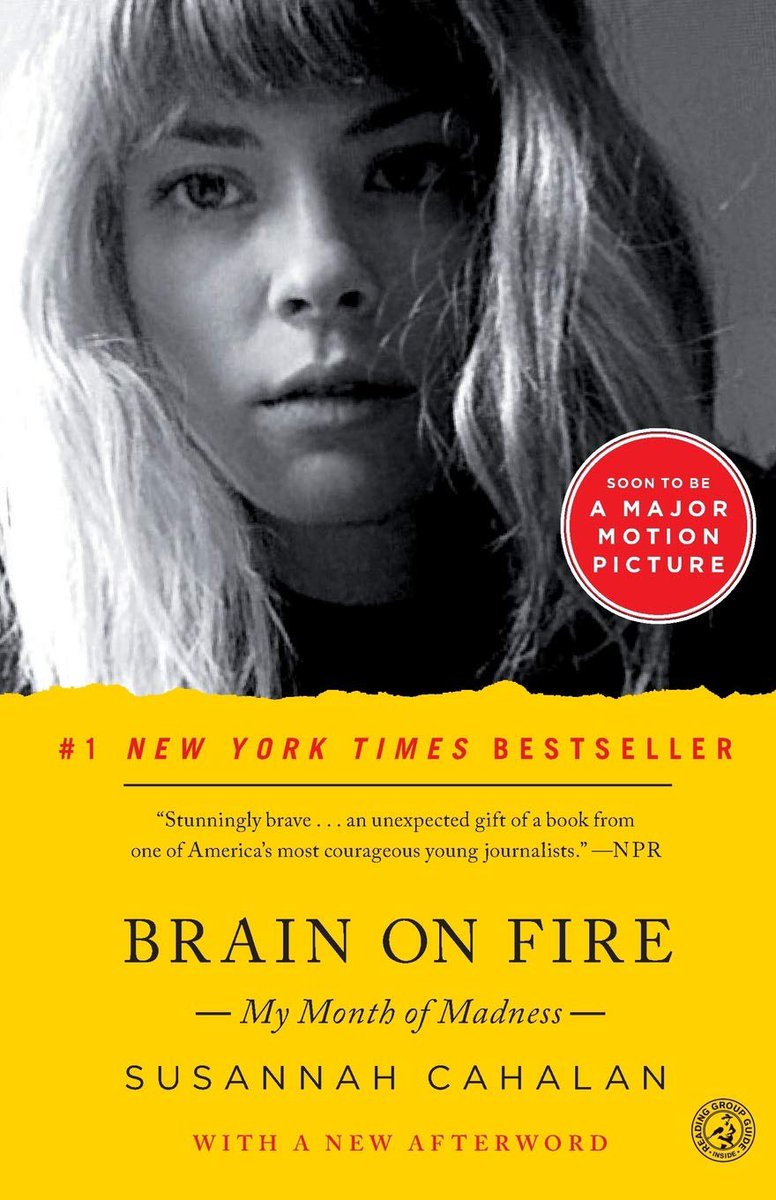
I am 45 pages into The Great Pretender by @scahalan and it's already one of the best books on mental illness I've read. I have goosebumps from the documented historic abuse and mistreatment of "patients". I have a feeling I know where this is heading as we approach present time.

If you don't know who Susannah Cahalan is, she is the person portrayed by @ChloeGMoretz in the film Brain on Fire, which is based on Cahalan's memoir with the same name.

Here's her Wikipedia page: en.m.wikipedia.org/wiki/Susannah_…

The title "The Great Pretender" comes from the "great pretender diseases". They are illnesses that look and appear as other conditions (such as insanity) and will be diagnosed as such unless someone dares question this verdict.

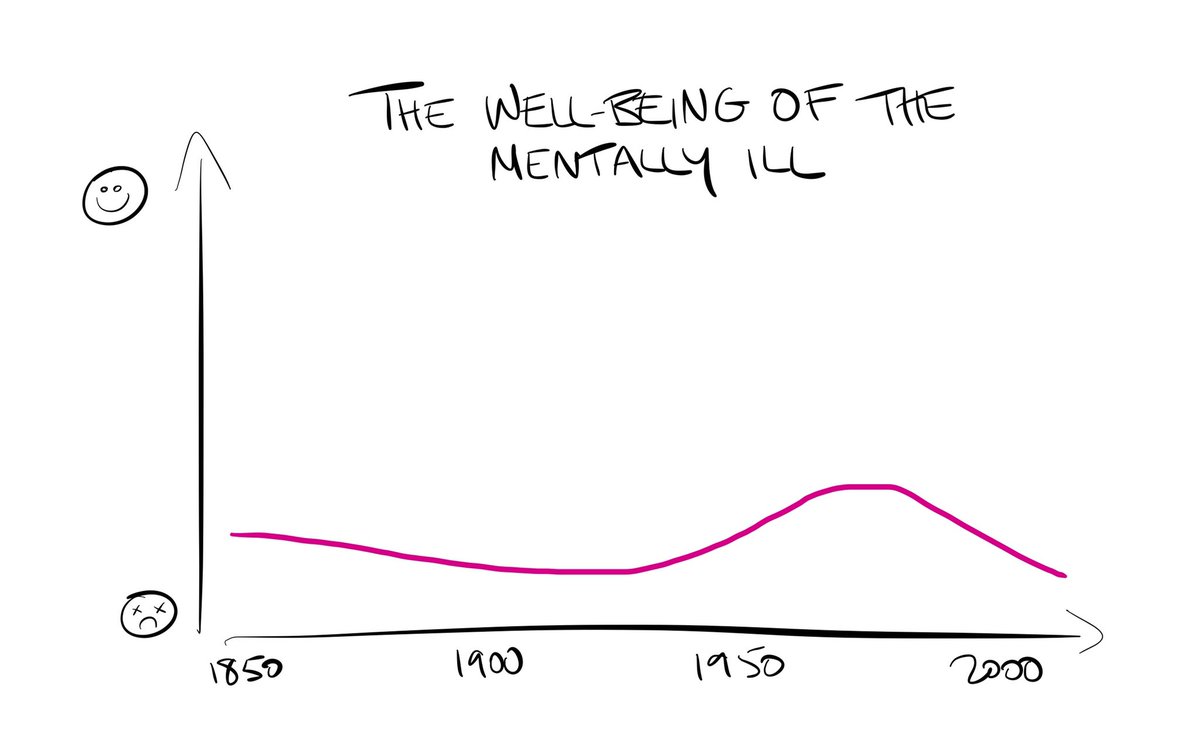
Hence my tweet earlier today. x.com/axbom/status/1…

The first two categories for mental illness in the US were simply "idiocy" and "insanity". By 1880 this had expanded into seven: mania, melancholia, monomania, paresis, dementia, epilepsy and dipsomania.

The diagnostic methodology, and treatment practices, left much to hope for.

People with the right status and money were keen on having troublesome family members committed to asylums. Charles Dickens tried to commit his wife Catherine so that he could pursue an affair with an 18-year old actress.

smithsonianmag.com/smart-news/new…

On 16 March, 1912 a leader in The Times explained suffragette militancy by attributing it to women’s “Insurgent Hysteria”. "When this [type of woman] has reached a certain age", a physician explained, “we know that there is no help in us”:

francesca-scriblerus.blogspot.com/2013/07/were-s…

British writer Lady Rosina's feminist views bothered ex-husband Sir Bulwer Lytton in his ambition for a seat in parliament - so he had her committed. Her own celebrity saved her. (He was the inventor the cliché "It was a dark and stormy night") blog.wellcomelibrary.org/2015/09/a-blig…

«During the twentieth century, neurology broke off into a distinct branch of medicine, and in doing so “claimed exclusive dominion over the organic diseases of the nervous system”—like stroke, multiple sclerosis and Parkinson's.»

«Meanwhile, psychiatrists took on the ones “that could not be satisfactorily specified by laboratory science”—like schizophrenia, depression, and anxiety disorders. Once a biological breakthrough was achieved, the illness moved out of psychiatry and into the rest of medicine.»

I'm now up to the point where it feels like this book has punched me in the stomach. And still I want everyone to read it. Thinking now of starting a neuroscience book club. Pleased that Calahan has gone through many of the science cons I reference in this thread: x.com/axbom/status/9…

A tweet summary of 400 pages: Mental health patients are treated like animals. The science is awry. Some care was improving from 60s. Biased research instigated reform. New, feigned confidence in mental diagnosis. All progress obliterated. Now tortured in jail. Yet still hope.

🔗 Originally posted on Twitter

Per Axbom Twitter

I never did that writeup so now I feel like I need to reread this book and make a mindmap. It really made an impression on me. If you want to feel more compassion for odd and inexplicable behavior, this is the book. Watching Brain on Fire with @ChloeGMoretz and having flashbacks. x.com/axbom/status/1…

Damn, in the movie, when she drew the clock, I went "her hemispheres have disconnected!". I've read too many neuroscience books and would feel way too confident in a neuroscience setting. Reminds me of my desire to observe a brain operation. Bet you didn't know that about me. 😬

Anyway the movie is worth watching. It's based on the true story of Susannah Cahalan and her memoir with the same name: Brain on Fire. She's written a second book now: The Great Pretender: The Undercover Mission That Changed Our Understanding of Madness. Getting it next :)

Also, this keen interest is why I am so very skeptical when it comes to the many pop-science behavioral economics books on the market right now. I believe their over_simplification is dangerous.

And why I start threads like this: x.com/axbom/status/9…

🔗 Originally posted on Twitter

Per Axbom Twitter

My upbringing in both west and east Africa, coupled with the prejudice I met when returning to Sweden (not personally, but "ideas" of what those countries are like), showed me how the western world loves to claim knowledge - and superiority - over things they do not understand.

Efforts guised as kindness and benevolence, charities and donations to "the third world" (how I hate that term), have throughout my life been exposed as fueling corruption and exacerbated dependence on aid. Those stories are unnerving...

I've spent this month coaching people across the world and as always I am reminded of how people - wherever they are - mostly share the same fears, wishes and dreams.

What differs are the opportunities. x.com/axbom/status/1…

The opportunities available differ not because of differences in skills or knowledge, but due to differences in ready money, social status, geography... and prejudice.

Sometimes I am frustrated by a slow pace of change but I also am quick to remind myself that I need to be playing the long game. And what a world of difference just listening to, and acknowledging, another human being can make. Your worries are real, your dreams matter.

As a coach one of the guiding principles is to primarily look forward. And moving forward I will be making more of those free coaching sessions available in the new year. Seeing a friendly face, sharing a moment, learning something new about ourselves. This is the long game.

🔗 Originally posted on Twitter

Per Axbom Twitter

Something I'm especially proud of this year is an industry colleague telling me how he's been sharing my blog posts with his vocational school students (~160 of them). Many have been telling him that they love them and make them think about design in completely new ways.

This tells me two things:

1) That my ideas and reasonings can be articulated in ways that travel beyond my immediate presence.

2) That my message of challenging the status quo, my passion, is resonating with others.

If I can empower others to know that the ways they are taught does not have to be the ways that they work and grow, that for me is time well spent. Any evidence that I accomplish this from time to time makes me very emotional. And thankful for all the opportunities given to me.

🔗 Originally posted on Twitter

Per Axbom Twitter

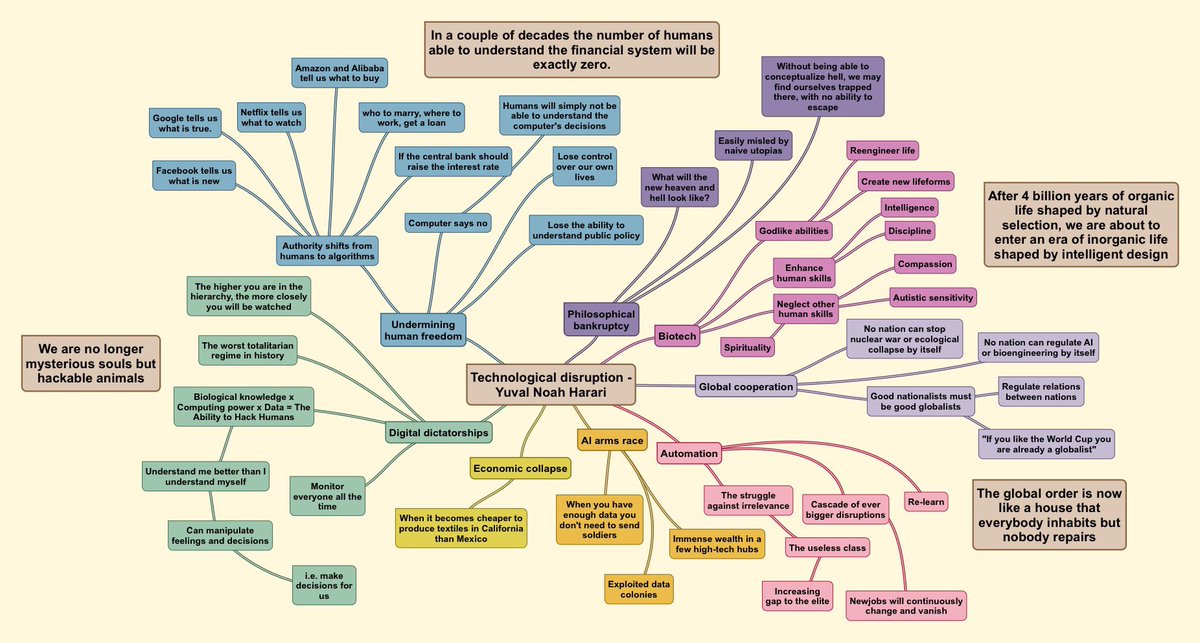
22 minutes with @harari_yuval well worth your time. I just made this #mindmap of his talk at Davos but do set aside time to watch his take on technological disruption if you can: m.youtube.com/watch?v=gG6WnM…

As I think more about this talk I am confident there were people in the audience at Davos who were seeing opportunities for exploitation as Yuval spoke, rather than warnings. Poverty and income inequality is not addressed enough.

🔗 Originally posted on Twitter

Per Axbom Twitter

My company Christmas donation this year will go to three organizations. First out is @FreetheSlaves who are fighting to end the slavery that is still so very real today. They have been fighting for freedom since 2000.

vimeo.com/481529279

I first came across @FreetheSlaves when doing research for my article The Slavery Supported by that Device in Your Pocket:

axbom.blog/the-slavery-be…

The second organization I have chosen is Giving People. They work in Sweden with ongoing support for children in poverty and vulnerable families, a phenomenon and problem too rarely talked about in Sweden but which of course has grown during the pandemic.

givingpeople.se

🔗 Originally posted on Twitter