
Digitization lowers barriers to communication to the extent that one person can be overwhelmed by personal messages in such a way that they must often resort to not responding, even when they themselves perceive this as rude and contrary to their own value system.
Digitization lowers barriers to communication to the extent that one person can be overwhelmed by personal messages in such a way that they must often resort to not responding, even when they themselves perceive this as rude and contrary to their own value system.
↪ Replying to @lwelchman
@lwelchman Agreed. I think my biggest objection was towards media ascribing tech savviness as a natural skill of digital natives. As I interpreted media messaging :)
Today I will be tutored in the system that nurses use when Swedes call the national health line number.
I love being a UX consultant for the variety of insights I get when visiting vastly different organizations.
"Digital native" does not mean you are better at using digital or even understand its workings. It just means you have been haunted by it your entire life, which may even lessen your ability to question aspects of it.
"Digital native" does not mean you are better at using digital or even understand its workings. It just means you have been haunted by it your entire life, which may even lessen your ability to question aspects of it.
What is happening... x.com/business/statu…
Share your feedback on the draft Contract #ForTheWeb. The @webfoundation is particularly keen to hear from women and people living in Global South countries, who are currently underrepresented in the survey.
Deadline: Sun, September 8.
docs.google.com/forms/d/e/1FAIpQLS…
"If the school restricts information access, knowledge doesn't simply become invisible; it does not exist." twitter.com/kyleejohnson/status/11…
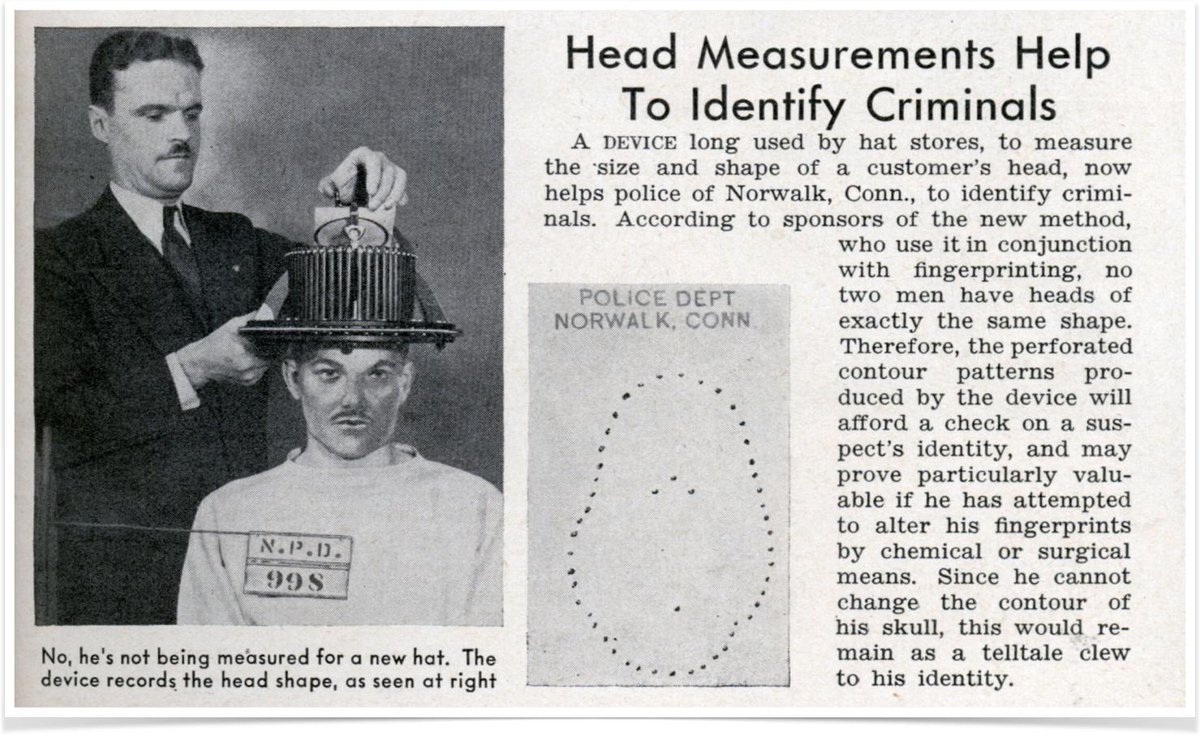
History is repeating itself in so many ways right now... from my metadata presentation:
Left image, article from July 1939.
"Head Measurements Help To Identify Criminals"
Right image, article from November 2016.
"Neural Network Learns to Identify Criminals by Their Faces"

Me: How will I even get enough material for this presentation on metadata I'm giving next week?
2 mins later: Wow, there's some dark stuff going on here.
4 mins later: Whoa, how can I even keep this presentation short enough for the time slot 😱
We need to become more flexible, fast-paced, agile, innovative, automated, and [insert buzzword here] to cope with future business environments.
No. What we need is to become more intent on helping other people manage their perceived obstacles, while acknowledging that we rarely have enough information on hand to do this in a sustainable way.
I worry a lot about a business focus on speed. A focus on doing something faster than everyone else. Velocity has a huge potential to carry us a vast distance from our intended goal, even if the bearing is only slightly off. A fast pace encourages rapid performance indicators, excelling in displaying short-term triumphs.
Sit down with the people you wish to help. Sit down with the people you are affecting. Listen to them slowly. Not quickly. Discover what they are saying not just in words but in body, in movements, capabilities and emotions. Build with them, not for them. Your most important indicator is human.
Ironically, your biggest challenge is not going faster. It is deceleration.
↪ Replying to @DorotheaBaur
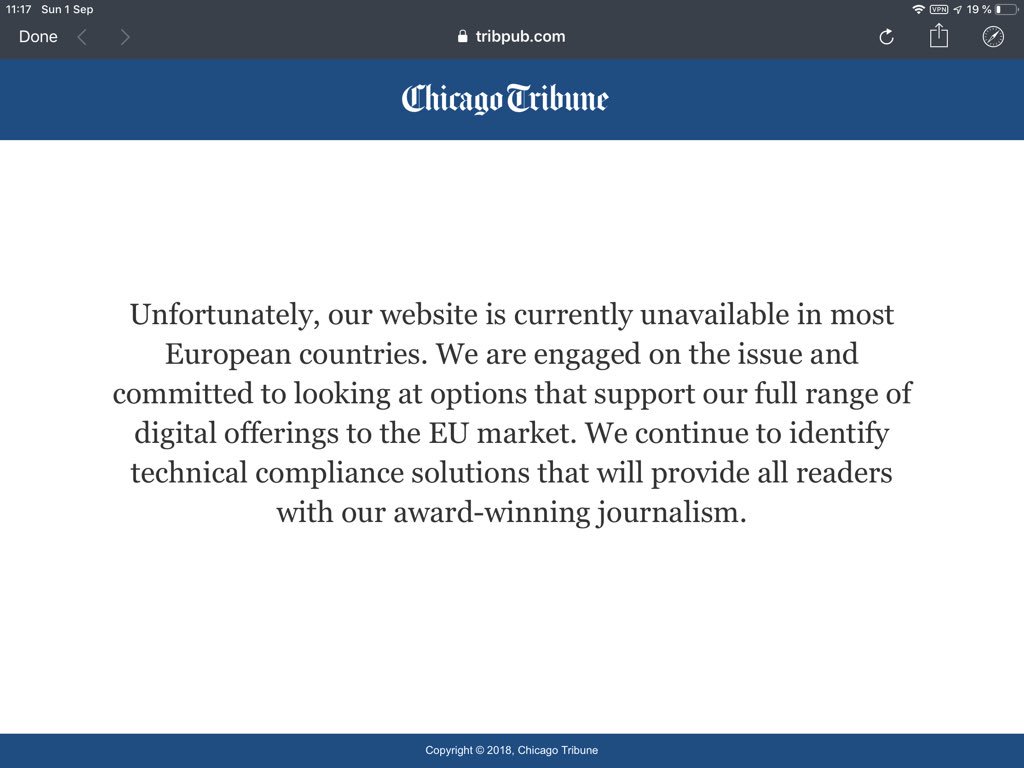
@DorotheaBaur @FrankPasquale Sidenote: the only way I can read that article is through VPN. This always translates to ”we track our readers without informed consent so can’t make our texts available in the EU”. Everything is relative, even the news outlets’ sense of responsibility in the bigger picture...
80 years ago today, Germany invaded Poland. #WWII
“Radio then, like Twitter today, was the technology of the id; a channel that could concentrate political fury at a time when there was plenty to go around.”
“Today, the rhetoric of infestation is back”
nytimes.com/2019/08/30/opi…
↪ Replying to @ohisthatall
@CodyAMorrow Fair question. I added this to my thread:
x.com/axbom/status/1…
A missing feature of all newsletters is to easily change e-mail address...
”So sad to see you go!”
”I’m not leaving, I’m just changing e-mail address for the subscription.”
”Please provide a reason for leaving.”
”I’m not leaving, it’s still me.”
”We also offer a monthly newsletter that may be more to your liking.”
”Oh, FFS...”
A minute later...
”Thank you for subscribing! We really hope you’ll enjoy our newsletter.”
In an office building somewhere: Manager for the newsletter high-fiving the person next to them. “We got a new subscriber, we must be doing something right!”
I follow and engage with Alastair because I feel he is always 2-5 steps ahead of me. His insights allow me to perform leaps. If you teach and hold workshops I recommend reading this post on workshop design. twitter.com/acuity_design/status/1…
↪ Replying to @beantin
@beantin @val_brigatti Well, read access from the OS.
The system built normalized prejudice into our emojis. It's bizarre but should be completely unsurprising.
See the thread for more examples. x.com/brookLYNevery1…
In the future, backspacing emojis will be a simple history lesson.
x.com/djnemec/status…
My take: Once we only had light-skinned yellow emojis. There was a call for more diversity in color and constellations (same-gender partnerships, rainbow families). As this was added, the diversity became an add-on, thus leaving in plain sight what was considered default.
So in the ambition to right what enough people in time agreed was wrong, the prejudice is exposed - and cemented - by the order in which ligatures are built.
I agree that it is a feature - and can make logical, programmatic sense - but it dismisses the emotional charge of so clearly displaying in which order history decided they were valid enough for inclusion.
To systematically build in such a way that backspacing always leaves us with the light-skinned yellow man (or only having heterosexual partnerships as a unit) tells us something about society and the makers of tech.
I very much doubt that it is with any expressed intent, or even conscious intent, that these biases are exposed in ligatures. Hence why it is a perfect illustration of something systemic.
I acknowledge that the “white” people ligatures are built the same way, always ending on the yellow man. But those emojis did not come about due to a call for diversity, they were a side-product of it.
And still the light-skinned men prevail.
↪ Replying to @val_brigatti
@val_brigatti @beantin There's not supposed to be read access to the enclave where the fingerprint is stored.
But I honestly don't know what to trust anymore.
idownloadblog.com/2014/02/26/app…