
↪ Replying to @letterpress_se
@letterpress_se It pisses people off and I've never heard of anyone responsible for reviewing why people unsubscribe and acting on that information.
↪ Replying to @letterpress_se
@letterpress_se It pisses people off and I've never heard of anyone responsible for reviewing why people unsubscribe and acting on that information.
Feeling hopeful after yesterday visiting the accessibility course final presentations at @Nackademin - a class taught by @hampelusken within the UX Designer program.
These were some of the best reviews and reasoned presentations I've seen, topping professional ones.
The students' passion shone through but I was also struck by the care and reflection with which they spoke about the people using the services, focusing less on tech constraints and more on human potential.
↪ Replying to @deeped
@deeped @sanasilb Det ställer krav på kompetens och eftertänksam reflektion. Och ökar kvaliteten. Snyggt. 🙌
Är ett barn två minuter sen till lektionen så kommer förstås det där sms:et. Skälet är irrelevant. Men bara för att man kan göra vissa saker digitalt betyder inte att man ska. För de ogenomtänkta lösningarna kan göra att människor, barn, far rejält illa och att de som mår dåligt mår ännu sämre. Micke Gunnarsson ryter ifrån här, med svordomar och tårar. Och jag kan inte låta bli att dela. Det är den här typen av effekter av digitaliseringen som gjorde att jag skrev Digital omtanke.
https://youtu.be/-UsIQd--pSM
”For young people, the risks of being left behind are buried under the assumption that they are digital natives - that they have supposedly grown up with an innate ability to use digital technology.”
bbc.co.uk/sounds/play/m0…
↪ Replying to @glumGPT
@raeBress @showYoDiq I don't save any pics on @dickpiclocator but a simple way for me to help could be to add some sort of notice that would encourage people to send you a copy, if that's at all interesting for you. Especially given that it should be consensual ones.
This goes on my fridge. x.com/amazingmap/sta…
↪ Replying to @MrAlanCooper
@MrAlanCooper @threadreaderapp unroll please :)
↪ Replying to @gfscstudio
@gfscstudio Haven't read, thanks for the tip!
↪ Replying to @gfscstudio
@gfscstudio Agreed. But when it's addressed towards changing people's behavior to, for example, create habits to decrease fossil fuel consumption, is it always good to nudge people without their awareness simply because it's for a good cause?
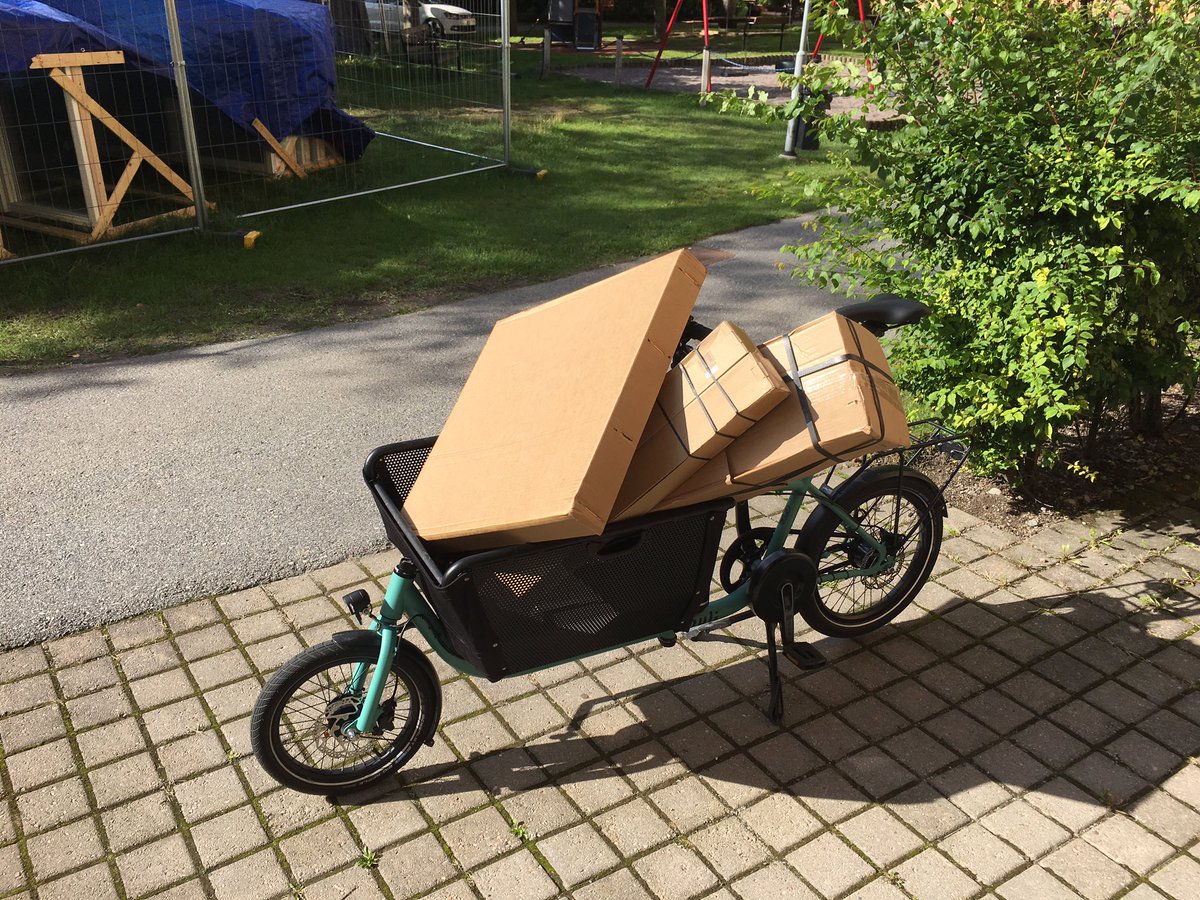
My cargo bike is really proving its worth today.
Image. A cargo bike on its stand, the transport basket filled with 3 really big parcels, the handle bars barely visible.
↪ Replying to @dr_know
@dr_know So much this. Thanks for sharing Sarah!
There is always the added complexity of people being sidetracked by society for so long they consider themselves unworthy of being treated better. Acceptance by target groups does not equal ethical...
What maddens me the most about the digital age is a lack of interest in allowing people to make choices based on their own capability and well-being. Instead the idea seems to be to nudge people to do what we have decided is best for them. When is a non-consensual nudge ethical?
But Per, you say, everything is a nudge. We can’t avoid it. And I would say that our practices should build on the acknowledgement of this and not surrender to it. How? In coaching we do it by mirroring, and by digging deeper into intent.
By repeating back my interpretation of another person’s statement (using different words), this allows me to validate my interpretation and for them to reflect further on their intent. It’s non-judgmental communication, and most tech I see does not build on it or for it.
I’m now working on a healthcare advisory system where nurses need to be reminded to follow this (non-linear) process: Prepare -Open - Listen - Analyze - Motivate - End - Recharge. I am convinced we can do more to build this type of thinking - and reflection - into more systems.
I’ll start building on these ideas in a blog post :)
The insulation equation as coined by @rushkoff: ”How much money do I have to earn in order to insulate myself from the reality I’m creating by earning money in this way?”
#digitalethics #growthethics
pbs.org/wnet/amanpour-…
↪ Replying to @ztopiapub
@ztopiapub I think we should stay away from gmail if we can ;) But also, adding more features like this has the risk of adding complexity that is of value to tech savvy people and contributes to the digital divide.
@ztopiapub Systemically I think we need more friction and reflection. Like how postage fees work. Consider if it costs 5 cents to send an e-mail to a person... would you do it as often? Not saying that is the solution, but I do believe friction is our friend.