
A region (county with healthcare responsibility) in Sweden has a ”living library” of 40 patients who can be checked out to ensure the patient perspective in development projects, seminars and more. x.com/KristinaNiemi1…
Posts in English
↪ Replying to @dqpdang
@dqpdang Thanks so much Di! Was great to chat with you briefly after as well.
All we have to imagine now is how soon this will be sold in penny-sized implants with a nanosecond response rate. x.com/ValaAfshar/sta…
Have you ever wondered what happens if upon applying for a Visa you by mistake tick the box saying Yes to having been engaged in terrorist activities?
Wonder no more.
When reality is absurd it is always more absurd than fiction.
https://www.bbc.com/news/uk-scotland-45678517
via Nicole Commander
↪ Replying to @nicolecommander
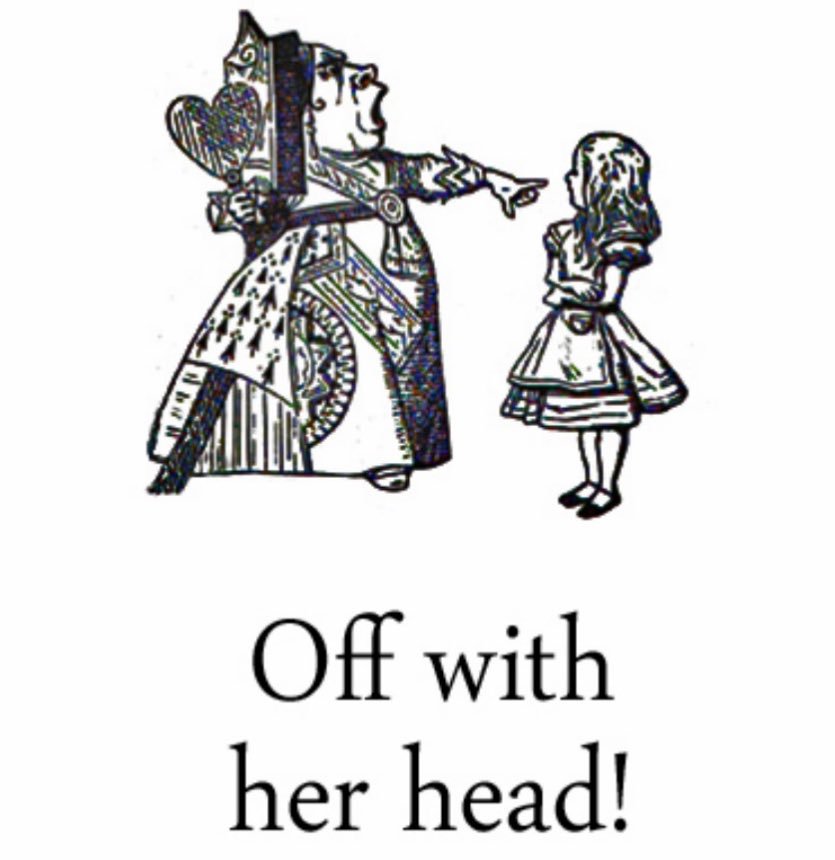
@nicolecommander This is like a scene from Alice in Wonderland. If only we knew how many people this has happened to.
↪ Replying to @Tynell
@Tynell @EvaFornet Yes, many social phrases have meanings that have been lost over time. I have understood "You're welcome" to be a shortened form of "You are/were welcome to what I did for you", esp. in the sense that it was pleasing for me to do it for you.
↪ Replying to @rnadworny
@rnadworny Thank you Rich! Any day now I will suggest a fika ;)
Twitter thread on the @NobelPrize winners 2018. My aim is to briefly summarize each person in a few tweets :)
#NobelPrize
James P Allison. Physiology or Medicine.
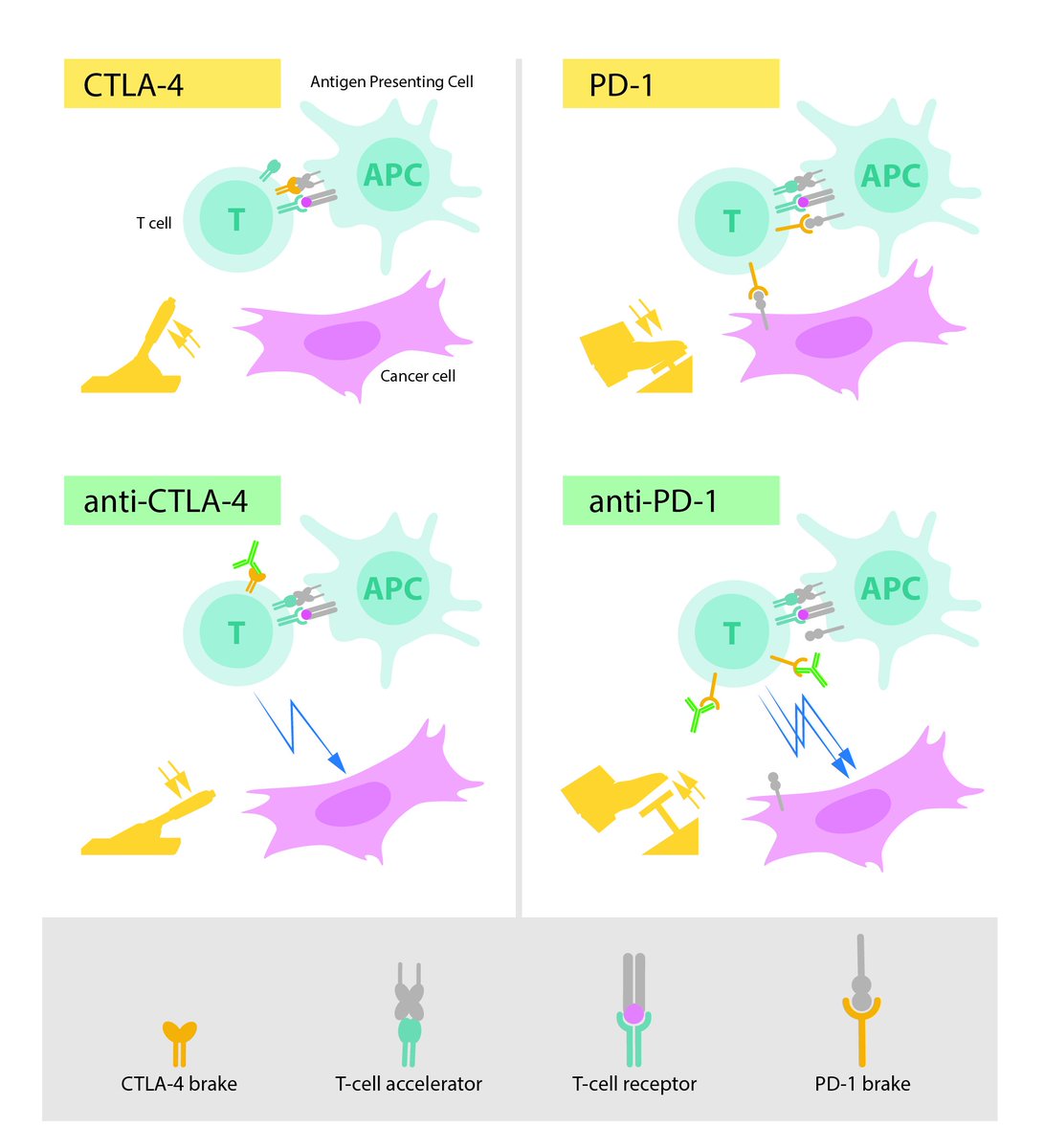
In late 80s found a function of a protein on T-cells that acts as a brake, shutting down immune response. T-cells travel our bodies to protect us from disease. His idea was to block the brake on the T-cell, called CTLA4, with an antibody,
thus allowing the T-cells to attack. His finding in 1996 allowed development of the first drug ever shown in a clinical trial to extend the lives of people with the cancer form metastatic melanoma (approved 2011). The technique has proven successful on other forms of cancers.
Tasuku Honjo. Physiology or Medicine.
Discovered the PDF-1 protein on the T-cell by chance in 1992. Theorized that suppressing PD-1 could boost immune response and treat cancers. This was confirmed in a 2002 study. In 2014, a drug was approved by the FDA to treat melanoma.
Also, Honjo's lab discovered the enzyme (AID) that enables class switching from immunoglobin M (IgM) to IgG or IgA. The first anti-body the body produces as part of immune response is usually IgM, but in most cases you need IgG or IgA. Thus important to identify defect AID genes.
James P Allison and Tasuku Honjo share the Nobel Prize in Physiology or Medicine "for their discovery of cancer therapy by inhibition of negative immune regulation".
Official press release: nobelprize.org/prizes/medicin…
#NOBELTRIVIA
Four people have won a Nobel Prize twice.
1. Maria Sklodowska-Curie (1903: physics; 1911: chemistry)
2. John Bardeen (1956 + 1972: physics)
3. Linus Pauling (1954: chemistry; 1962: peace)
4. Frederick Sanger (1958 + 1980: chemistry)
Arthur Ashkin. Physics.
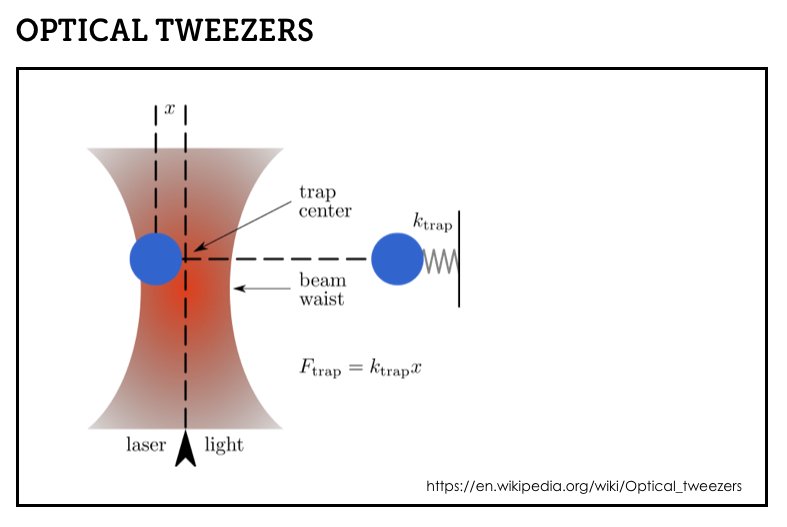
Started work on manipulation of microparticles with laser light in the late 1960s. Invented optical tweezers in 1986. Pioneered the optical trapping process that later could manipulate atoms, molecules, and biological cells.
Optical tweezers are an instrument with a highly focused laser beam that can physically hold and move microscopic objects.
Gérard Mourou. Physics.
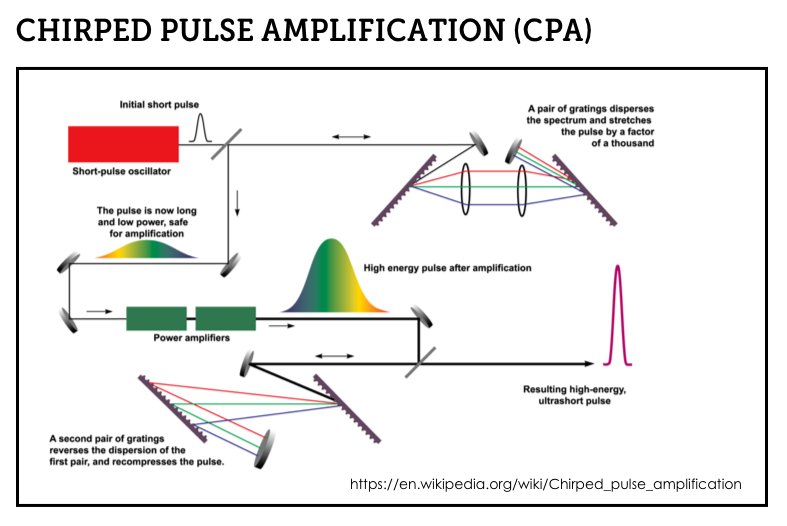
With Donna Strickland, co-invented a technique called chirped pulse amplification (CPA), later used to create ultrashort-pulse, very high-intensity (terawatt) laser pulses.
Donna Strickland. Physics.
With Mourou developed the CPA technique for “micro-machining”. She leads an ultrafast laser group at University of Waterloo that develops high-intensity laser systems for nonlinear optics investigations.
CPA amplifies lasers through a series of steps involving stretching, amplifying, and compressing beams. CPA can be used to create a laser pulse that only lasts one attosecond, one-billionth of a billionth of a second, allowing the study of what happens inside individual atoms.
For groundbreaking inventions in the fields of laser physics, the Nobel Prize is awarded with one half to Arthur Ashkin and the other half jointly to Gérard Mourou and Donna Strickland.
Official press release: nobelprize.org/prizes/physics…
#NOBELTRIVIA
Donna Strickland is the third woman ever to be awarded a Nobel Prize in physics. She is preceded by:
* Maria Goeppert-Mayer, 1963 (atomic structure)
* Marie Skłodowska Curie, 1903 (radioactivity)
↪ Replying to @svmboyd
@svmboyd @HODigital This is brilliant. Where can I see more?
Just a heads up that everyone I know should watch #Nanette. Likely a lot of people I know already have. x.com/axbom/status/1…
↪ Replying to @unknown
@EvaFornet Again: "Everyone uses this phrase, not only waiters." I've also personally used this phrase a lot when working in a bar.
x.com/axbom/status/1…
The 'cultural profile' (man married to a member of the Swedish Academy and whose behavior sparked the controversies that led to the Nobel Prize in literature not being awarded this year) has just been sentenced to 2 years in prison for rape. The sentence will be appealed.
↪ Replying to @unknown
@Loukas_RS It could also be a variant of "I hope it is to your liking", which makes sense.
↪ Replying to @unknown
@Loukas_RS That's my thinking as well, and then when we take time to start breaking them down it's funny how odd many of them are.
↪ Replying to @unknown
@EvaFornet I'm not expressing a view of waiters, but a view of language. Everyone uses this phrase, not only waiters.
In Sweden café staff will hand you the order with the phrase:
"Hope it tastes." (Hoppas det smakar.)
Of course it will taste something! But even if they said "Hope it tastes _good_", it's like "I have no idea what I'm doing so I hope it tastes good."
Anyway, enjoy your day! 😀
To clarify, since the misinterpretation happened: I am poking fun at Swedish language (and really social phrases in general), I am not poking fun at waiters. It's a phrase used in all manners of Swedish life when offering something edible/drinkable.