↪ Replying to @unknown
@Acuity_Design I think writing it down could get you into trouble with your bank.
↪ Replying to @unknown
@Acuity_Design I think writing it down could get you into trouble with your bank.
↪ Replying to @unknown
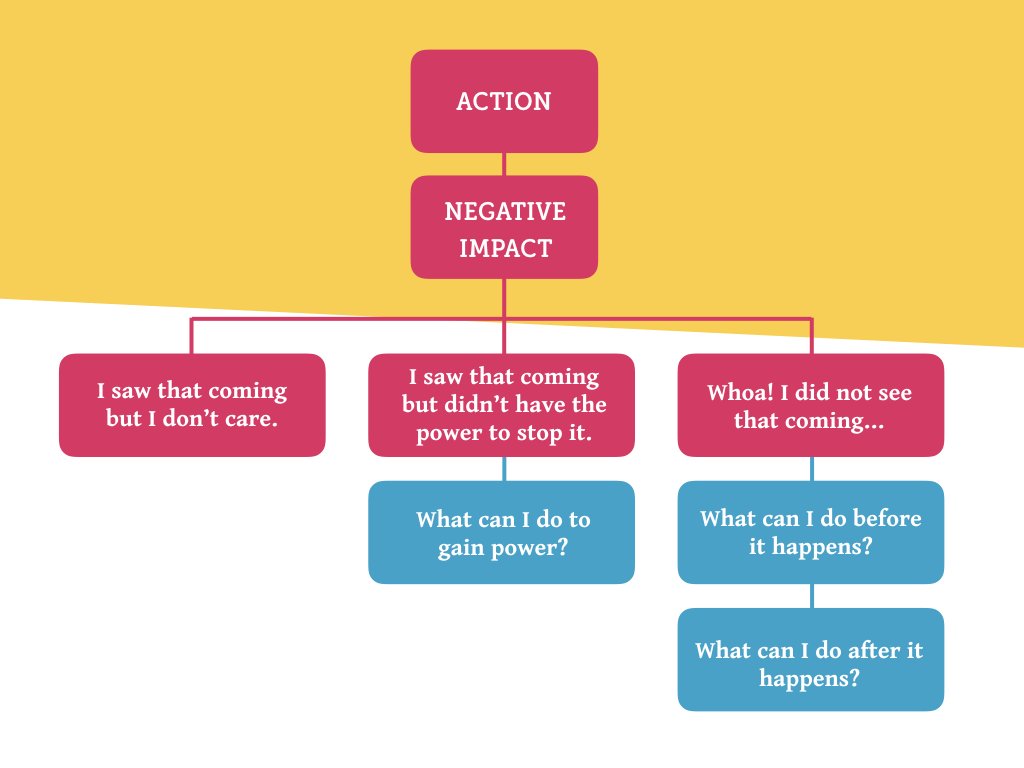
@harrybr @jmspool Agree. Regarding intent I have this diagram I use sometimes. The blue boxes are what I try to address in what I'm writing now. I am told often these days how there will always be people who don't care about negative impact :/
↪ Replying to @Raffiro
@Raffiro Yeah, I was hugely surprised by the lack of cuisine options!
↪ Replying to @jmspool
@jmspool I believe we can avoid confusion by talking about ”harmful design” rather than ”dark patterns”. It is harmful regardless of intent. We can then gauge moral intent by:
1. what effort was made to avoid harm
2. the response/act once the harm is known
@jmspool ”Dark patterns” is then just a way of categorizing common themes among the harmful designs.
Or what say you, @harrybr ?
[se] Här kan du se mina bilder från #WSAdag18 : Det osynliga problemet med sagolika användarupplevelser. slideshare.net/axbom/det-osyn…
↪ Replying to @unknown
@pellet Skitintressant. Tack! Ja, går ju definitivt att koppla Forgetting curve till behovet av att pausa och ha längre tid mellan interaktioner. Minnet är så oerhört flyktigt, vilket blir viktigt att hantera i en tid när vi så förtvivlat famlar efter fakta.
I was given the opportunity to do my #fairytaleux talk today at #WSAdag18 - had a blast and am truly thankful for all the positive feedback. Make note of the t-shirt I have purchased solely for this talk :) x.com/pierredurietz/…
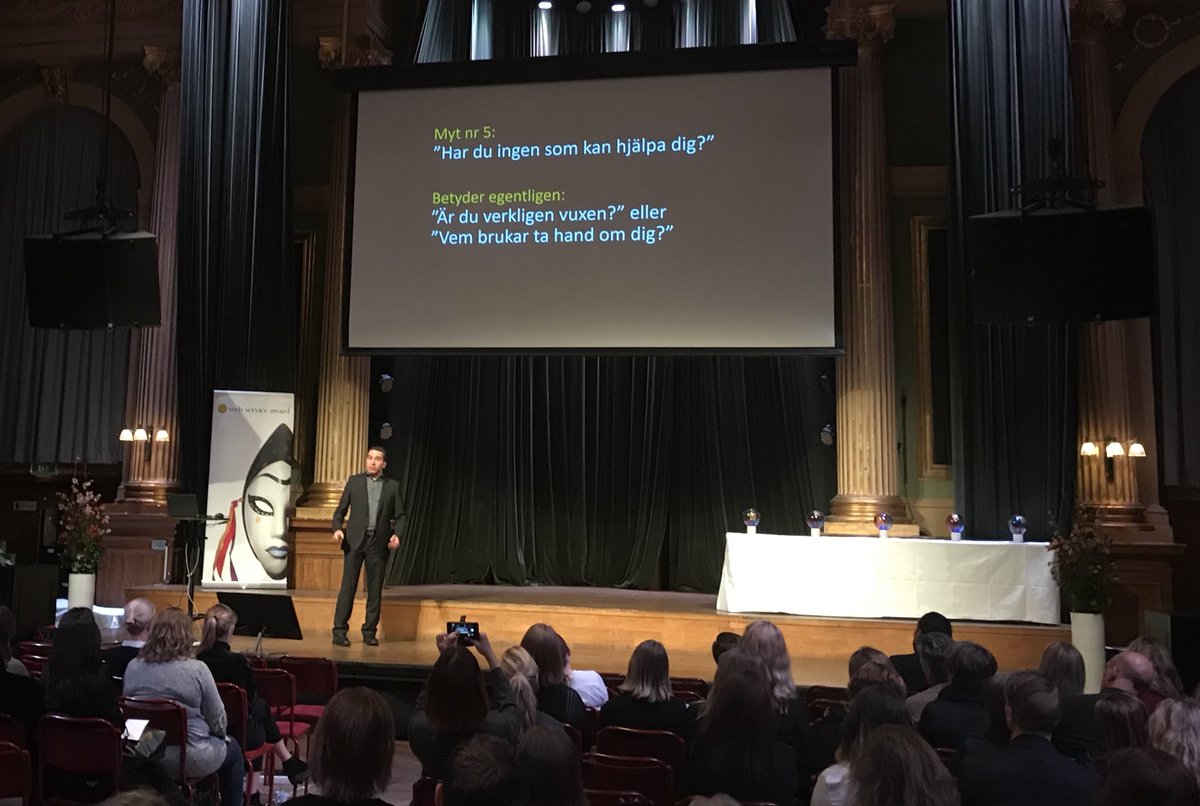
[se] Briljant preso av @ibennani om tillgänglighet. Det här är vad du förmedlar när du frågar en funktionshindrad person om det inte finns någon som kan hjälpa dem:
”Är du verkligen vuxen?”
”Vem brukar ta hand om dig?”
#wsadag18
Alltså det här att jag tog fel hashtagg 😂 #WSAdag18 x.com/axbom/status/9…
#WSAdagen18 Här är reklamfilmen som @PierreDuRietz hänvisade till angående långsamt internet:
internetmuseum.se/tidslinjen/rek…
Had to run back and get my ring before going in to do my talk at #WSAdagen18 today. Yes, I’m superstitious. Yes, I know it’s stupid. But it works I tell you! 🤪
↪ Replying to @UXMuch
@UXMuch Haha. That just means it’s meant to be.
@UXMuch This is the print on a t-shirt I often wear when talking about ethics :) I did not start out making the diagram like a bear but once it started showing through I may have enhanced it ;)

↪ Replying to @elou
@elou I know! Crazy. I think I’m gonna nickname it Inclusive Panda.
Finally(!) it came to me, just over an hour ago. I drew this. I give you *drum roll* the Inclusion-Exclusion Map for design.
#misusability #designethics #inclusivedesign
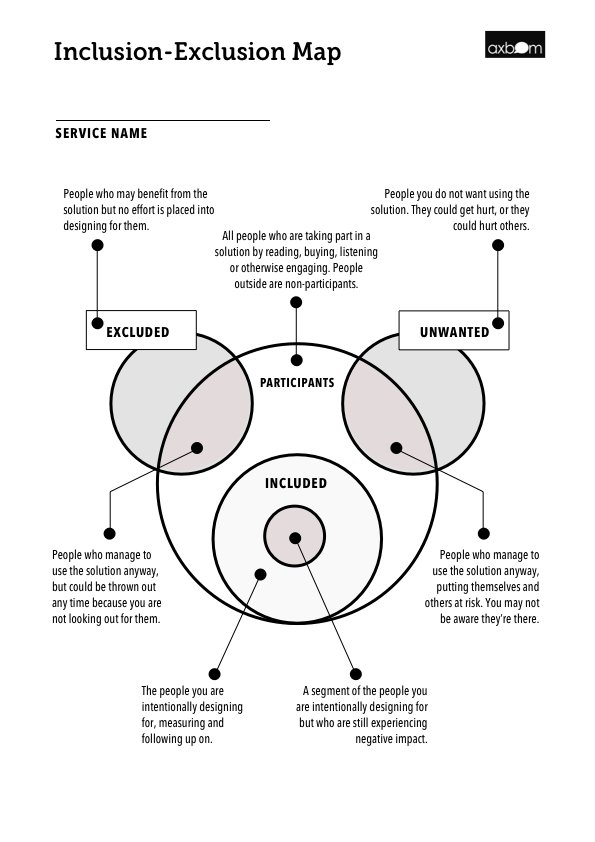
Simplified example using Twitter as the service:
1) EXCLUDED. People with certain disabilities (why are image descriptions not default?)
2) UNWANTED. Bots, haters, misogynists. Underage children.
3) People with disabilities are finding ways to bypass poor design.
4) Bots, haters, misogynists are still very much active.
5) INCLUDED as target group are WEIRD (western, educated, industrialized, rich...)
6) Meanwhile, many women - who are still INCLUDED - are being harassed, because (4).
7) Many participants are not mapped at all.
1/ This is a good read for understanding why I may sometimes come across as shy in social settings.
huffingtonpost.com/michael-taft/l…
2/ When others speak I listen. When they pause I am taking in and processing what they are saying. Many people feel that the silence is awkward and jump in to fill the "void". My opportunity to respond may be lost.
3/ When others speak I try not to think about what to say next. I am thinking about the meaning of what they are saying. In the silence I am choosing the best way forward based on my experience - and deciding if I need clarification.
4/ Silence also allows the "sender" a moment to reflect upon what they have said. This of course works well for me in coaching settings and research. In social settings, when conversations are more like tennis matches, not as much. But I do feel how my listening is appreciated.
5/ The act of true listening can untie a lot of knots by itself. When I first hired my own coach it was one of the first times someone was listening to me without judgement and without intent to respond with advice. It is a liberating experience.
6/ The act of active listening is also liberating when it is done consciously, when I am the coach. Giving time to reflect on words, even if just for a few seconds, has the potential to change the whole direction of a conversation.
/stop.