
Most Swedish history books will tell you that voting was made available to the general public in 1921 when women were allowed to vote.
This ignores the fact that the act of depriving rights to vote based on mental health or neurological disability didn't stop until 1989.
Tagged: Twitter
My feed just became a stream of screen dumps of the US presidential alert.
To anyone not in the know, I’ll let @ibogost explain: theatlantic.com/technology/arc…
The web content accessibility guidelines are not about designing for people with disabilities. They are about designing the right way. Not adhering to them is the wrong way.
As simple as that.
I am blown away by the positive feedback I've been getting on this workshop and some of the outcomes are forcing a big smile and me shaking my head. It's definitely time to send out a newsletter soon and share my impressions and reflections. And where I'll be going in November! x.com/MityaGizatov/s…
↪ Replying to @MityaGizatov
@MityaGizatov Wow, thank you so much Mitya! I am humbled and happy.
And to anyone who wants to relive Swedish fika, here is the YouTube video.
youtube.com/watch
↪ Replying to @cwodtke
@cwodtke Agree, I loved it for 3-4 months (for sketching) but it turned out to be too big for the way I move around between clients. Also, too big for watching Netflix in bed! 😂
↪ Replying to @BrizaPie
@BrizaPie Maybe use queryfeed to make an RSS feed from your search query and use a feed reader or IFTTT to trigger anything at all. queryfeed.net
The same experts who proclaimed Trump inconceivable as president are now on the radio confidently explaining how he will be a hard candidate to beat.
I think they forfeited their right to be confident experts 2 years ago.
A region (county with healthcare responsibility) in Sweden has a ”living library” of 40 patients who can be checked out to ensure the patient perspective in development projects, seminars and more. x.com/KristinaNiemi1…
↪ Replying to @dqpdang
@dqpdang Thanks so much Di! Was great to chat with you briefly after as well.
All we have to imagine now is how soon this will be sold in penny-sized implants with a nanosecond response rate. x.com/ValaAfshar/sta…
↪ Replying to @nicolecommander
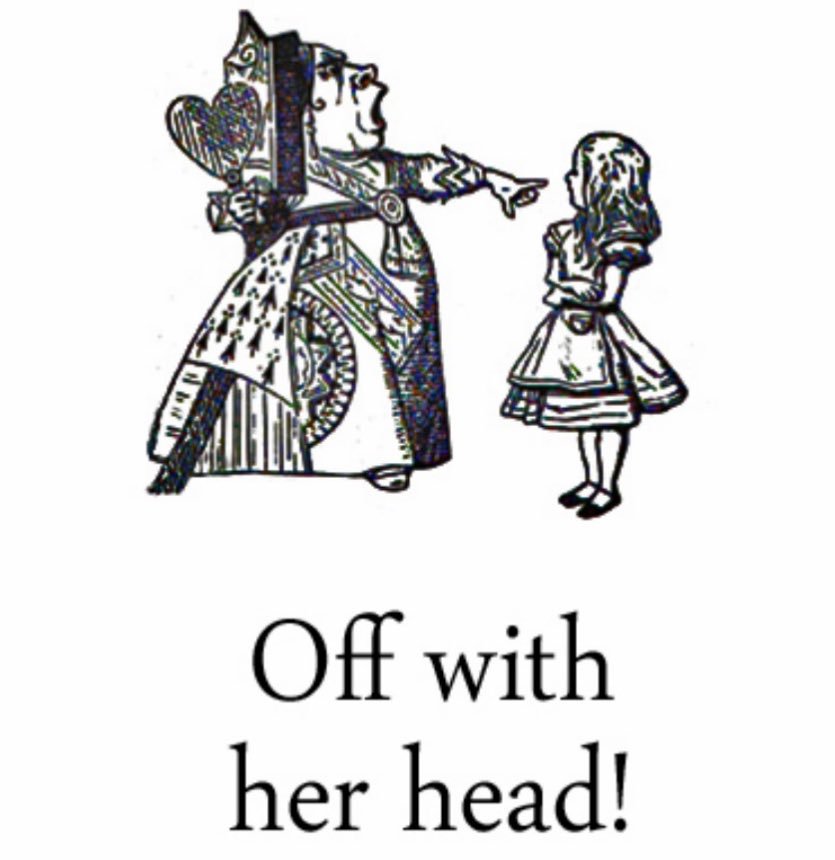
@nicolecommander This is like a scene from Alice in Wonderland. If only we knew how many people this has happened to.
↪ Replying to @Tynell
@Tynell @EvaFornet Yes, many social phrases have meanings that have been lost over time. I have understood "You're welcome" to be a shortened form of "You are/were welcome to what I did for you", esp. in the sense that it was pleasing for me to do it for you.
↪ Replying to @rnadworny
@rnadworny Thank you Rich! Any day now I will suggest a fika ;)
Twitter thread on the @NobelPrize winners 2018. My aim is to briefly summarize each person in a few tweets :)
#NobelPrize
James P Allison. Physiology or Medicine.
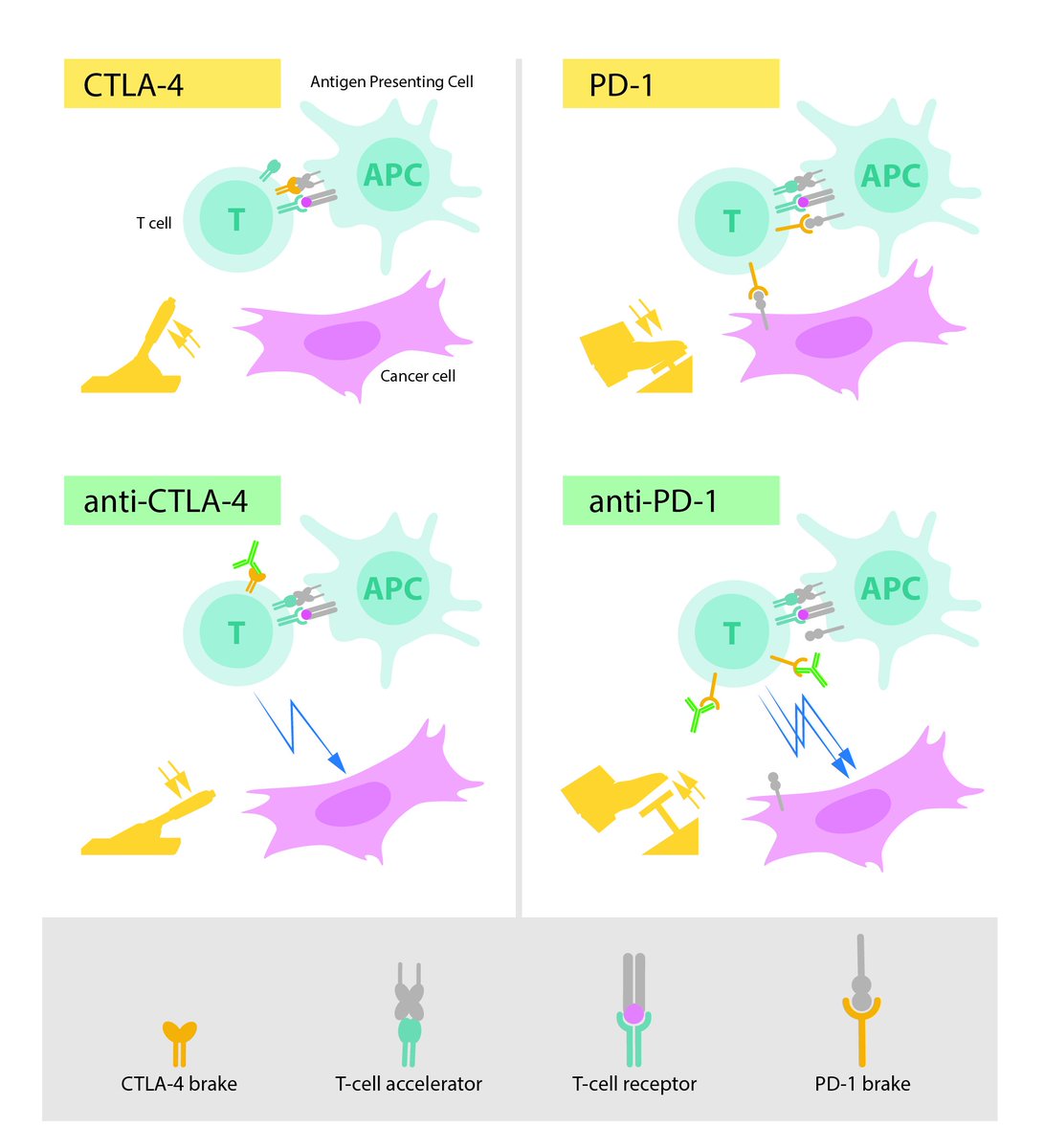
In late 80s found a function of a protein on T-cells that acts as a brake, shutting down immune response. T-cells travel our bodies to protect us from disease. His idea was to block the brake on the T-cell, called CTLA4, with an antibody,
thus allowing the T-cells to attack. His finding in 1996 allowed development of the first drug ever shown in a clinical trial to extend the lives of people with the cancer form metastatic melanoma (approved 2011). The technique has proven successful on other forms of cancers.
Tasuku Honjo. Physiology or Medicine.
Discovered the PDF-1 protein on the T-cell by chance in 1992. Theorized that suppressing PD-1 could boost immune response and treat cancers. This was confirmed in a 2002 study. In 2014, a drug was approved by the FDA to treat melanoma.
Also, Honjo's lab discovered the enzyme (AID) that enables class switching from immunoglobin M (IgM) to IgG or IgA. The first anti-body the body produces as part of immune response is usually IgM, but in most cases you need IgG or IgA. Thus important to identify defect AID genes.
James P Allison and Tasuku Honjo share the Nobel Prize in Physiology or Medicine "for their discovery of cancer therapy by inhibition of negative immune regulation".
Official press release: nobelprize.org/prizes/medicin…
#NOBELTRIVIA
Four people have won a Nobel Prize twice.
1. Maria Sklodowska-Curie (1903: physics; 1911: chemistry)
2. John Bardeen (1956 + 1972: physics)
3. Linus Pauling (1954: chemistry; 1962: peace)
4. Frederick Sanger (1958 + 1980: chemistry)
Arthur Ashkin. Physics.
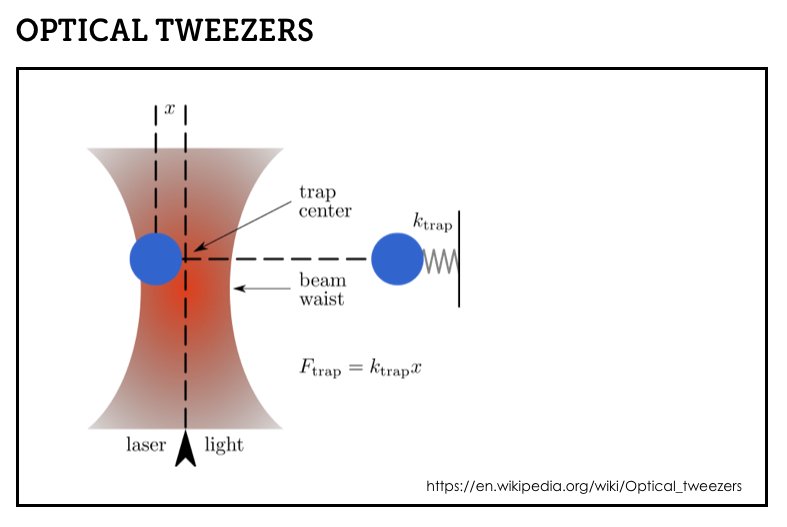
Started work on manipulation of microparticles with laser light in the late 1960s. Invented optical tweezers in 1986. Pioneered the optical trapping process that later could manipulate atoms, molecules, and biological cells.
Optical tweezers are an instrument with a highly focused laser beam that can physically hold and move microscopic objects.
Gérard Mourou. Physics.
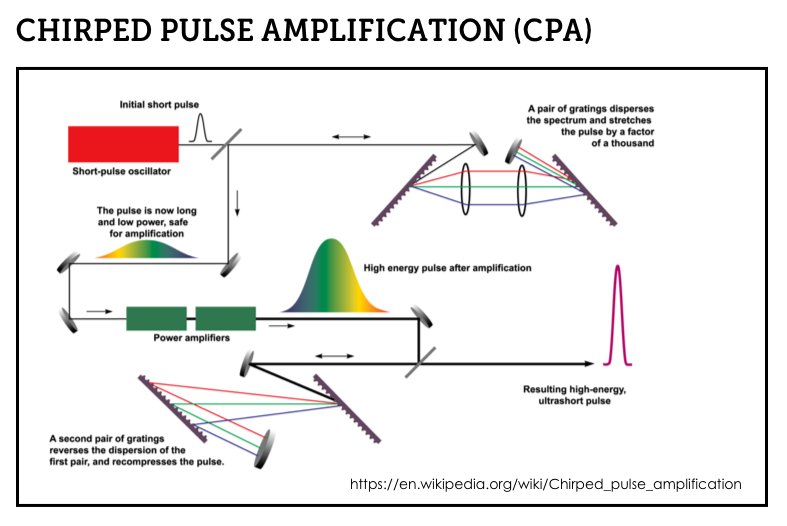
With Donna Strickland, co-invented a technique called chirped pulse amplification (CPA), later used to create ultrashort-pulse, very high-intensity (terawatt) laser pulses.
Donna Strickland. Physics.
With Mourou developed the CPA technique for “micro-machining”. She leads an ultrafast laser group at University of Waterloo that develops high-intensity laser systems for nonlinear optics investigations.
CPA amplifies lasers through a series of steps involving stretching, amplifying, and compressing beams. CPA can be used to create a laser pulse that only lasts one attosecond, one-billionth of a billionth of a second, allowing the study of what happens inside individual atoms.
For groundbreaking inventions in the fields of laser physics, the Nobel Prize is awarded with one half to Arthur Ashkin and the other half jointly to Gérard Mourou and Donna Strickland.
Official press release: nobelprize.org/prizes/physics…
#NOBELTRIVIA
Donna Strickland is the third woman ever to be awarded a Nobel Prize in physics. She is preceded by:
* Maria Goeppert-Mayer, 1963 (atomic structure)
* Marie Skłodowska Curie, 1903 (radioactivity)
↪ Replying to @svmboyd
@svmboyd @HODigital This is brilliant. Where can I see more?
Just a heads up that everyone I know should watch #Nanette. Likely a lot of people I know already have. x.com/axbom/status/1…