Per Axbom Twitter

Speaking at a corporate conference next week and suddenly I’m unsure if it’s supposed to be in Swedish or English(!). There are so few days left I feel embarassed to ask. Going to read back on e-mails to try and deduce it that way… 😅

Thanks everyone for your concern, advice and jests :) The answer is Swedish.

So here is why I get confused: on Wednesday I’m giving a talk in English for a UK audience. Next week a talk in Swedish for a Swedish archival interest group (on metadata). The week after that a talk in English for a Swedish company who have invited international clients…

🔗 Originally posted on Twitter

Per Axbom Twitter

While one may worry about everyday life keeping people from seeing the democratic collapse, I worry about the democratic collapse keeping people from seeing the climate collapse. I imagine it's similar behavioral mechanisms...

gen.medium.com/i-lived-throug…

The chronology of this cartoon by @mackaycartoons gone viral is fascinating. Let's just say it didn't start with all those waves.

mackaycartoons.net/2020/03/18/wed…

🔗 Originally posted on Twitter

Per Axbom Twitter

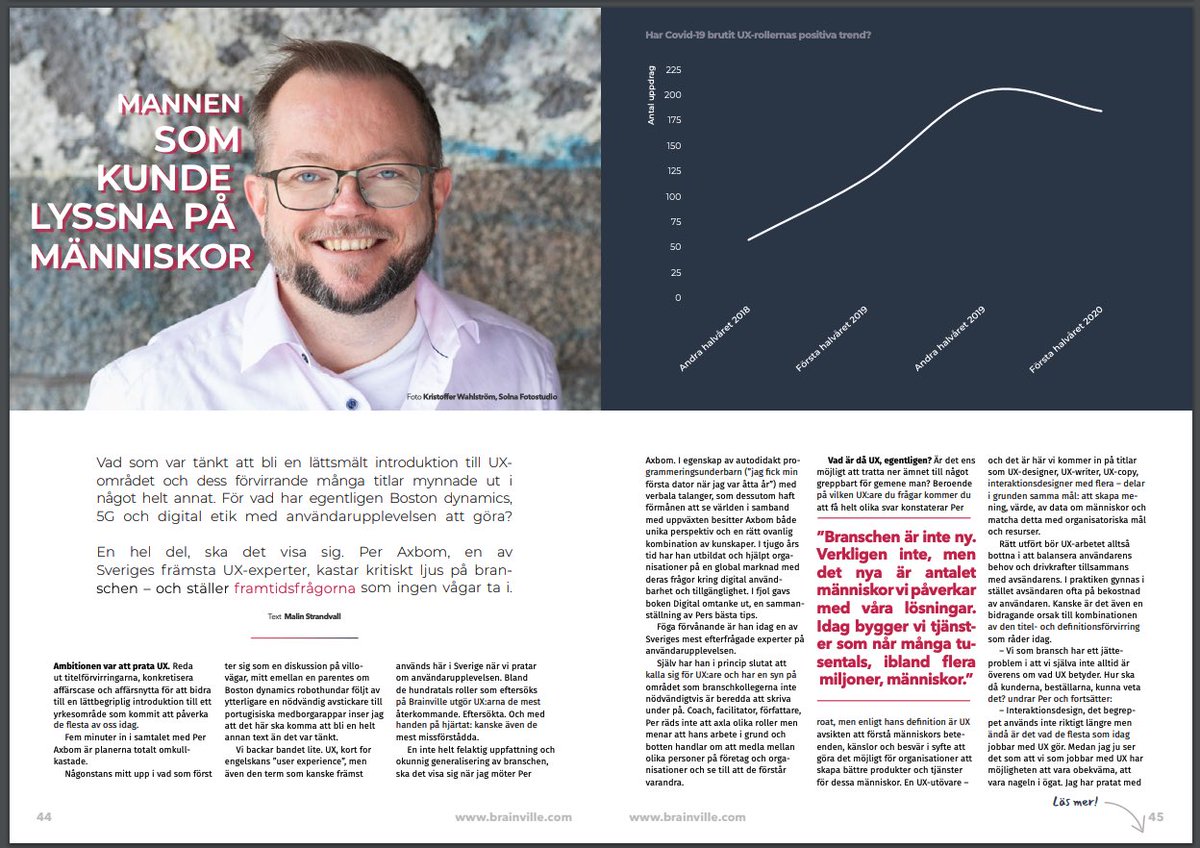
I’m rather proud of this profile of me if I may be so bold. Malin who interviewed me managed to capture who I want to live up to being. I know I’ll fail often, but I also know how to recognise the right path.

The title is “The man who could listen to people.” 😊

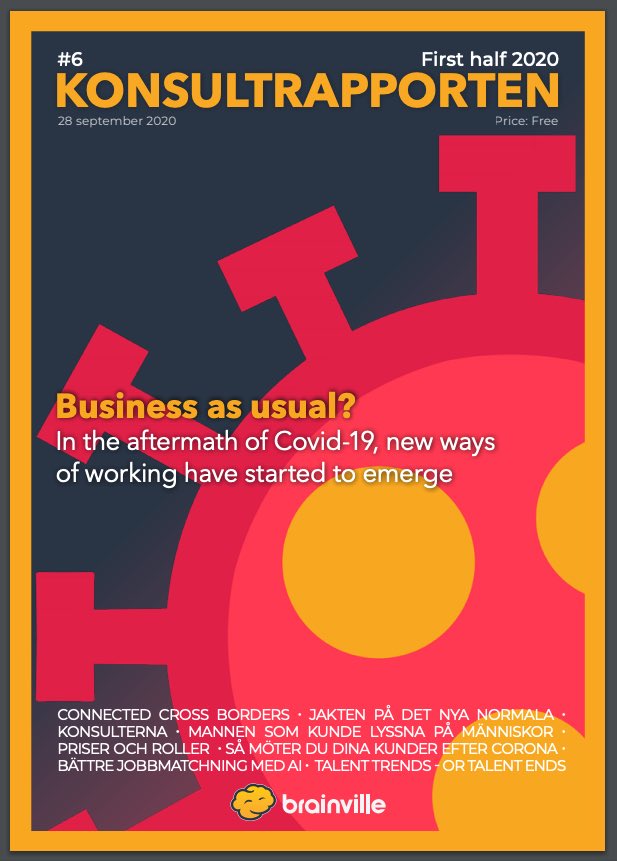
The interview with me (in Swedish) can be found in this PDF, starting on page 44 of the magazine (which happens to be ‘page 23' of the PDF).

konsultrapporten.brainville.com/2020/Konsultra…

🔗 Originally posted on Twitter

Per Axbom Twitter

1/ When you call to book a table at a restaurant, do you ask about accessibility considerations: e.g. wheelchair access, menus in braille or even mindful music volume? Chances are that if you are not yourself affected by these issues, you do not.

2/ If you don’t, this leaves it up to those who have these needs to fight their own battles in making restaurants do better. These are the same people who already experience obstacles being hit twice by also having to fight to be seen and heard and provided space.

3/ Also, if enough people visit restaurants that do not make any accessibility accommodations, those restaurants will feel supported by a considerable clientele and be de-incentivised to include more people in their efforts to provide a welcoming experience.

4/ By simply asking the question “What accessibility accommodations have you made?” you…

* create awareness
* bring the topic top of mind
* show that accessibility matters not just to those directly affected
* unburden people who are coping with these obstacles daily

5/ Already today many of us acknowledge that we do not use words that demean, degrade and insult others. Not because the words hurt us, because they hurt someone else. Questioning how inclusive the spaces I visit are is the next step in proactively mitigating how others are hurt.

6/ I wrote about this last year in the context of Helping events become more inclusive, but it’s important to remember that the same frame of mind applies to all aspects of life: Asking the important questions and letting the responses guide my actions. axbom.blog/events-inclusi…

🔗 Originally posted on Twitter

Per Axbom Twitter

When we see these hacks happen with coffee makers we can’t dismiss them with “it’s only a coffee maker”. We must apply futurist thinking and consider that similar vulnerabilities apply to schools, hospitals and power plants…

arstechnica.com/information-te…

…and voting machines. wsj.com/articles/why-a…

Ukraine has famously been a testing ground for power station hacks. vice.com/en_us/article/…

But Russian hackers have won remote access to the control rooms of many US power suppliers as well.

bbc.com/news/technolog…

What really worries me is that a lot of equipment that is hacked, we simply don’t know about. Some “backdoors” are just left open to be accessed when needed.

healthcareitnews.com/news/when-medi…

And you know how easy some of these “hacks" are?! It’s often about “antiquated, legacy systems with hardcoded passwords that can be found with a simple Google search”. The same reason there are laws passed against default passwords in WiFi routers.

techcrunch.com/2018/10/05/cal…

The fact of the matter is, nobody knows how far-reaching or how big the problem is. But experts agree that what we have seen as of yet is the tip of an iceberg. Only imagination allows us to visualise what is below the surface.

nytimes.com/2018/10/11/opi…

The new Israeli series Tehran begins with the remote hacking of a commercial airline. It’s brilliant as it is timely, but also because so few people understand this vulnerability to even think of it. Machines break down. We’re used to it.

We’re not used to the human intent.

x.com/andreachalupa/…

🔗 Originally posted on Twitter