@janboddez
Hehe, a lot to unpack here and I would love to write a longer post on this. What you are doing in each of your posts is applying ethical reasoning, which is great.
My hope is to boost awareness of unintentional harm based on re-using other people's content in ways they did not initially intend and did not approve.
So when engaging in actions that manage other people's content my ideal situation is one where ethical reasoning takes place, with the explicit goal of minimising harm. Best-case this reasoning is documented and transparent.
To an extent this is what you are doing 😊
With clients I lead them through impact mapping exercises, where impacts are often valued according to their severity, how much the contribution is, how neglected/vulnerable those affected are and how likely it is to happen.
When we don't know the answer we need to find out, from people who are affected. Which means proactive listening.
Exercises like this also create more understanding for situations where functionality has to be recalled - and that is more often then planned as a potential circumstance.
I'll try to find time to think about and address each of your examples but it will have to be after the weekend. 😊
Tagged: Akkoma
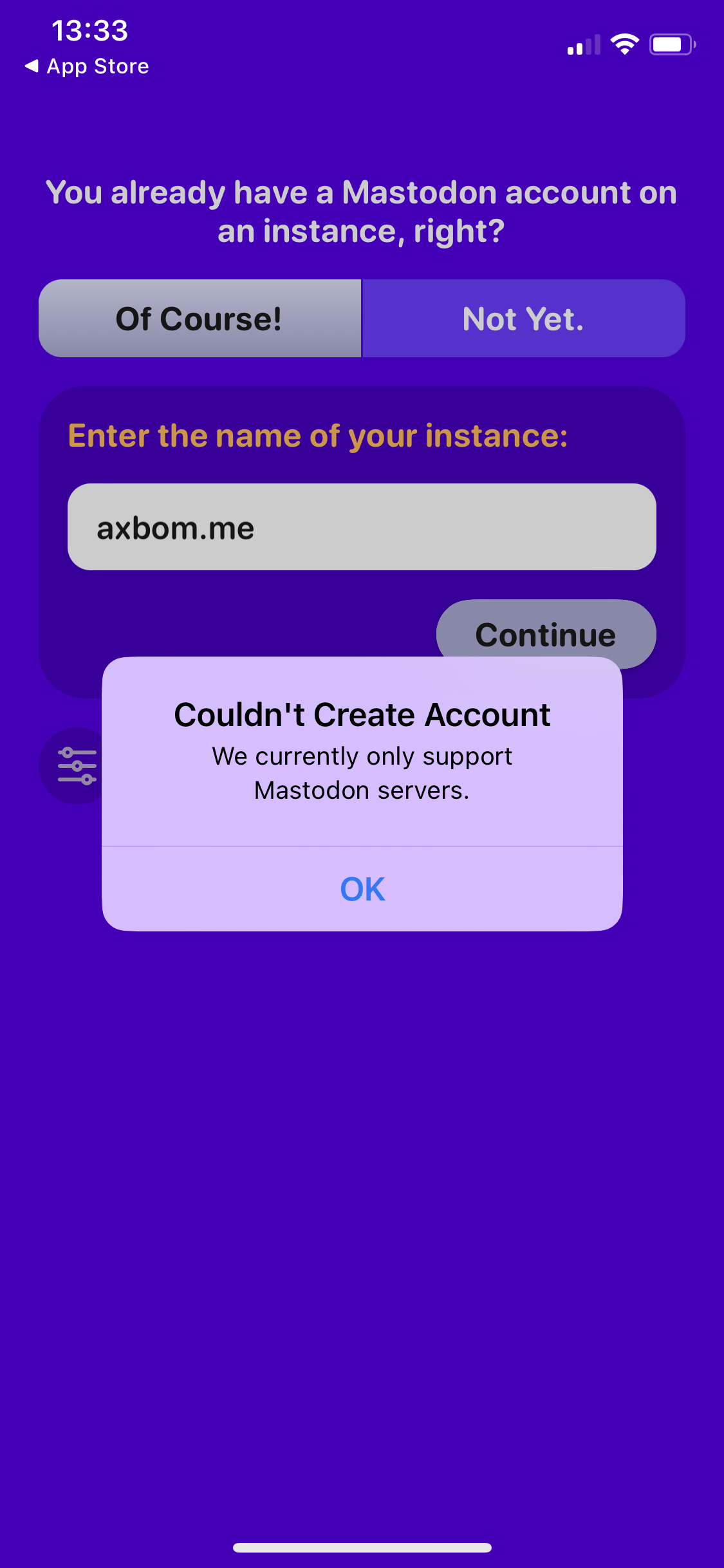
@ivory Is it your intent to support all of ActivityPub/Fediverse and not just Mastodon?
@berkes
Hehe, a lot to unpack here and I would love to write a longer post on this. What you are doing in each of your posts is applying ethical reasoning, which is great.
My hope is to boost awareness of unintentional harm based on re-using other people's content in ways they did not initially intend and did not approve.
So when engaging in actions that manage other people's content my ideal situation is one where ethical reasoning takes place, with the explicit goal of minimising harm. Best-case this reasoning is documented and transparent.
To an extent this is what you are doing 😊
With clients I lead them through impact mapping exercises, where impacts are often valued according to their severity, how much the contribution is, how neglected/vulnerable those affected are and how likely it is to happen.
When we don't know the answer we need to find out, from people who are affected. Which means proactive listening.
Exercises like this also create more understanding for situations where functionality has to be recalled - and that is more often then planned as a potential circumstance.
I'll try to find time to think about and address each of your examples but it will have to be after the weekend. 😊
(Edit: First meant for this reply to go to @janboddez but I realised it was still relevant for both.)
@janne @troed
1. Yes, search engines apply non-consensual scraping to an extent. But it's an interesting case to reason around.
If the premise of publishing a web page is that it can be indexed - the robots.txt file being a standard - then it can be reasoned that it's possible to publish a web page with the correct code for not being indexed. It's an opt-out, yes, but it can be applied *before* actually publishing the page. The action never happens.
The difference between adding a consent and adding a non-consent could be argued as negligible in this scenario. As long as the rules of engagement are clear.
2. In pratical ethics it's great to judge one's own actions based on adherence to, or misconstruction, of intent. Though I would argue that it's dangerous to assume people want to reach "everyone" because they have public posts.
There is a difference in low and high levels of attention. Though I'm not really talking about boosts it's a good case for reflecting on responsibility based on number of followers. Does more followers imply more responsibility, for example.
Scraping of data that individuals posted in one context, for one purpose, will mean that the scraper intends to use the content in a way that the poster did not intend.
There is no consent for this use.
Scraping of personal information (including personal updates) almost always happens without consent and without compassion for individuals and their autonomy.
The fact that the information is public and available has nothing to do with consent for any use that the scraping party desires.
Whether or not that use is considered benevolent and harmless by the scraping party does not matter.
Whether or not a majority of people appear to approve of the scraping does not matter.
Whether or not there is an option to opt out (after the fact) does not matter.
Scraping without consent is one way that disenfranchised and vulnerable individuals are harmed and forced to leave online spaces that are of value to them.
@ambivalena
Grattis! 😊
@b_cavello Great thread. You should put that in a blog post :)
@energisch_ Thanks, that was my takeaway in the end as well :)
@ForeignSubstance My thinking is that the license agreement doesn’t even matter. Expecting deletion of data, or even assuming that it can confidently be done, is the fallacy.
Thinking I now want to visit a hard drive destruction site to see how they do it. 😅
@Robert_R_Freitag_II Yes, I’ve always been fascinated by how willing people are to delude themselves if there’s a chance of quick financial gain, however unethical, or absurd, the premise may be.
Twenty years ago i applied for a job as a web strategist. The ad was an incredibly perfect fit for me. Despite my confidence I wasn’t even called to an interview.
I questioned this in an email and asked if they perhaps would reconsider. Whereupon the manager asked that my cv and application be returned to me.
This was all through email, so the idea they thought they could ”return” my application was hilarious to me. They only created yet another copy.
Today I see people making the same logical errors with regards to moving data.
When you request an archive or move data out of your cloud drive and then close your account with a provider, you haven’t ”taken back” your data.
You have to expect your data to still be stored with them in many backups. You’ve just created yet another copy,
This is the nature of digital.
@g I'm surprised at myself for not thinking about this either. I keep seeing the need for everyone to just have a personal encrypted personal storage box for all their data.
Much like https://solidproject.org/
Usability and access just needs to improve.
@ambivalena Ja det är för jäkla otäckt vilken liten kontroll man har över sin egen information. Man är sårbar hur man än gör.
When you turn in any of your devices for repair, how worried are you about your data being compromised and copied?
"Researchers at University of Guelph in Ontario, Canada, recovered logs from laptops after receiving overnight repairs from 12 commercial shops. The logs showed that technicians from six of the locations had accessed personal data and that two of those shops also copied data onto a personal device. Devices belonging to females were more likely to be snooped on, and that snooping tended to seek more sensitive data, including both sexually revealing and non-sexual pictures, documents, and financial information."
https://arstechnica.com/information-technology/2022/11/half-of-computer-repairs-result-in-snooping-of-sensitive-data-study-finds/

@iamdavidobrien Beautiful. Thank you for pointing me to it David.
@Kolombiken Thanks for sharing. I got no notification for a new follow though, which would be expected.
Have to run some tests now with my secret Mastodon account 😅
@Kolombiken Perhaps. It's a bit concerting that they decided not to support ActivityPub, the W3C standard, and have opted for Mastodon specific APis.
I just found out that I also can not be followed by someone using Ice Cubes. It simply blocks anything that isn't Mastodon.