
Herd immunity is reached when a large population becomes immune to an infection, either
* through previous infections OR
* through vaccination
and hence there is protection for individuals who are not immune, because there is less chance they meet someone ill.
1/ thread 👉
Herd immunity slows spread of disease but generally does not stop it. Some individuals can not become immune, because of conditions such as immunodeficiency or immunosuppression. Or being an infant.
For these people herd immunity is crucial.
2/
Herd immunity is not a strategy, it's just inevitable as time passes. At least when it comes to diseases that are contagious. It occurs naturally or through vaccines.
Mass vaccination is a form of inducing herd immunity and successfully prevents the spread of many diseases.
3/
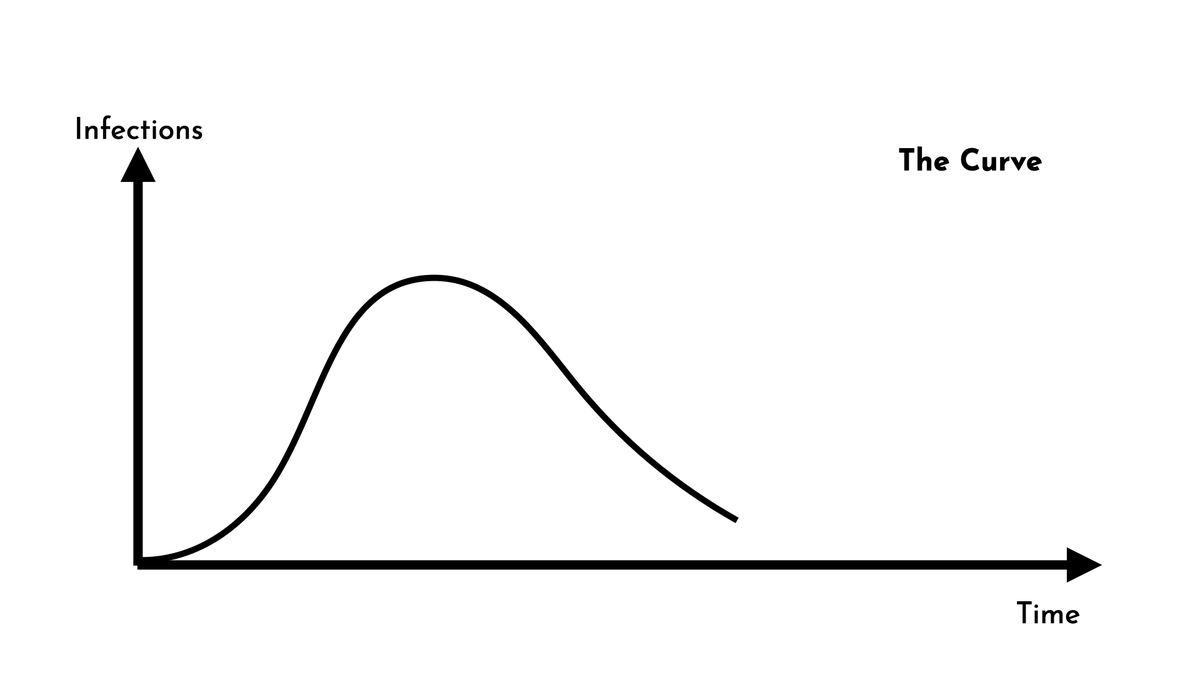
For the disease we know as COVID-19 there is no vaccine yet. The SARS-CoV-2 virus will continue to spread COVID-19 at an increasing rate until enough people are immune and the number of infections per day goes down.
This is what we call The Curve.
4/
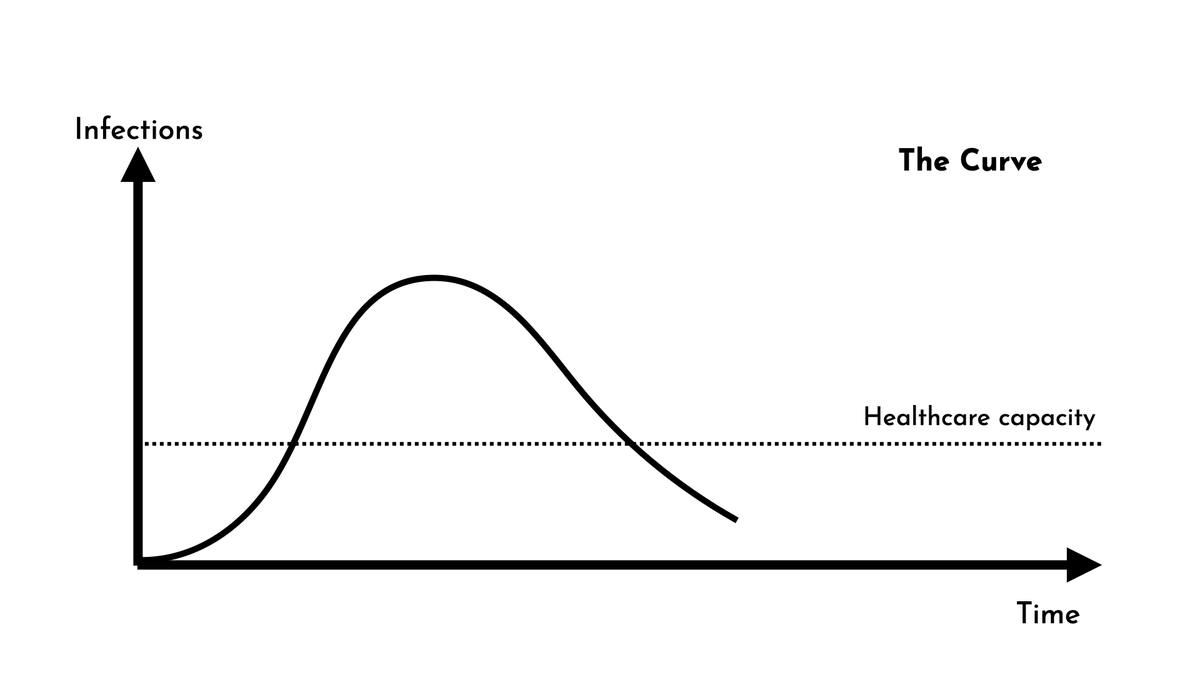
While we wait for a vaccine that can help us reach herd immunity more safely, the way to save the lives of those seriously ill is to have a healthcare system that can care for all of them.
This means extra effort to not get sick yourself and not getting others sick.
5/
While we wait for a vaccine (note: experts say it's not 100% certain that one can be made) then what is known as "flattening the curve" is the only play we have. Keep the rate of infection low so that healthcare systems can manage.
6/
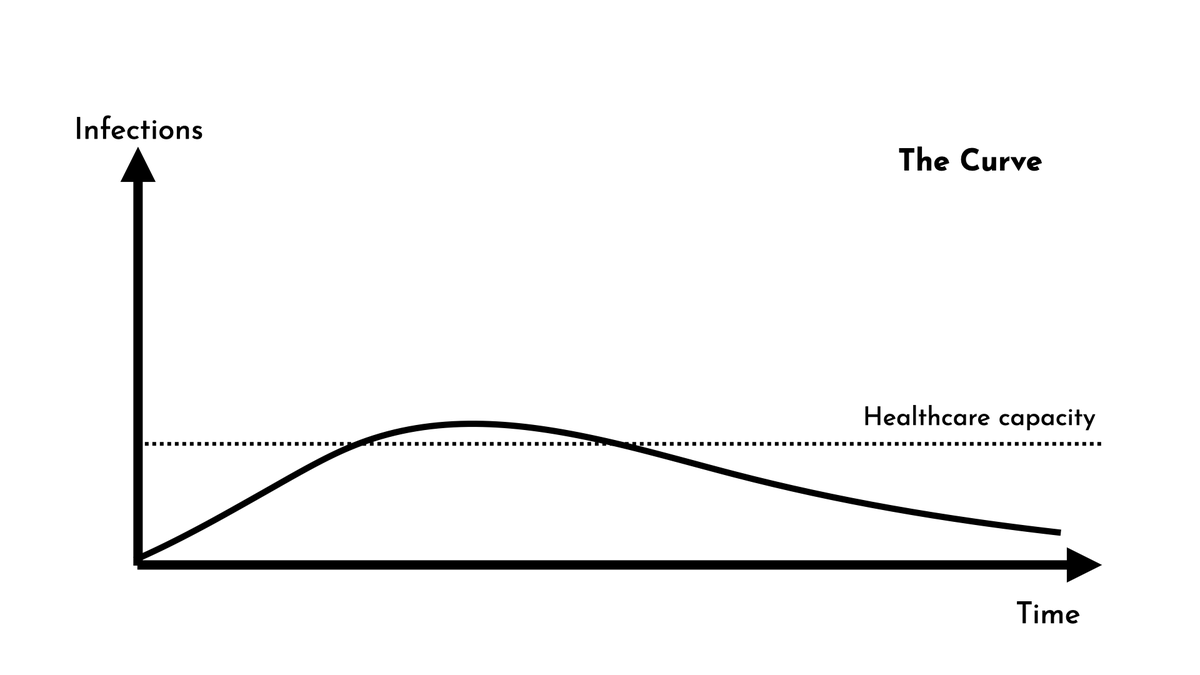
However, what I see many people misunderstand is this simple fact: Flattening the curve does not mean that the area under the curve becomes smaller. It essentially means that the same number of people will still get infected, just over a longer period of time.
7/
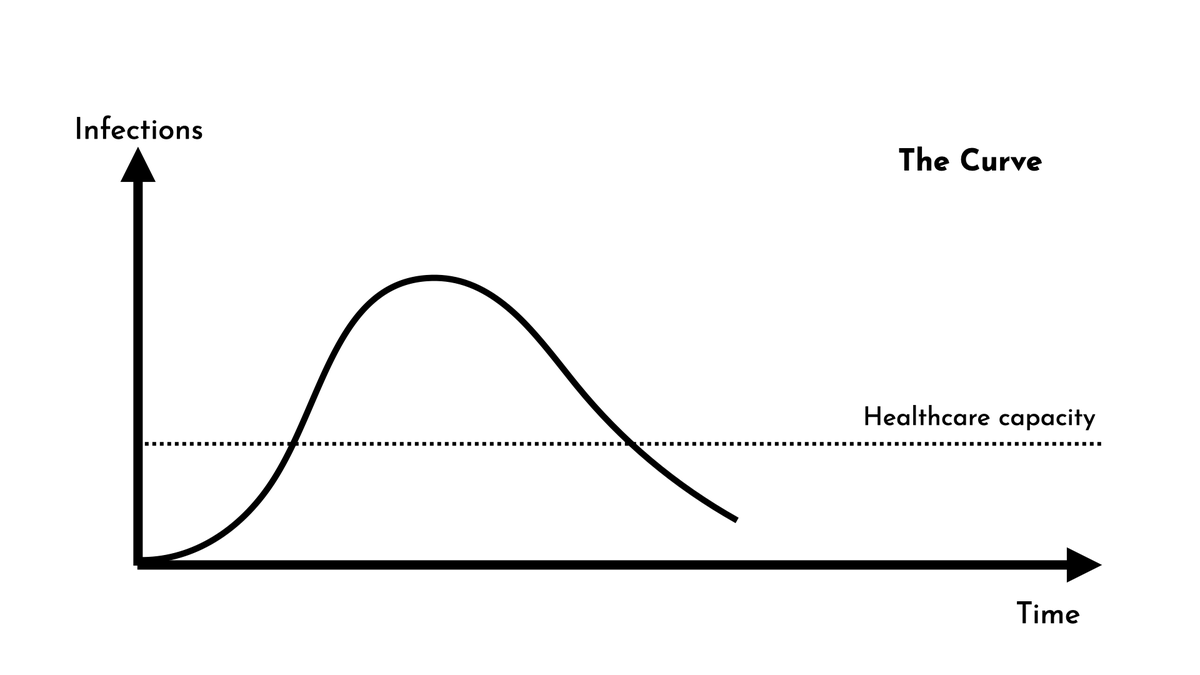
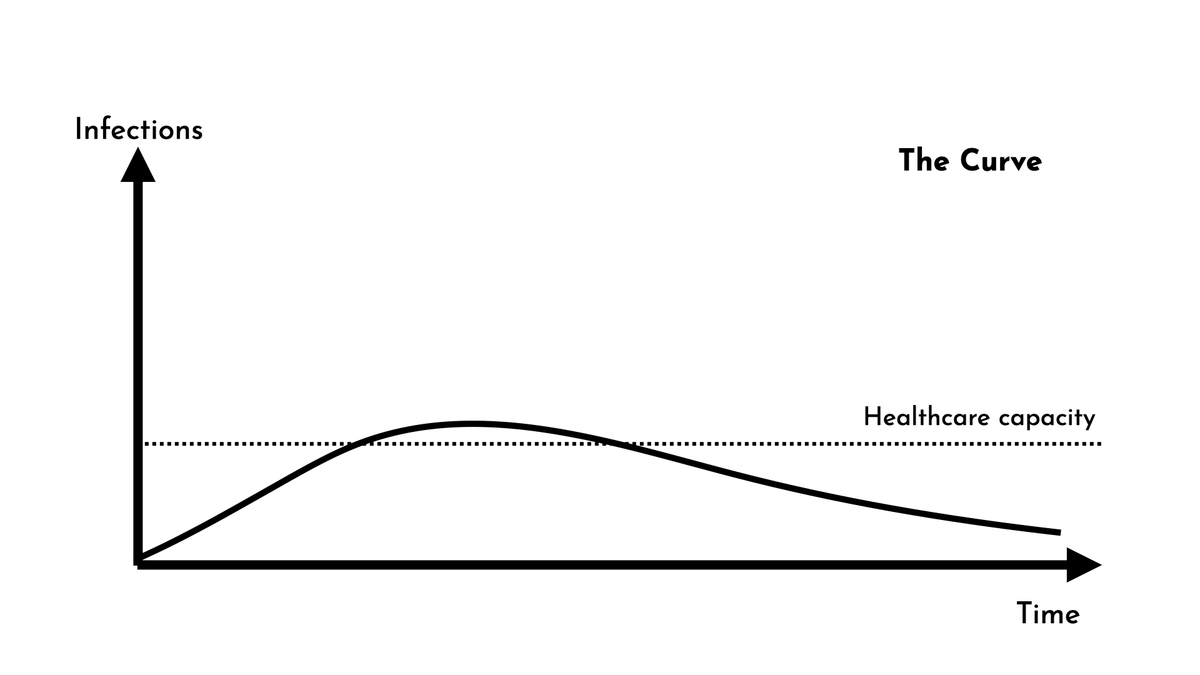
I also hear people interpreting "herd immunity" as something we want to avoid. But herd immunity is not really a strategy, it is simply an inevitable end-game. And it's how the most vulnerable become better protected, enabling them to lead more normal lives.
8/
What countries are doing right now is deploying different strategies for keeping infection rates down, not to avoid herd immunity (everyone wants that in the end), but to minimize deaths due to hospitals and medical staff working at max capacity.
9/
Some countries appear to be doing a better job than others but there are many risks with comparing different countries right now, as it's still early in the pandemic and HOW the spread is happening in each individual country is not really known yet.
10/
Obviously, one way to reduce infection rates is to remove physical contact between people. Countries are managing this through different variations of what is being called "lock-downs". There is reason to believe that this can actually make the curve go down.
11/
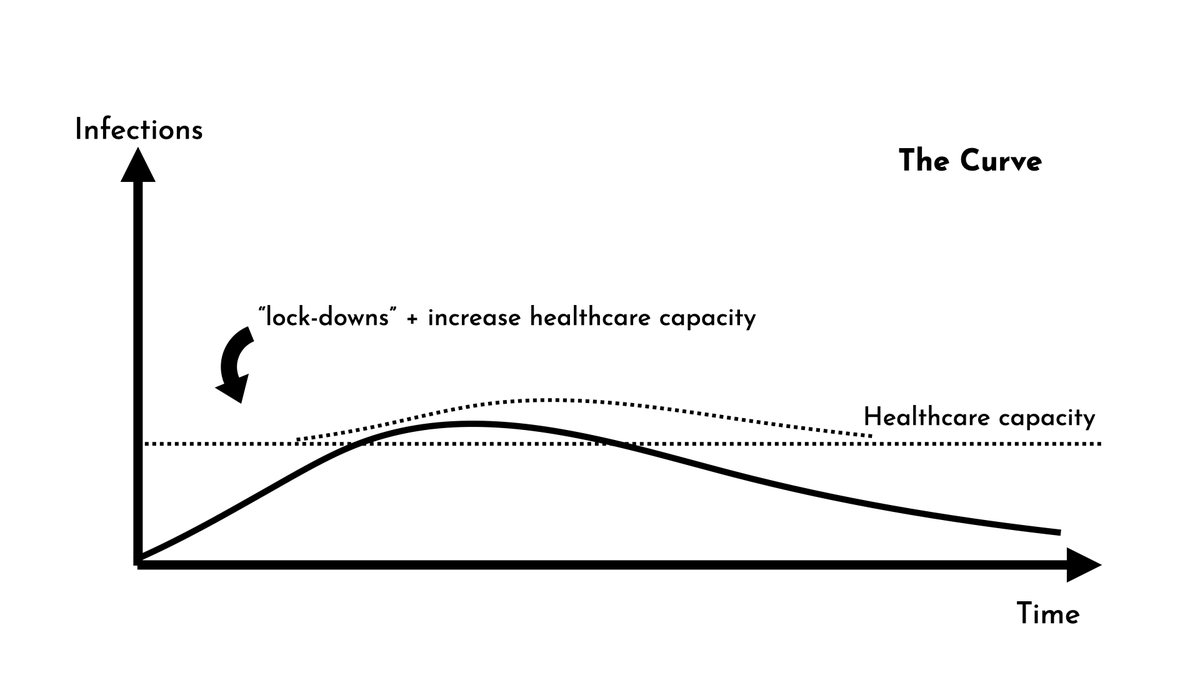
However, there is very little data on what happens when these "lock-downs" are lifted. Will the infection rates go up again, creating another "bump" and yet another need for a lock-down? Will "lock-downs" be required X weeks per year? We just don't know yet.
12/
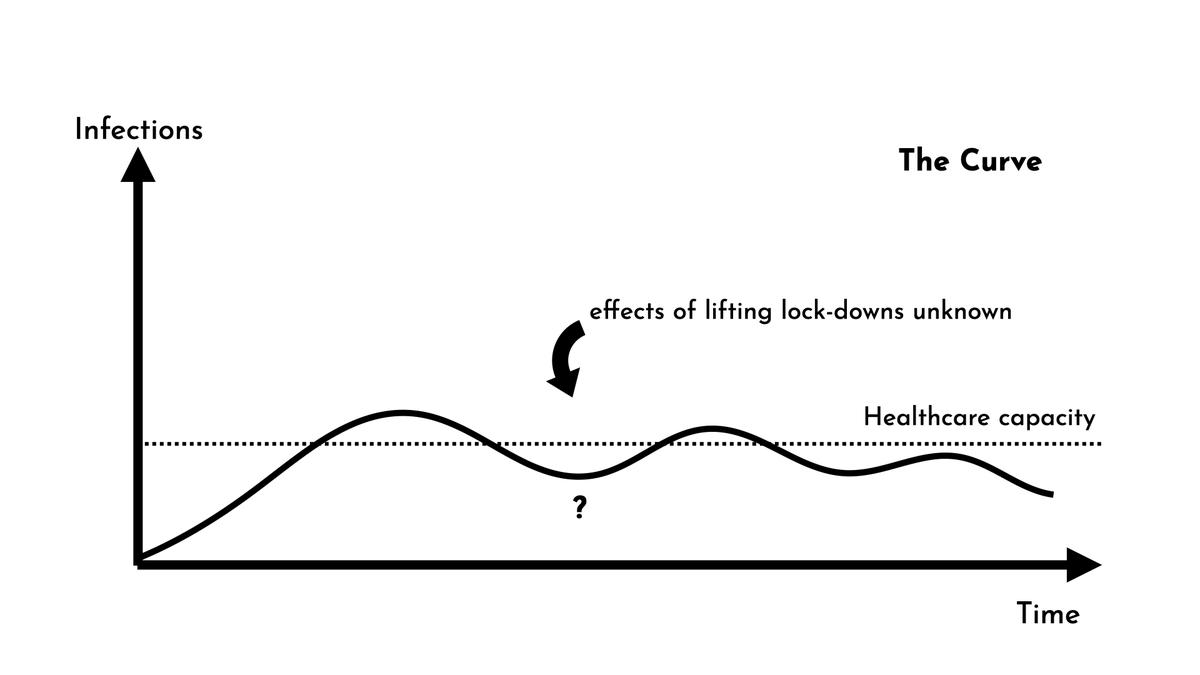
I do not favor one approach over another, that is far from my expertise, but what I'm taking away from all the professionals that I listen to, is that there are still too many unknowns and it will take a long time (probably years) before a reasonable evaluation can be made.
13/
To finish off, being able to gauge herd immunity for different areas and groups of people will certainly be crucial to understanding when populations can start moving around more freely. It's a key indicator.
14/
Anyway, don't listen to me, listen to @WHO and your national disease control operations - they are the ones keeping an eye on your country and what is specifically happening there. Stay safe and remember to protect the vulnerable by following regulations and advice.
15/
If you did want to read more on herd immunity, you can always start with the Wikipedia article:
en.wikipedia.org/wiki/Herd_immu…
16/
And remember, there will always be some detail in this reasoning that I have misinterpreted or should be elaborated on for a more complete picture, so keep an eye out in follow-up posts. Or build on my thoughts to compose your own better ones. Be good.
17/
For instance, elaborating on the "flatten the curve" numbers, there are of course also scenarios in which treatments get better over time, thus reducing loss of life. And a vaccine would, in fact, contribute to reducing number of infections in the long-term.
18/
The professionals are right now saying that COVID-19 will likely be with us for a very long time, returning in waves, or seasons.
I believe them. And I believe human behavior in social gatherings will change significantly...
19/
Another objection one might have is that it's better to try and contain the spread, and eradicate it, rather than just "flatten the curve". Something usually done with contact tracing, strict isolation and "lockdowns". There are now signs of success in S Korea and China.
20/
To the best of my understanding this is what many countries start out attempting to do. But as soon as you have community spread it becomes very difficult. Enforcing city-wide lockdowns has proven hard in Europe.
Once we went pandemic the efforts appear unpredictable.
21/
But I welcome being surprised by community efforts. Shutting down air travel to the extent that has happened already is not something I think many would have guessed feasible a few months ago.
Factors will continue to change, and predictions and numbers along with them.
22/
And yes, a disease can be eradicated if elimination is achieved worldwide and the number of cases is permanently reduced to 0. There are two cases: Smallpox was declared eradicated in 1980, and Rinderpest in 2011. But distrust of modern medicine makes eradication difficult.
23/
Also, @beantin reminded me that among the many unknowns are the uncertainty of how long a person will remain immune and how the virus itself will mutate. Alas, herd immunity puts evolutional pressure on the virus to create new strains.
Let's leave this as a future topic 😬.
24/
Great article by @GiladEdelman arguing how many privacy issues would be solved by banning targeted advertising. And (spoiler alert!) this wouldn’t kill online businesses.
www-wired-com.cdn.ampproject.org/c/s/www.wired.…
#digitalethics #SurveillanceCapitalism
@SvD Vad har hänt med er app? Varför är den plötsligt så otroligt dålig? Artikellistor, sökfunktioner... massor som försvunnit.
↪ Replying to @kayleighmcenany
@kayleighmcenany This enforces racism, builds stereotypes and contributes to misinformation. This in turn supports bad decision-making, oppression and violence. It also makes you, and by association the United States, appear both incompetent and uninformed. Is any or all of this your intent?
There is hope for the world with people like Avi Schiffmann in it. He turned down millions of dollars for ads on his #coronavirus site.
"I don't want to retire at 17"
This should also tell you a lot about the economic forces trying to control us.
❤️ Listening options:
Spotify: open.spotify.com/episode/11yPDf…
Apple Podcasts: podcasts.apple.com/us/podcast/mak…
Overcast: overcast.fm/+GtnC9v9gQ
Stitcher: stitcher.com/s?eid=68605427
My post: axbom.blog/axbom-tech-for…
x.com/techforgoodliv…
Being interviewed by Rebecca Rae-Evans was delightful and uplifting. I have never felt more comfortable as a podcast guest. I also appreciate and love how I always discover things about myself when other people ask me questions and listen with real interest, and I allow myself to reveal what I’m thinking. New thoughts were certainly sparked in this episode.
If ethics and compassion in tech is your thing, you would make me very happy if you gave it a listen and let me know what thoughts are sparked in you.
This interview was part of my participation at UX Copenhagen: “In this series, a member of the Tech for Good Live team will spend some time chatting to one of the UX Copenhagen speakers, and by the end of it we’ll be best friends. GUARANTEED.”
Listening time: 50 mins.
Listening options: https://axbom.blog/axbom-tech-for-good-podcast/
Spotify: https://open.spotify.com/episode/11yPDf5rV0zor29Uyoj50Y?si=iIz1a6mxRNGhoA3b_-pM7Q
Apple Podcasts:
#designethics #digitalethics #techforgood #podcast #uxcopenhagen
↪ Replying to @beantin
@beantin @TheEconomist This is true. And terrifying.
↪ Replying to @hondanhon
@hondanhon Event: Seminar
Location: Cyberspace (a.k.a. The Information Superhighway)
alternatively:
Cloud talk.
↪ Replying to @beantin
@beantin @TheEconomist Most worrisome here is that what was previously deemed toxic now will be accepted. Regulation has to be inevitable...
Covid-19:
COrona VIrus DIsease - 2019 (the year the disease
was identified).
Coronavirus:
A family of viruses that cause illness ranging from common cold to more severe diseases.
SARS-CoV-2: Severe Acute Respiratory Syndrome Coronavirus 2 (the virus that causes Covid-19).
Corona: latin word that means "crown" or "halo", referring to the shape of the virus particle when viewed under a microscope.
↪ Replying to @tranhelen
@tranhelen Hmm, I always use it for 'thank you'.
↪ Replying to @unknown
@drpontus Did we ever like the blink tag? 😆 As for these filters I think people will use them more and more and pretty soon we will be talking avatar to avatar rather than taking showers. 😂
Different filters will have different use-cases of course.
↪ Replying to @Hansherman
@Hansherman Vet inte om det var en undran, men 19 är alltså året som sjukdomen först identifierades :)
I have discovered snapchat filters for my webcam and your meetings with me will never be the same again.
↪ Replying to @Marm_Design
@brightspaceux I feel you. I have one of those horrible nespresso machines. At least I can recycle the pods, which gives me some sense of comfort, but it's not ideal.
But even this gets old. More often lately I'm longing for filter coffee...