
What if it’s not competition, but rather cooperation and inclusion, that creates better products? 😮
I’m rather proud of this profile of me if I may be so bold. Malin who interviewed me managed to capture who I want to live up to being. I know I’ll fail often, but I also know how to recognise the right path.
The title is “The man who could listen to people.” 😊
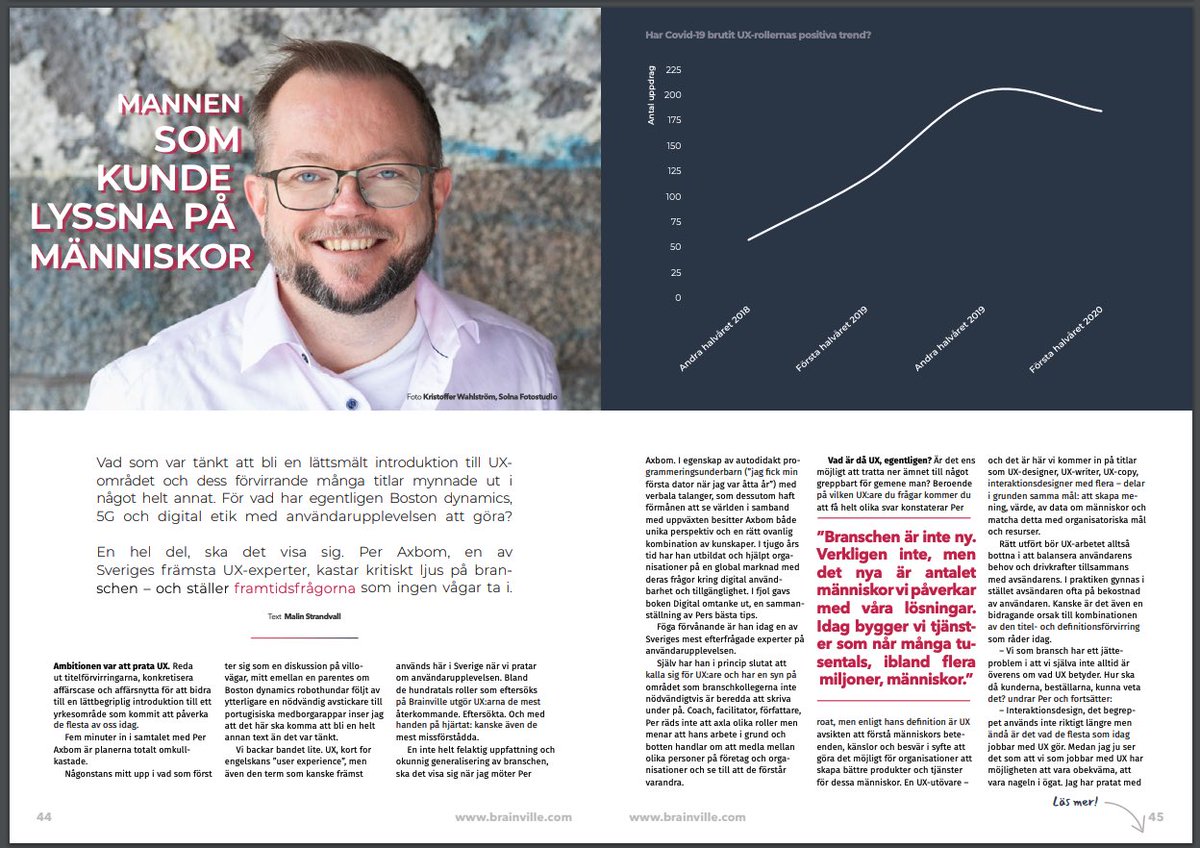
The interview with me (in Swedish) can be found in this PDF, starting on page 44 of the magazine (which happens to be ‘page 23' of the PDF).
konsultrapporten.brainville.com/2020/Konsultra…
1/ When you call to book a table at a restaurant, do you ask about accessibility considerations: e.g. wheelchair access, menus in braille or even mindful music volume? Chances are that if you are not yourself affected by these issues, you do not.
2/ If you don’t, this leaves it up to those who have these needs to fight their own battles in making restaurants do better. These are the same people who already experience obstacles being hit twice by also having to fight to be seen and heard and provided space.
3/ Also, if enough people visit restaurants that do not make any accessibility accommodations, those restaurants will feel supported by a considerable clientele and be de-incentivised to include more people in their efforts to provide a welcoming experience.
4/ By simply asking the question “What accessibility accommodations have you made?” you…
* create awareness
* bring the topic top of mind
* show that accessibility matters not just to those directly affected
* unburden people who are coping with these obstacles daily
5/ Already today many of us acknowledge that we do not use words that demean, degrade and insult others. Not because the words hurt us, because they hurt someone else. Questioning how inclusive the spaces I visit are is the next step in proactively mitigating how others are hurt.
6/ I wrote about this last year in the context of Helping events become more inclusive, but it’s important to remember that the same frame of mind applies to all aspects of life: Asking the important questions and letting the responses guide my actions. axbom.blog/events-inclusi…
Being interviewed by Malin (which felt just like an engaging conversation) was immensely fun and rewarding. I perhaps did not provide the UX profile Malin expected, but she was fully on board with that! Brilliant interviewer and writer. 🙌
(interview in Swedish)
All good intent can backfire. x.com/guardian/statu…
When we see these hacks happen with coffee makers we can’t dismiss them with “it’s only a coffee maker”. We must apply futurist thinking and consider that similar vulnerabilities apply to schools, hospitals and power plants…
arstechnica.com/information-te…
…and voting machines. wsj.com/articles/why-a…
Ukraine has famously been a testing ground for power station hacks. vice.com/en_us/article/…
But Russian hackers have won remote access to the control rooms of many US power suppliers as well.
bbc.com/news/technolog…
What really worries me is that a lot of equipment that is hacked, we simply don’t know about. Some “backdoors” are just left open to be accessed when needed.
healthcareitnews.com/news/when-medi…
And you know how easy some of these “hacks" are?! It’s often about “antiquated, legacy systems with hardcoded passwords that can be found with a simple Google search”. The same reason there are laws passed against default passwords in WiFi routers.
techcrunch.com/2018/10/05/cal…
The fact of the matter is, nobody knows how far-reaching or how big the problem is. But experts agree that what we have seen as of yet is the tip of an iceberg. Only imagination allows us to visualise what is below the surface.
nytimes.com/2018/10/11/opi…

The new Israeli series Tehran begins with the remote hacking of a commercial airline. It’s brilliant as it is timely, but also because so few people understand this vulnerability to even think of it. Machines break down. We’re used to it.
We’re not used to the human intent.

Best text on compassion I've read. By @compassioncode / @aprilwensel
"Humility is essential because you cannot authentically show someone compassion while feeling superior to them."
Compassion Is Not About Being ‘Nice'. compassionatecoding.com/blog/2020/9/21…
"[…] much of what the super-rich claim as “theirs” is, upon closer inspection, not (fully) attributable to them, but rather to factors beyond their control, including the structures, inventions and institutions created by others." x.com/The_Corres/sta…
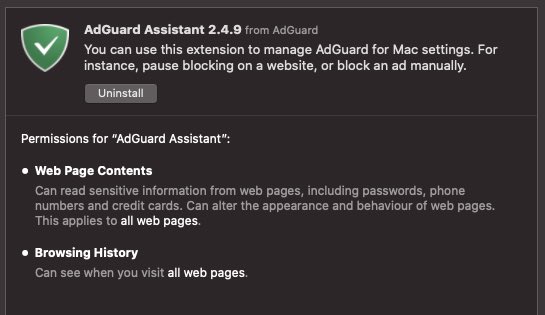
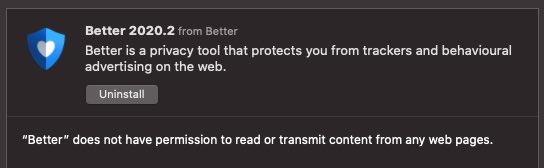
Hey @Adguard, why does your extension require permission to read info I enter into webpages (which includes passwords and credit card info)? I’m comparing for example with @betterblocker which requires no such permissions.
↪ Replying to @maria_axente
@maria_axente @WIRED Wow. Really makes one wonder... if it becomes too big for anyone to understand its workings, should we allow it? But then this also begs the question: how/when do we know we've understood something?
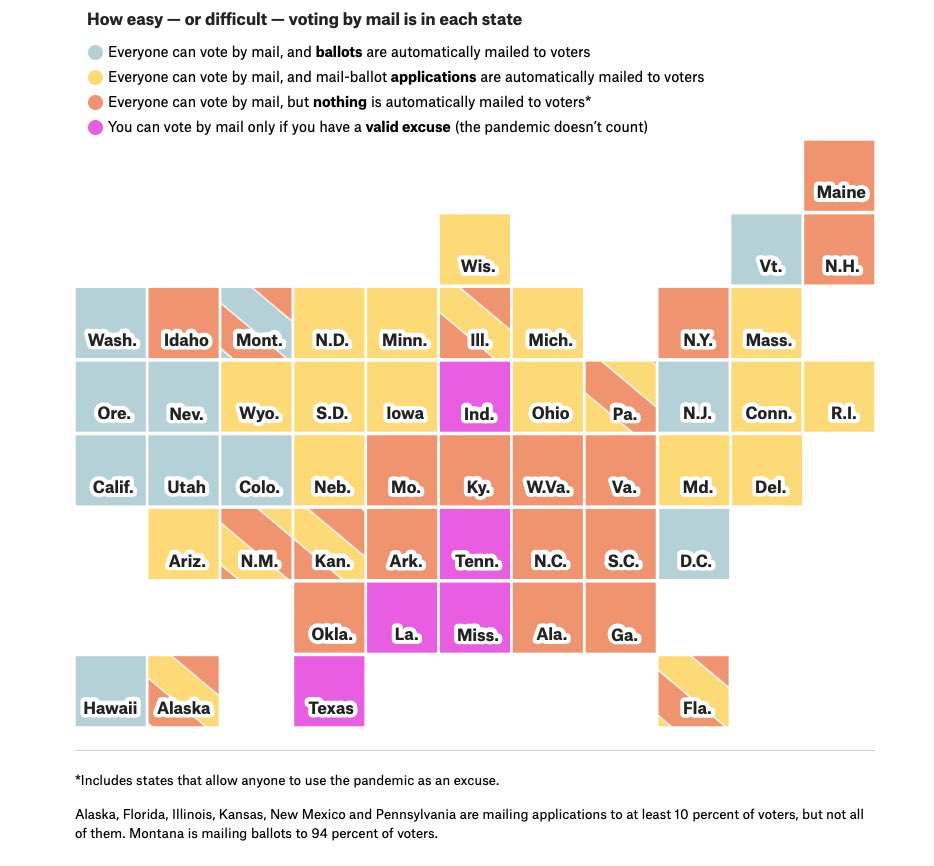
The differences in difficulty of voting in each US state, visualised. In pink states, the pandemic does not count as a valid excuse for voting by mail. In the orange states everyone can vote by mail (counting those where the pandemic is a valid excuse).
projects.fivethirtyeight.com/how-to-vote-20…
It would be foolish to believe that a book resting on your bedside table, unread, does not still influence your thoughts.
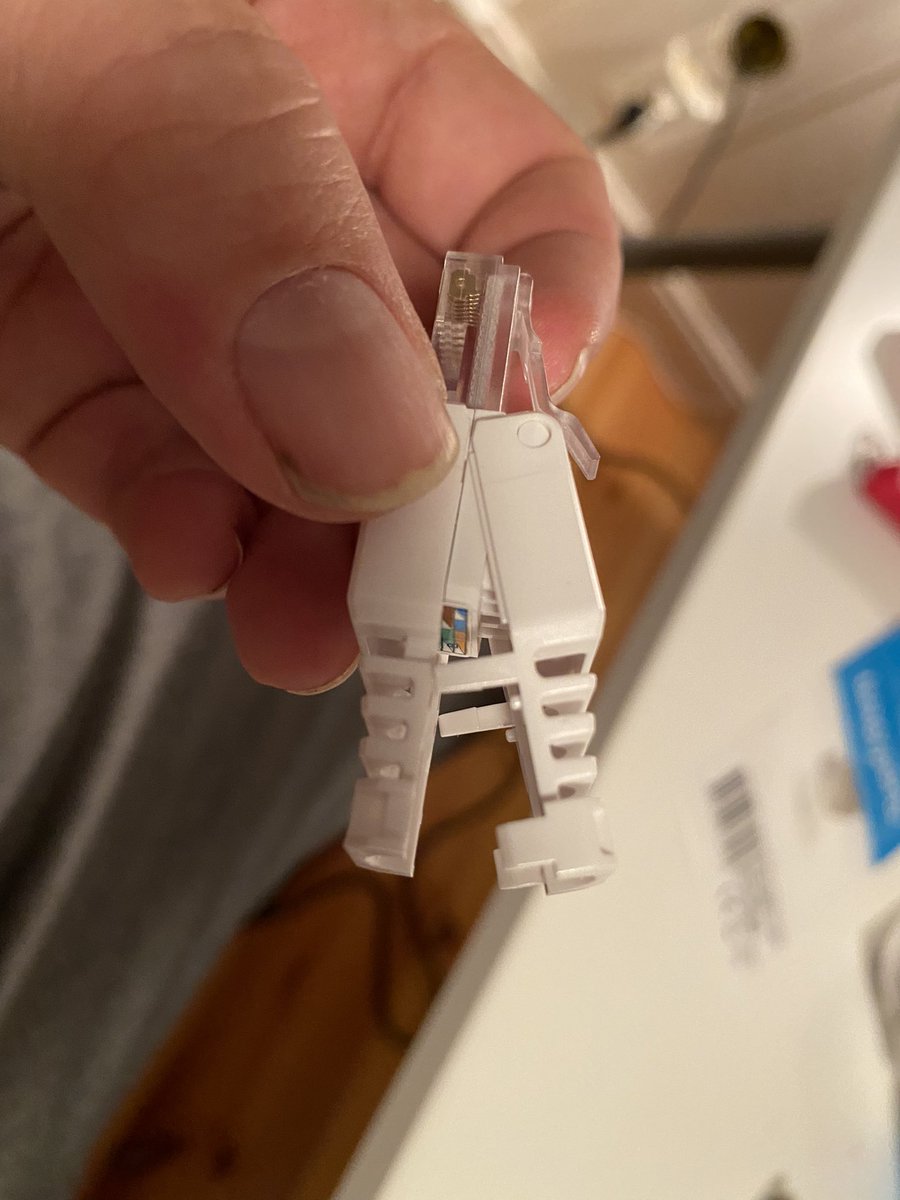
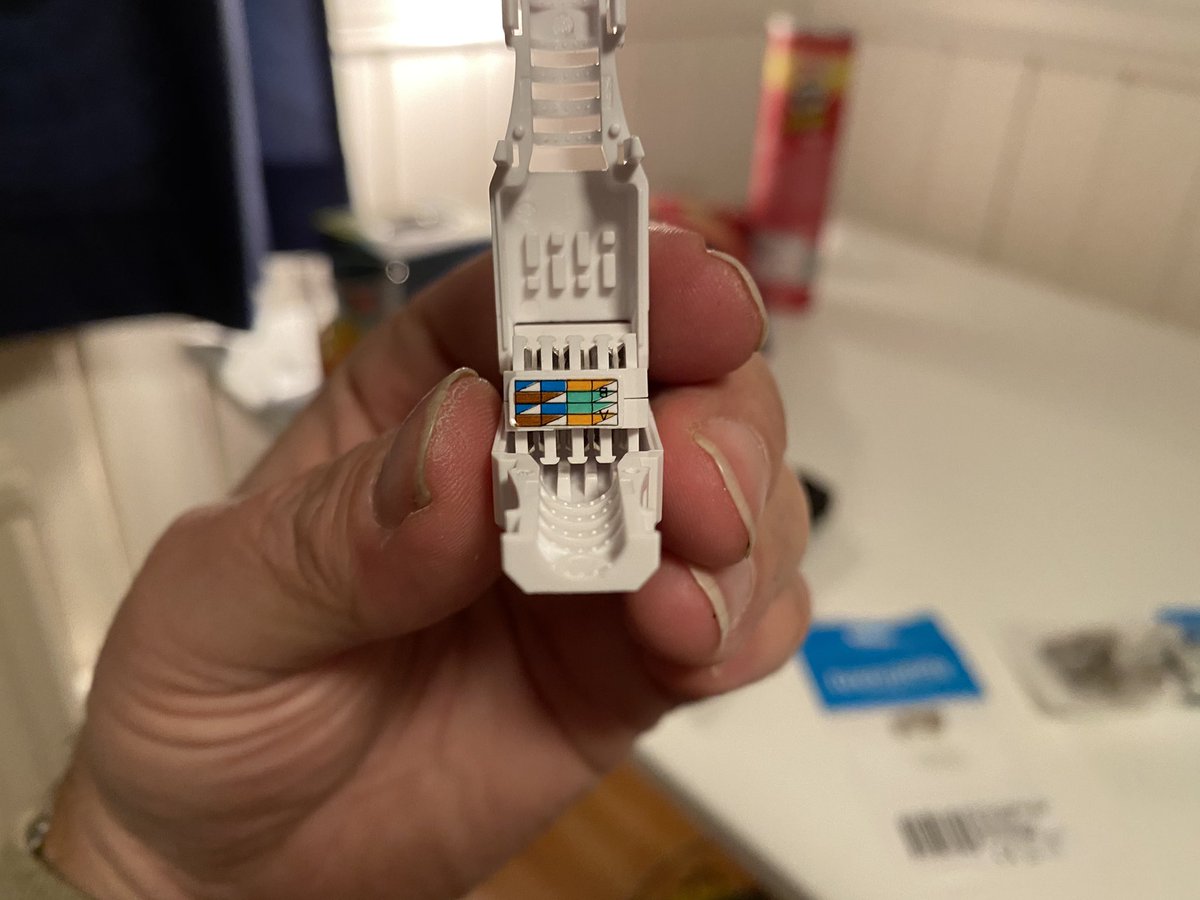
Geek friends! I thought I'd make an easy job of it and bought a tool free RJ45 connector. But now the color coding doesn't make sense for me! Where does each wire go (see image 2)?
Yes, I know the order in a regular RJ45 connector.
↪ Replying to @ohisthatall
@futureroboboy Yes, @The_Corres is a great one to support! Glad you liked it. 🙌
Dear news media, stop covering the US as if it’s a democracy
"[…] a country that is a democracy in name only, a kleptocracy in actual practice, and well on its way to becoming an autocracy full stop."
open.thecorrespondent.com/698/dear-news-…
↪ Replying to @pappasadrian
@pappasadrian I believe they do have an impact in creating awareness. Awareness for me is one of the most important things right now, as it's necessary for consumer action and behavior change.
I think we may have to start calling them blood batteries.
axbom.blog/the-slavery-be…
This right here shows how incredibly dangerous and harmful this path is... (also see Abeba's whole thread). x.com/Abebab/status/…
A neuroscientist explains how politicians and the media use fear to make us hate without thinking - MarketWatch marketwatch.com/story/a-neuros…