
↪ Replying to @ifenn
@ifenn Excellent additional point! I gain a lot of trust by doing this.
↪ Replying to @ifenn
@ifenn Excellent additional point! I gain a lot of trust by doing this.
A not unsubstantial part of my work is helping others visualise their ideas in Powerpoint. You'd think I might tire of this, but...
- It gives me access to information long before it reaches stakeholders and management.
- I can influence the content.
- I can help improve impact.
Have any of the companies doing Facebook ad boycotts provided clear demands or requirements for what it will take for them to return to advertising?
If not, they have still failed to communicate where they draw their 'line' and their acts are mostly PR stunts.
Pulling your advertising a month during a pandemic when nobody is buying anyway is perhaps not a daring show of support. It's probably just good business sense.
What will it take for these companies to be comfortable with Facebook again? A calendar shift into August? 🤷
”We can make any watch reveal the position of the wearer, we can listen to the wearer without them knowing, and we can also alert them to take medication”
bbc.com/news/technolog…
↪ Replying to @SynchroM
@SynchroM Cool, had not heard about that. Looking into it now. Thanks!
↪ Replying to @SynchroM
@SynchroM Exactly. Good point. And here's where it all breaks because building this the right way requires effort, time and knowledge that is often not available.
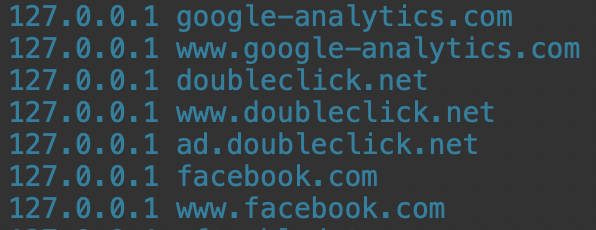
And why the hosts file on my computer has these rows.. 😊
↪ Replying to @ErikBernskiold
@ErikBernskiold I would love some open source scripts that help websites block certain other scripts before they are loaded. You're right, it's not simple. Was looking into it a month ago and realised the complexity means most just won't bother.
↪ Replying to @unknown
@bjornfant Haha, true. But that cookie doesn't require consent as it would be regarded as an essential cookie. Creating awareness of it would of course be of value.
↪ Replying to @unknown
@MattsBigIdeas I actually think many websites don’t know HOW to block third-party cookies from loading (e.g. google trackers) when they have them in their code. Most common mistake is embedding YouTube videos without being aware that these embeds set cookies.
ghacks.net/2018/05/23/why…
How many websites set their cookies BEFORE the visitor clicks the accept button? Most of them?
↪ Replying to @DaleReardon
@DaleReardon @zoom_us theguardian.com/technology/202…
↪ Replying to @karenmcgrane
@karenmcgrane Nope... or rather: I've made the 'mistake' of upgrading my MacOS. So if I'm running an old version of MacOS I could potentially use TunesKit DRM iBook. Maybe if I find and old Mac... Such a hassle though...
↪ Replying to @unknown
@beingbrad But I agree with you wholeheartedly. It's really, really sad and a good example of how decisions around digitization has made an experience worse. Shouldn't have to be this way.
I'm at that stage where I bought lots of books on iBooks because I wanted to avoid Amazon... and now I'm stuck with Apple's DRM system and can't read on a paperwhite screen device. Bad move on my part, I know.
But... any tips for best Apple Books reading experience?
When I started addressing #DesignEthics five years ago it became clear I couldn’t address it in isolation. Injustice is systemic, only fixed when systemic loops are broken. But I did not anticipate addressing slavery.
My new article on Ethical:
https://ethical.net/technology/the-slavery-supported-the-device-in-your-pocket/
When I started addressing #DesignEthics 5 years ago it became clear I couldn’t address it in isolation. Injustice is systemic, only fixed when systemic loops are broken. But I did not anticipate addressing slavery.
New on @ethical_net
#DigitalEthics
ethical.net/technology/the…
↪ Replying to @strandell
@strandell We don’t need deepfakes when we have Miles Fisher ;)
Tom Cruise 2020
I just want to make it abundantly clear that this is in fact not Tom Cruise, but impersonator Miles Fisher. I was just very impressed by the attention to body language.
Also, deepfakes are not always computer generated ;)
And then this reaction video!
youtube.com/watch?v=O-SbV4…
The reaction video is of course also Miles Fisher but I’m worried by even feeling the need to point that out...
1. The Spanish flu did not originate in Spain. They were just the first to report on it because they didn’t censor their press during the war. Those vulnerable were 20 to 40-year olds. Lots of dependents (children and elderly) were left without support.
2. Over three waves of infections, the Spanish flu killed around 50 million people between 1918 and 1919. It infected about 500 million people – so one in three people in the world alive at that time. The death toll could have been higher, due to likely under-reporting.
3. There was no reliable diagnostic test and no really good treatments. The disease was called many different things, which meant there was a problem counting the dead as well.
4. People were on the move, not only troops, but also civilians: refugees and displaced persons. Fastest modes of travel were ships and trains. Illiteracy was much higher than now, which had an impact because news was mainly transmitted by newspapers.
5. Australia could see it coming and took advantage of that to put in place maritime quarantine in 1918. Public health measures that really worked that year. But they lifted it too soon and the third wave of infection of early 1919 killed 12,000 Australians.
6. It was a time of eugenics-type thinking and it was perceived that those people who were more prone to the flu were somehow inferior, and that it was somehow their own fault. This thinking (mostly) disappeared later.
7. The West became disillusioned, and turned away from, science. Alternative medicine took off in America. China instead embraced science. Russia was the first after this, followed by Western European nations, to put in place socialized healthcare systems.
8. There was a realization that a pandemic was a global health crisis you had to treat at the population level. There was no point in blaming individuals. Socialized healthcare would protect the larger population from those who fell ill, as they would seek and receive treatment.
9. All these insights and more are outlined in science journalist Laura Spinney’s 2018 book Pale Rider: The Spanish Flu of 1918 and How It Changed the World. She wrote it when she realized how little people knew about the worst disaster of the 20th century.
10. But today she is also surprised that people keep comparing covid-19 with the Spanish flu. The 1957 Asian flu killed ~2 million. The 1968 Hong Kong flu killed ~4 million. They were much worse than our current outbreak to date. And yet they seem to have fallen out of memory.
11. For all our talk about how easy it is to spread information and keep people informed today, it sure seems to be an environment where it’s also all too easy to forget.
Read Kate Whiting’s conversation with Laura Spinney here:
weforum.org/agenda/2020/04…
12. This is relevant. To stop calling it the Spanish flu. On Wikipedia, in history books and public discourse this is often what it is called. People should know why. But we can do better going forward. It's the 1918 flu pandemic.
x.com/MathAndCobb/st…
Flashback to being interviewed by @mmmmmpig in 2016. Amazing to have this time in my life documented. Thanks Scott!
20questionstuesday.com/blog/2016/5/17…