Skip to content
Notes by Axbom
Per Axbom Bluesky

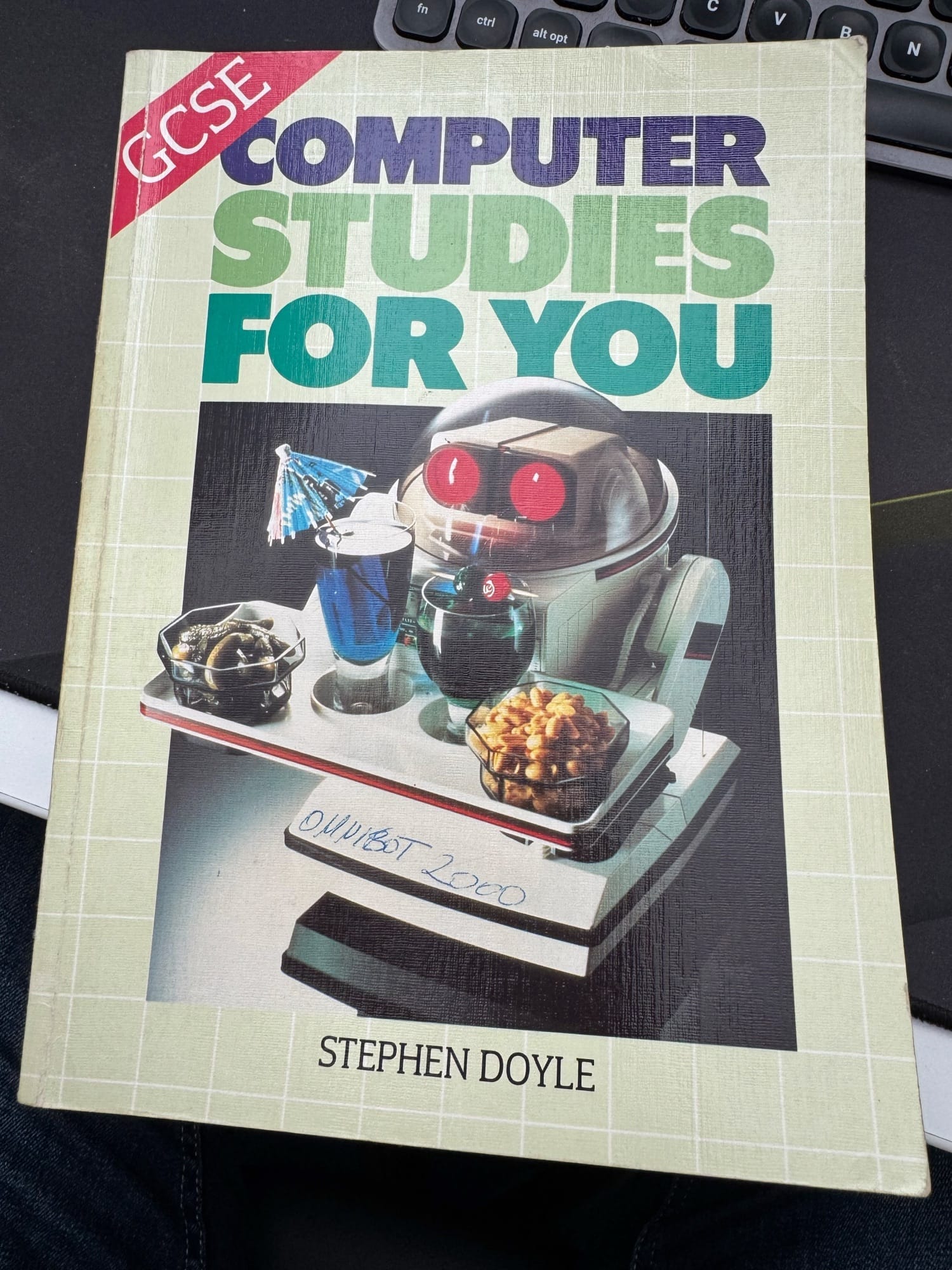
Stumbled upon my GCSE Computer Studies book first published 1985… this edition published in 1988.

Cover of the book Computer Studies for You by Stephen Doyle. It has a photo of a small robot with a tray serving pickles, peanuts and drinks.
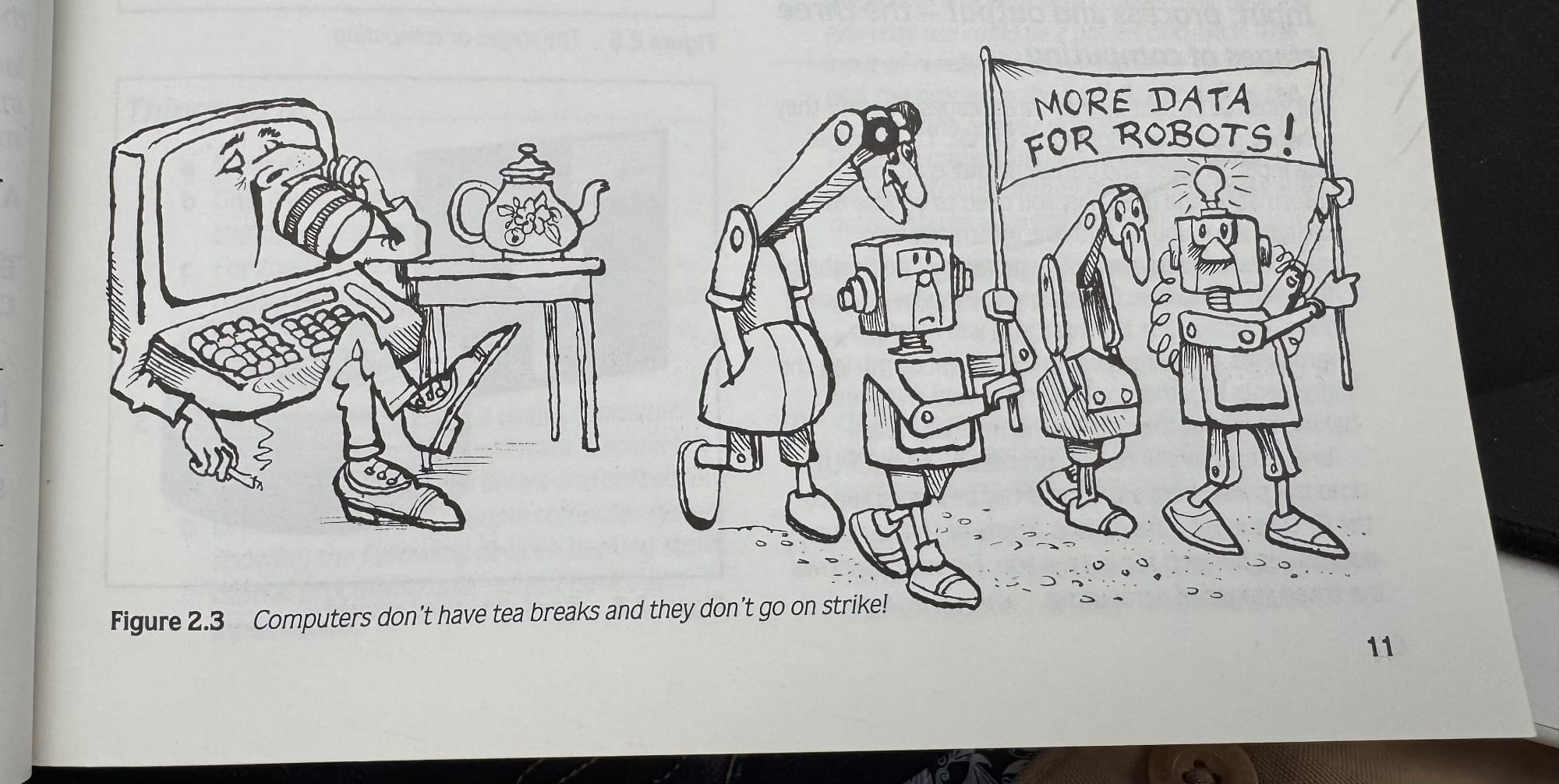
Figure 2.3 An illustration of a computer with arms and legs kicking back and drinking tea, and then a group of robots who look like they are on strike holding a sign that says “More data for robots!”.

The photo description reads “Computers don’t have tea breaks and they don’t go on strike."
Photo from the Things to do page in the the chapter about Social implications.

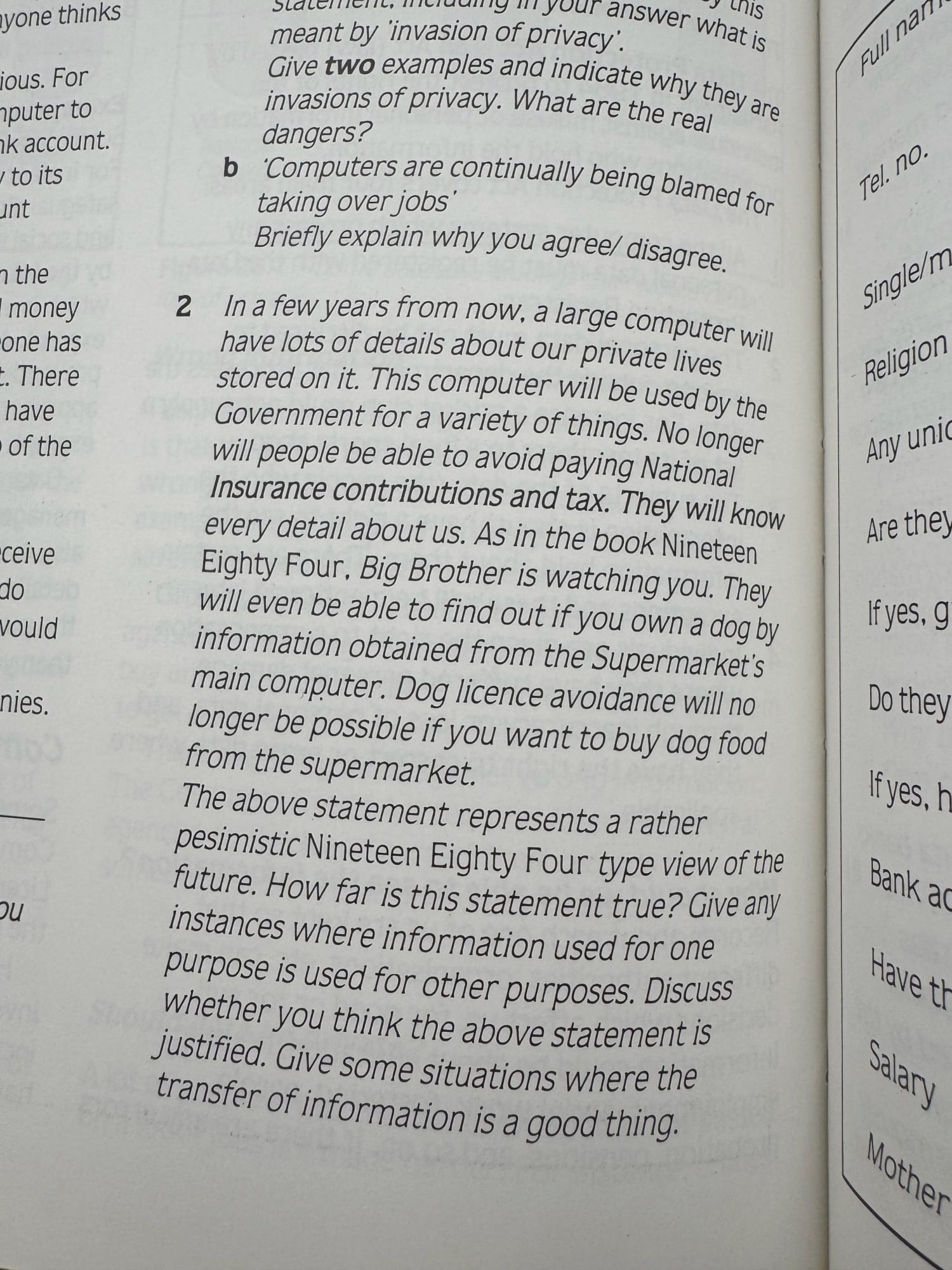
"In a few years from now, a large computer will have lots of details about our private lives stored on it. This computer will be used by the Government for a variety of things. No longer will people be able to avoid paying National Insurance contributions and tax. They will know every detail about us. As in the book Nineteen Eighty Four, Big Brother is watching you. They will even be able to find out if you own a dog by information obtained from the Supermarket's main computer. Dog licence avoidance will no longer be possible if you want to buy dog food from the supermarket.

The above statement represents a rather pesimistic Nineteen Eighty Four type view of the future. How far is this statement true? Give any instances where information used for one purpose is used for other purposes. Discuss Whether you think the above statement is justified. Give some situations where the transfer of information is a good thing.
Photo from page about computers.

Computers are very accurate.
You may have read in the newspapers stories like:
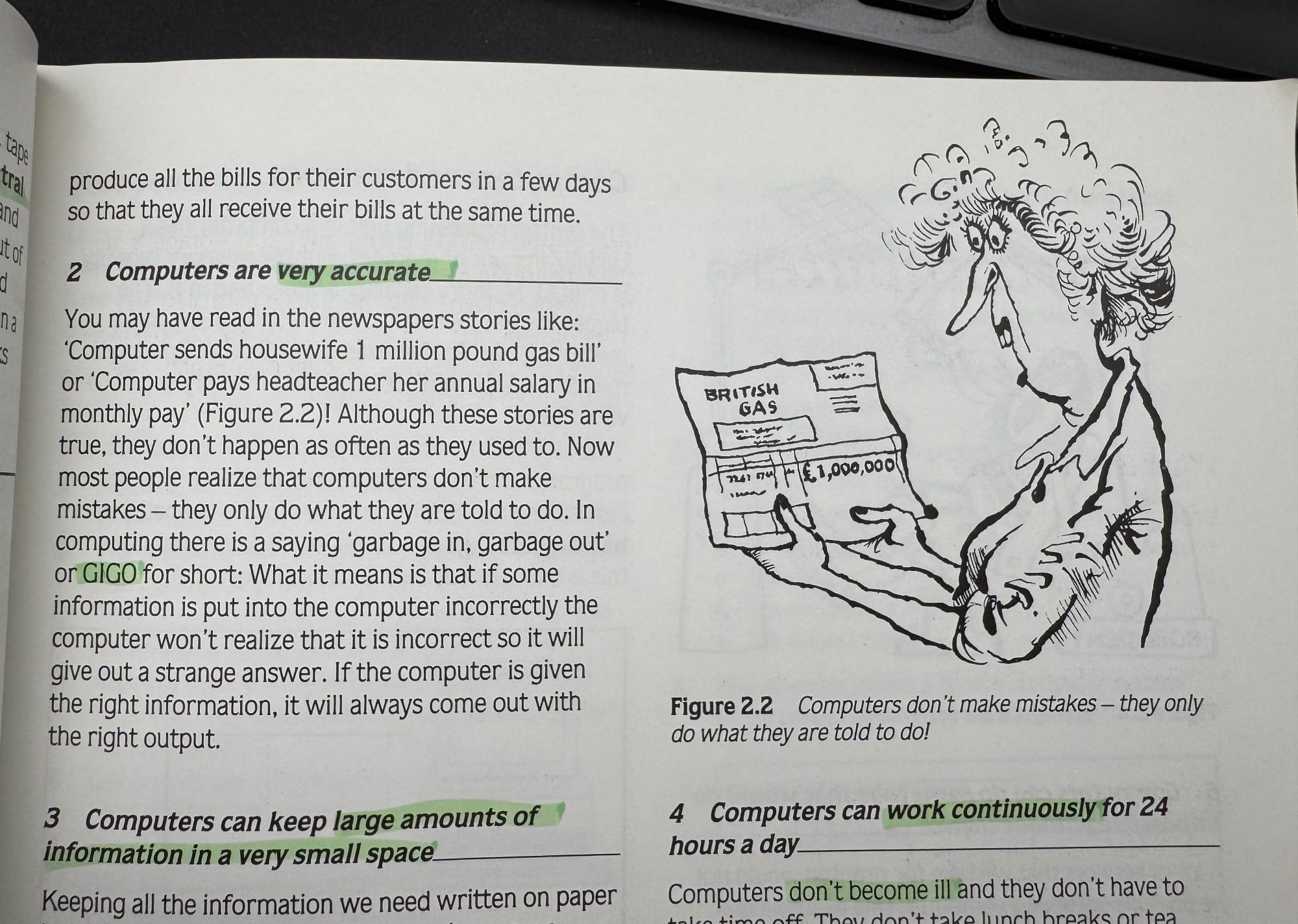
'Computer sends housewife 1 million pound gas bill' or 'Computer pays headteacher her annual salary in monthly pay' (Figure 2.2)! Although these stories are true, they don't happen as often as they used to. Now most people realize that computers don't make mistakes - they only do what they are told to do. In computing there is a saying 'garbage in, garbage out' or GIGO for short: What it means is that if some information is put into the computer incorrectly the computer won't realize that it is incorrect so it will give out a strange answer. If the computer is given the right information, it will always come out with the right output.

Figure 2.2 has an illustration of a woman looking shocked at an electricity bill from Electric Gas showing a sum of 1 million pounds. THe description reads "Computers don’t make mistakes – they only do what they are told to do."

🔗 Originally posted on Bluesky

11 Apr 2025, 13:21
Share
LinkedIn Bluesky Email
  • Notes by Axbom
  • RSS

© 2026 Notes by Axbom