↪ Replying to @unknown
@Loukas_RS @David_M_Bergman That's pretty much my take right now. It's been an extremely media-friendly term to throw around.

↪ Replying to @unknown
@Loukas_RS @David_M_Bergman That's pretty much my take right now. It's been an extremely media-friendly term to throw around.
↪ Replying to @unknown
@Loukas_RS @David_M_Bergman x.com/axbom/status/1…
Next on my reading list is "Jag blev Stockholmssyndromet". Literally: I became the Stockholm syndrome. It's the personal story of Kristin Enmark, who was held hostage in 1973. When critizicing the police she was dismissed with a non-existent diagnosis invented on the spot.

↪ Replying to @Tinu
@Tinu I made the mistake of looking at the devil actor's tweets around covid and now I can't watch it anymore. 😬
↪ Replying to @unknown
@Tesla452 I have yes, but good call. That's the type of "mindless" action my mind sometimes craves to calm down - however counterintuitive that may seem.
Are there no new good action movies? Appreciate any fast-paced action movies you can recommend. Preferably one I can rent on Apple TV or watch on Netflix 😬 Feel like I've run out of them though, so other platforms as well if the movie is worth a subscription ;)
↪ Replying to @PavelASamsonov
@PavelASamsonov mamasuncut.com/white-fuzz-cor…
Digital abuse is hard to leave – by design
Once we recognise digital harm as a form of abuse it becomes clear how the same patterns of victim-blaming that we see in all abusive relationships tend to be repeated.
https://axbom.blog/digital-abuse-is-hard-to-leave/
#digitalethics
Digital abuse is hard to leave – by design
Once we recognise digital harm as a form of abuse it becomes clear how the same patterns of victim-blaming that we see in all abusive relationships tend to be repeated.
axbom.blog/digital-abuse-…
↪ Replying to @movito
@movito Are you in the process of getting the ID.3?
↪ Replying to @SekaiFarai
@SekaiFarai In Sweden we have this. It's called MÄN. Which is literally Men.
They organize discussion groups and seminars around identity, violence, consent, being a better father, masculinity norms and more.
Info in English: mfj.se/en
↪ Replying to @vanmojo
@vanmojo Agree, while there of course also is a possibility of scientific consensus around phenomenons that later are proven false - as I try to exemplify in the thread.
(I realize your tweet is a year old. Just saw it now when it was liked again. Sorry about that.)
↪ Replying to @MetaMikeBiggs
@MetaMikeBiggs Will do!
@MetaMikeBiggs It's honestly so bad I'm crying.. this should be compulsory reading for all Americans... in short the bulk of mentally ill patients are in jail, deprived of competent care, because there are no other beds. Will do a writeup when I'm done but it's hard to know where to begin...
@MetaMikeBiggs My writeup will likely more focus on how many illnesses, and the rulesets for diagnosing each of them, came about through the consensus of a group of white men, with very little science to back them up.
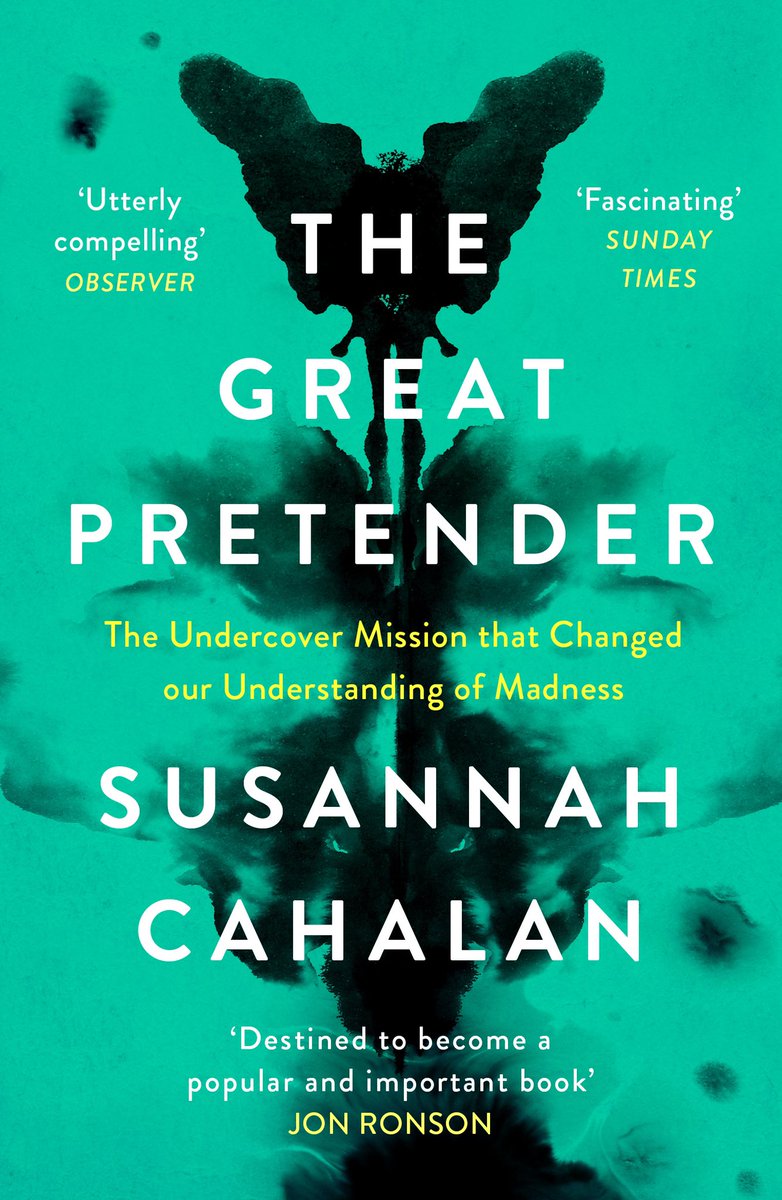
I am 45 pages into The Great Pretender by @scahalan and it's already one of the best books on mental illness I've read. I have goosebumps from the documented historic abuse and mistreatment of "patients". I have a feeling I know where this is heading as we approach present time.
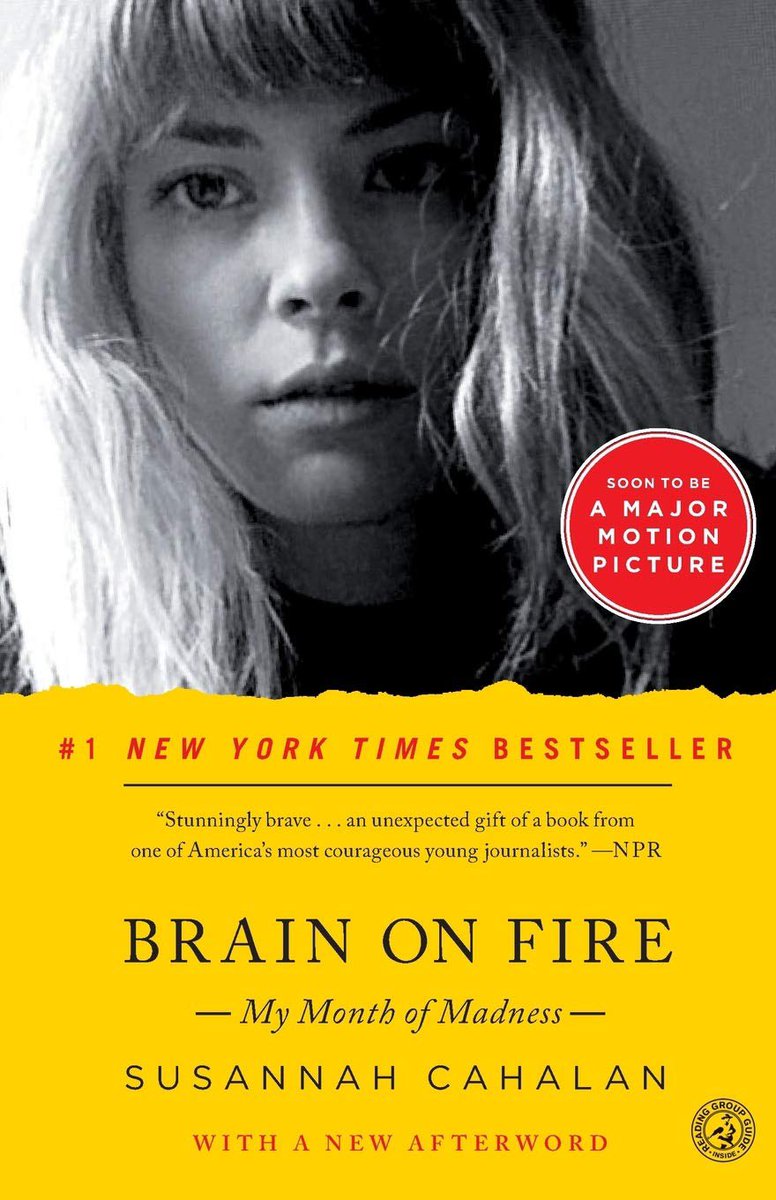
If you don't know who Susannah Cahalan is, she is the person portrayed by @ChloeGMoretz in the film Brain on Fire, which is based on Cahalan's memoir with the same name.
Here's her Wikipedia page: en.m.wikipedia.org/wiki/Susannah_…
The title "The Great Pretender" comes from the "great pretender diseases". They are illnesses that look and appear as other conditions (such as insanity) and will be diagnosed as such unless someone dares question this verdict.
Hence my tweet earlier today. x.com/axbom/status/1…
The first two categories for mental illness in the US were simply "idiocy" and "insanity". By 1880 this had expanded into seven: mania, melancholia, monomania, paresis, dementia, epilepsy and dipsomania.
The diagnostic methodology, and treatment practices, left much to hope for.
People with the right status and money were keen on having troublesome family members committed to asylums. Charles Dickens tried to commit his wife Catherine so that he could pursue an affair with an 18-year old actress.
smithsonianmag.com/smart-news/new…
On 16 March, 1912 a leader in The Times explained suffragette militancy by attributing it to women’s “Insurgent Hysteria”. "When this [type of woman] has reached a certain age", a physician explained, “we know that there is no help in us”:
francesca-scriblerus.blogspot.com/2013/07/were-s…
British writer Lady Rosina's feminist views bothered ex-husband Sir Bulwer Lytton in his ambition for a seat in parliament - so he had her committed. Her own celebrity saved her. (He was the inventor the cliché "It was a dark and stormy night") blog.wellcomelibrary.org/2015/09/a-blig…
«During the twentieth century, neurology broke off into a distinct branch of medicine, and in doing so “claimed exclusive dominion over the organic diseases of the nervous system”—like stroke, multiple sclerosis and Parkinson's.»
«Meanwhile, psychiatrists took on the ones “that could not be satisfactorily specified by laboratory science”—like schizophrenia, depression, and anxiety disorders. Once a biological breakthrough was achieved, the illness moved out of psychiatry and into the rest of medicine.»
I'm now up to the point where it feels like this book has punched me in the stomach. And still I want everyone to read it. Thinking now of starting a neuroscience book club. Pleased that Calahan has gone through many of the science cons I reference in this thread: x.com/axbom/status/9…
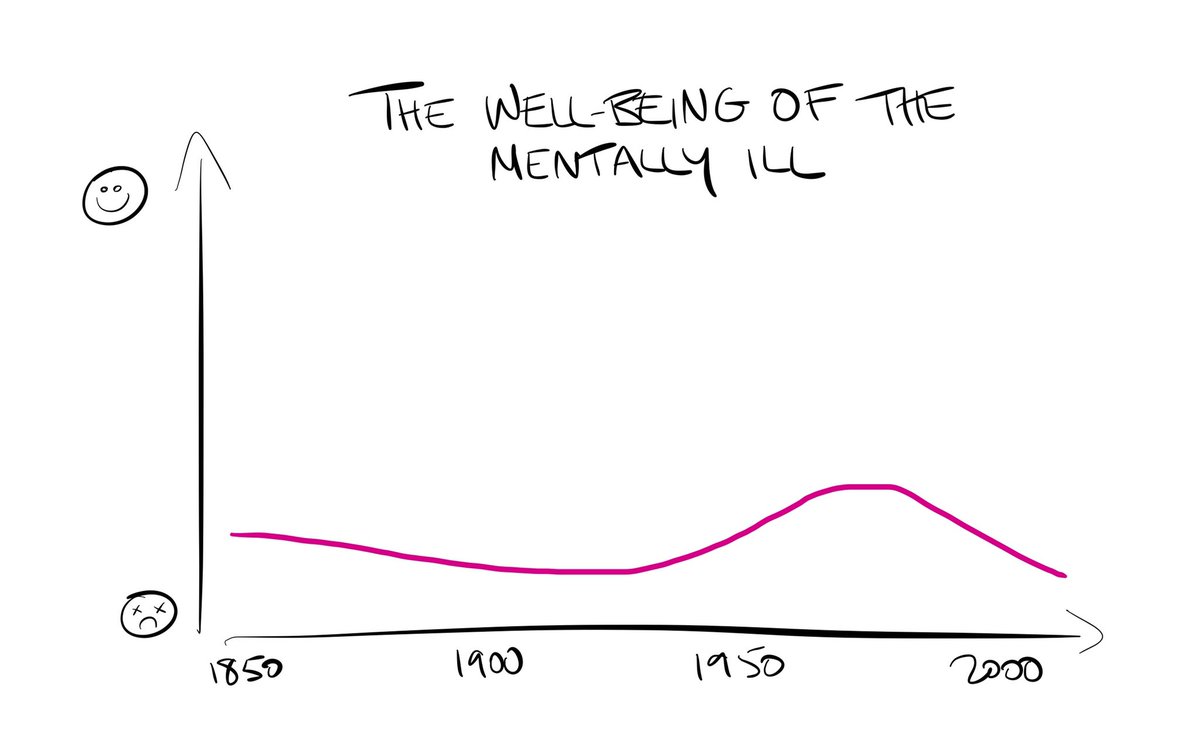
A tweet summary of 400 pages: Mental health patients are treated like animals. The science is awry. Some care was improving from 60s. Biased research instigated reform. New, feigned confidence in mental diagnosis. All progress obliterated. Now tortured in jail. Yet still hope.
The existence of categories makes us want to place everything we observe inside them. This makes professionals ignore unknown skills, unknown disease, unknown designs and better ways of conveying knowledge. Curiosity can help you continuously challenge categories.
↪ Replying to @Carnebro
@Carnebro Lägg till en webbkamera så kan du ha videomöten i tv-soffan på ett smidigt sätt :)
I never did that writeup so now I feel like I need to reread this book and make a mindmap. It really made an impression on me. If you want to feel more compassion for odd and inexplicable behavior, this is the book. Watching Brain on Fire with @ChloeGMoretz and having flashbacks. x.com/axbom/status/1…
Damn, in the movie, when she drew the clock, I went "her hemispheres have disconnected!". I've read too many neuroscience books and would feel way too confident in a neuroscience setting. Reminds me of my desire to observe a brain operation. Bet you didn't know that about me. 😬
Anyway the movie is worth watching. It's based on the true story of Susannah Cahalan and her memoir with the same name: Brain on Fire. She's written a second book now: The Great Pretender: The Undercover Mission That Changed Our Understanding of Madness. Getting it next :)
Also, this keen interest is why I am so very skeptical when it comes to the many pop-science behavioral economics books on the market right now. I believe their over_simplification is dangerous.
And why I start threads like this: x.com/axbom/status/9…
↪ Replying to @melodyshar
@melodyshar I find myself reflecting on, and recognizing, what helps me feel purpose, meaning and flow. I try to move towards where I can experience more of that. Definitely not a straight line, but it's a helpful reminder for me to consider these before I move too fast. 😊
↪ Replying to @Carnebro
@Carnebro Glöm inte att om du råkar ha en äldre dator kan den med fördel kopplas till TV:n med HDMI-kabel. Alla play-tjänster funkar ju i webbläsaren. Och vill man lyxa till det kan man då ha ett sån't här tangentbord, med pekplatta, som "fjärr".
@Carnebro Haha, glömde länken till tangentbordet.
webhallen.com/se/product/224…