@Lawrie Excellent set of questions. Thank you!

Per Axbom
Today is Stanislav Petrov Day. It's a day when I take some time to reflect on the importance of questioning technology. Because that is what Stanislav Petrov did when he averted nuclear war on September 26 in 1983.
"We can't wait anymore."
"7 minutes until the first warhead is in the observation zone."
"We won't have time to retaliate. You have to make a decision!"
"You see it?"
"Could be."
"No. That's not heat from a missile."
"Damn!"
"Let's keep looking."
"THE COMPUTER CAN'T BE WRONG!"
"I don't understand it."
"Damn it! They have to confirm this damn attack."
"All thirty levels of security levels confirms the attack!"
"Infrared devices verify heat from all five launched missiles!"
"What are we going to do?"
Stanislav Petrov: "Nothing. I don't trust the computer. We'll wait."
This dialogue is from a re-enactment in the documentary The Man Who Saved the World.
Last year I wrote about three learnings I take away from his story.
1. Embrace multiple perspectives.
Petrov was educated as an engineer rather than a military man. He knew the unpredictability of machine output.
2. Look for multiple confirmation points.
To confirm our beliefs we should expect many different variables to line up and tell us the same story. If one or more variables are saying something different, we need to pursue those anomalies to understand why. If the idea of a faulty system lines up with all other variables, that makes it more likely.
3. Reward exposure of faulty systems.
If we keep praising our tools for their excellence and efficiency it's hard to later accept their defects. When shortcomings are found, this needs to be communicated just as clearly and widely as successes. Maintaining an illusion of perfect, neutral and flawless systems will keep people from questioning the systems when the systems need to be questioned.
https://axbom.com/lessons-from-stanislav-petrov/
Today is Stanislav Petrov Day. It's a day when I take some time to reflect on the importance of questioning technology. Because that is what Stanislav Petrov did when he averted nuclear war on September 26 in 1983.
"We can't wait anymore."
"7 minutes until the first warhead is in the observation zone."
"We won't have time to retaliate. You have to make a decision!"
"You see it?"
"Could be."
"No. That's not heat from a missile."
"Damn!"
"Let's keep looking."
"THE COMPUTER CAN'T BE WRONG!"
"I don't understand it."
"Damn it! They have to confirm this damn attack."
"All thirty levels of security levels confirms the attack!"
"Infrared devices verify heat from all five launched missiles!"
"What are we going to do?"
Stanislav Petrov: "Nothing. I don't trust the computer. We'll wait."
This dialogue is from a re-enactment in the documentary The Man Who Saved the World.
Last year I wrote about three learnings I take away from his story.
1. Embrace multiple perspectives.
Petrov was educated as an engineer rather than a military man. He knew the unpredictability of machine output.
2. Look for multiple confirmation points.
To confirm our beliefs we should expect many different variables to line up and tell us the same story. If one or more variables are saying something different, we need to pursue those anomalies to understand why. If the idea of a faulty system lines up with all other variables, that makes it more likely.
3. Reward exposure of faulty systems.
If we keep praising our tools for their excellence and efficiency it's hard to later accept their defects. When shortcomings are found, this needs to be communicated just as clearly and widely as successes. Maintaining an illusion of perfect, neutral and flawless systems will keep people from questioning the systems when the systems need to be questioned.
@Mabande Now I feel like a fool. That actually worked. When I tried logging in there was no such option (just one option to select Facebook for login), but when I didn’t enter an email address first I could request a password reset and enter my email there instead.
Now I’m in. Thanks, I wouldn’t have even tried that if you hadn’t asked. 😅
Den 9 december föreläser jag på Human Rights Festival i Lund under rubriken "Är AI ett hot mot mänskliga rättigheter?"
Jag är oerhört tacksam över möjligheten att få lyfta och dela med mig av betydande insikter om teknikens påverkan på människor i det här tongivande sammanhanget.
Interesting account obstacle. I’m so smitten with the show Extraordinary Attorney Woo that I decided to learn a bit of Korean.
When I try to create an account in Duolingo it tells me I already have an account (based on my email), and then the only option to log in is Facebook. But I haven’t had a Facebook account in years. So I’m stuck, unless of course I select another email.
But also… if I haven’t logged in in years, that account should have been deleted.
I will of course now contact their support.
Igår släppte jag ett nytt avsnitt av #Omtanke. Det var oerhört roligt att producera denna gång. Eftersom jag var så irriterad 😅
Det är 11 minuter långt.
Man kan helt kort säga att det här är en podd där jag läser in ett urval av mina blogginlägg. Men jag nöjer mig inte med att bara läsa in utan portionerar ut en hel del ljudeffekter också, för att göra det hela mer levande i ljud-format.
Den här gången handlar det om QR-koder, och hur jag blev upprörd över att de spridit ut lappar med koder i lobbyn på hotellet jag bodde på i somras. Ett paradis för bedragare.
Du hittar länkar till olika appar att lyssna i (Apple Podcasts, Spotify, Overcast, Pocket Casts, m fl) längst ner på sidan:
https://omtanke.axbom.se/episodes/bedragliga-qr-koder
A backdoor can be meticulously documented, have limited access, include a variety of security measures, and be carefully developed with the best of intentions. But it's still…
…a backdoor.
Gotta love that this is the second paragraph in the Wikipedia entry for Backdoor:
"In the United States, the 1994 Communications Assistance for Law Enforcement Act forces internet providers to provide backdoors for government authorities. In 2024, the U.S. government realized that China had been tapping communications in the U.S. using that infrastructure for months, or perhaps longer; China recorded presidential candidate campaign office phone calls —including employees of the then-vice president of the nation– and of the candidates themselves."
More on this story:
https://reason.com/2024/10/11/chinese-hackers-used-u-s-government-mandated-wiretap-systems/
« "The problem with backdoors is known—any alternate channel devoted to access by one party will undoubtedly be discovered, accessed, and abused by another," David Ruiz of the internet security firm Malwarebytes Labs wrote in 2019. He noted that cybersecurity researchers had been making that argument for years. They've been repeating themselves for years because their warnings appear to fall on deaf ears. »
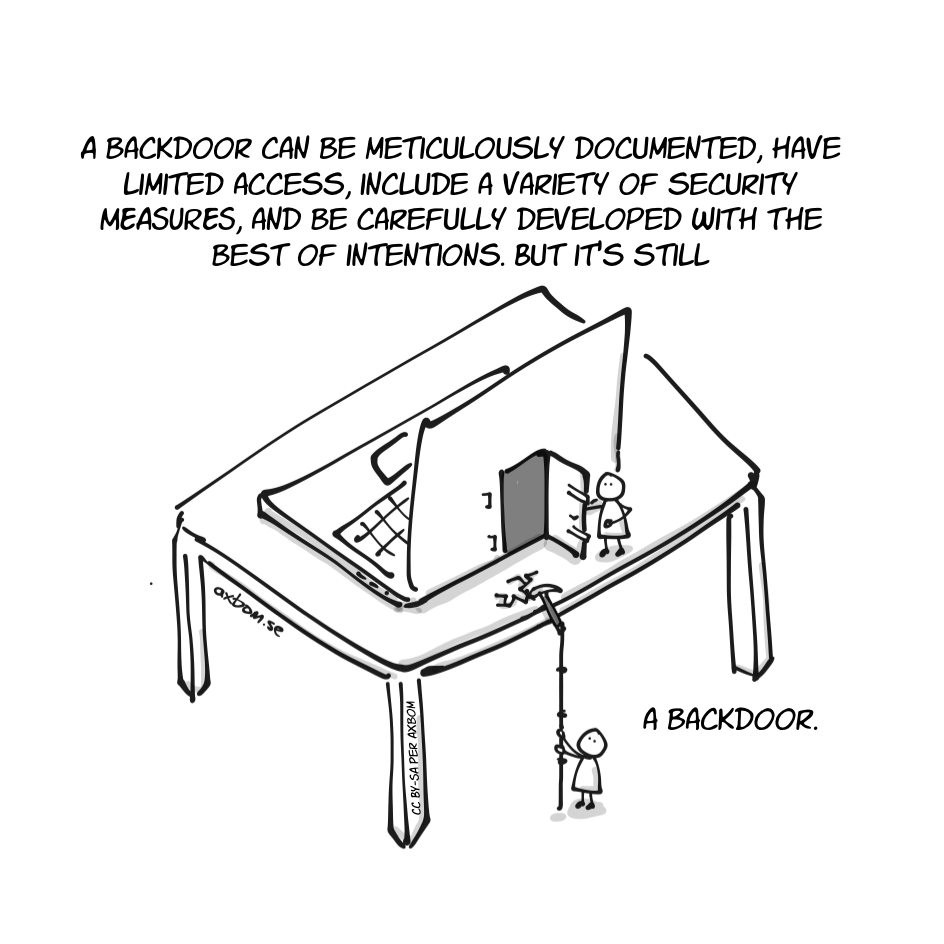
Jag satt och ritade lite i helgen som jag gillar att göra. Det blir ändå ofta arbetsrelaterat. 😅
Det har inte funnits tid för mig att skriva så mycket om #ChatControl , och tack vare att andra varit oerhört mycket på bollen – och skrivit bättre än jag skulle haft förmåga till – så behövs ju inte det heller. Jag tycker du ska se till att följa Karl Emil Nikka om du är det minsta nyfiken på den massövervakning som EU, med Ylva Johansson i spetsen, försöker driva igenom. Det är faktiskt så illa som det låter.
En oändlig rad experter och organisationer har varnat för hur förslaget inskränker mänskliga rättigheter, yttrandefriheten och hotar källskydd. Liknande lagar hittas idag i totalitära stater. Förespråkarna talar om att den är till för att skydda barn, och samtidigt varnar Unicef för att lagen skulle komma att hota barns integritet – som skyddas av Barnkonventionen – eftersom det tar bort barnens rätt till privatliv och privat kommunikation.
Förra veckan fick vi höra att omröstningen skjuts på framtiden men det betyder inte på något sätt att man kan pusta ut. Snarare riskerar ju debatten att tappa fart och en rad beslut kan tas när alltför få har blicken på bollen.
Självaste EU-kommissionen har också spridit ett sponsrat inlägg på X (Twitter) med felaktig information om folkets stöd för massövervakningsförslaget Chat Control 2.0. De grundar påståendet i en enskild enkät med oerhört ledande frågor (ungefär "vill du skydda barn?") som jag föreslår bör användas som avskräckande exempel i alla kommunikationsutbildningar.
I lördags uttalade sig Ylva Johansson om ChatControl i programmet Medierna i Sveriges Radio P1. Det är en hel del häpnadsväckande och vilseledande uttalanden, och självklart har Nikka bemött alla dessa. Mest oroväckande är att lagens främsta förespråkare inte alls tycks förstå (eller duckar helt och hållet för) hur tekniken fungerar.
Det är självklart inte lätt för de flesta medborgare att syna Ylva Johanssons uttalanden när argumentationen låter så här: "Det är klart att när man är lite av pionjär som jag är i det här fallet så får man räkna med att man också blir ifrågasatt."
Här kommer därför lite länkar som underlättar för dig som kanske vill börja sätta dig in i ämnet:
Chatcontrol.se - här hittar du vanliga Frågor och Svar om lagförslaget till massövervakning, och ett verktyg för att mejla politiker.
Medierna i P1 från 23/9 2023. Inslaget börjer vid 13 minuter och 15 sekunder in i programmet.
Spotify: https://open.spotify.com/episode/1fBNQgihYqAU3E2TB5ysci
Apple Podcasts: https://podcasts.apple.com/se/podcast/medierna/id306474724?l=en&i=1000625740626
Pocket Casts: https://pca.st/nb6ul0y5
Nikkas bemötande av inslaget i Medierna, "Fler missvisande påståenden om Chat Control 2.0".
https://nikkasystems.com/2023/09/23/fler-missvisande-pastaenden-om-chat-control-2-0/
@edbro @khalid Det är lurigt för det har länge funnits en organisation med det namnet i lite olika former.
Näringslivets Mediainstitut, NMI, bildades 1988. Namnet valdes för att klargöra att näringslivet var avsändaren och institutet finansierades av arbetsgivarorganisationen SAF.
Janerik Larsson, vice vd och informationschef på SAF, förklarade avsikten med NMI så här:
“NMI är en del av SAFs opinionsbildande verksamhet. Men syftet är inte att skapa hegemoni. Det är viktigt för företagen att den information utifrån vilken de agerar är korrekt, och i så måtto är en bättre journalistik också en näringsvänligare journalistik. Även obehagliga sanningar måste få sägas. (Larsson 1998: 31)”
Det var det Medieinstitutet som Timbro säger sig ha återstartat 2007, då med namnet Timbro Medieinstitut.
När Timbro Medieinstitut om och om igen hamnade i blåsväder på grund av tvivelaktiga granskningar och Timbro ville frikoppla sig från namnet 2017, så fortsatte Mats Olin på egen hand i organisationen Näringslivets Medieinstitut 2018. Först finansierades det som en del av Stiftelsen Fritt Näringsliv (ytterst Svensk Näringsliv) men nu ägs organisationen sedan 2021 av Mats Olin på egen hand som ett aktiebolag. Om jag förstått rätt så får han fortfarande uppdrag av stiftelsen, som eventuellt också är den enda uppdragsgivaren…
https://www.journalisten.se/nyheter/mats-olin-tar-over-naringslivets-medieinstitut
Det hela är ganska fascinerande att gräva i. Jag funderar på hur många sådana här organisationer det finns som har en aura av vetenskaplighet och drivs med en så tydlig agenda, och med givna uppdrag att påverka.
Så det är jag som tackar för att jag fick chans att bli lite klokare kring lobbyism-formerna också. 😊
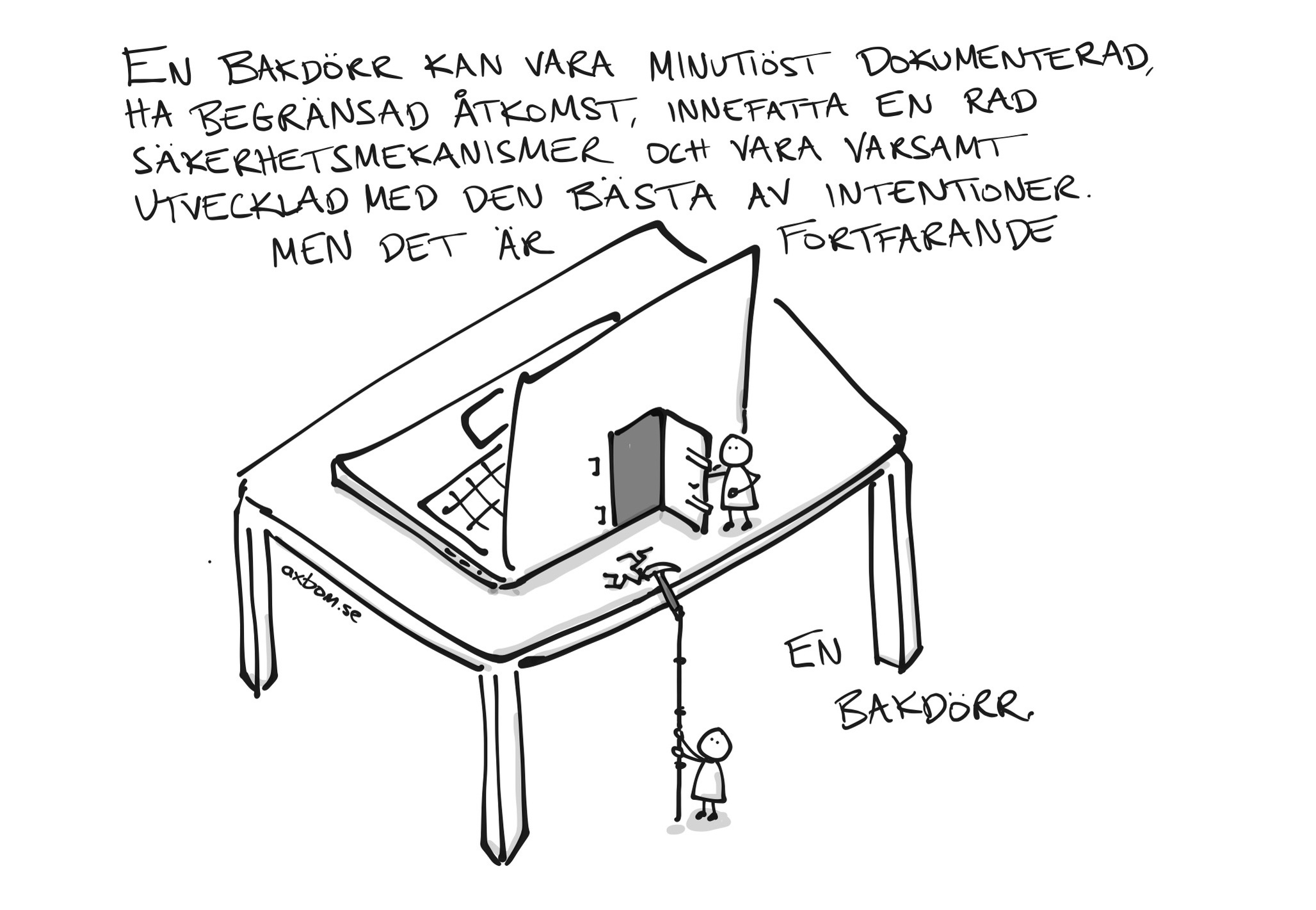
En bakdörr kan vara minutiöst dokumenterad, ha begränsad åtkomst, innefatta en rad säkerhetsmekanismer och vara varsamt utvecklad med den bästa av intentioner. Men det är fortfarande en bakdörr.
#chatcontrol
@karlemilnikka "Johansson är inte ens pionjär på området, något hon själv borde veta. Det har ju knappt gått 30 år sedan Stasi upplöstes."
Det här var nog en av de giftigaste och mest träffsäkra formuleringarna jag läst på länge. Snyggt. Jag höll själv på att trilla av stolen när jag hörde henne säga detta.
@edbro @khalid Jag har inte så mycket tankar om just tv, jag tittar oerhört sällan på SVT. Men radio är det jag lyssnar på många timmar i veckan. 😊
Blir ändå nyfiken… vad är NMI? Näringslivets medieinstitut i sig tycks vara mer av en lobby-organisation? Som numer ägs av en privatperson.
Hittade att de avhandlas i detta avsnitt av Journalisten-podden efter att det blev klart att de själv skriver och hjälper till att skriva anmälningar till Granskningsnämnden och Medieombudsmannen.
https://pca.st/episode/ce77b441-601a-4823-b996-88282eff64e8
Obs, jag gillar mediekritik, och hyser inga tvivel om att partiskhet ofta letar sig in i journalistiken, men tänker att NMI själva kanske inte är så transparenta kring sina metoder.
@kallekn Jag hade lyssnat hela morgonen från Spanarna, genom Konflikt och kan nog mycket riktigt varit i början av Medierna när jag skrev detta 😁
Love this article by Carissa Véliz!
"And bullshit is dangerous, warned Frankfurt. Bullshit is a greater threat to the truth than lies. The person who lies thinks she knows what the truth is, and is therefore concerned with the truth. She can be challenged and held accountable; her agenda can be inferred. The truth-teller and the liar play on opposite sides of the same game, as Frankfurt puts it. The bullshitter pays no attention to the game. Truth doesn’t even get confronted; it gets ignored; it becomes irrelevant."
https://time.com/6299631/what-socrates-can-teach-us-about-ai/
Alltså helvete vilken bra public service-radio vi har i Sverige ändå.
Ville bara säga det.
More people need to understand the vitriol and harm that X/Twitter exacerbates, and how it puts in harms way the very people hired to protect others. Leaders, politicians (in many countries) and the owner of the platform himself have contributed to the very real harm directed towards now former employees.
Yoel Roth served as the head of Twitter's trust and safety department, a position he stepped down from in November 2022.
"[…] Elon Musk added fuel to the fire. I’ve lived with armed guards outside my home and have had to upend my family, go into hiding for months and repeatedly move."
https://www.nytimes.com/2023/09/18/opinion/trump-elon-musk-twitter.html
@sphakos Nice. Thank you for sharing. I was hoping it would be in the “opposite” direction, but now I see how this will obviously happen in both directions depending on where your mind starts…
@Itty53 I feel like I’m just really curious about people and love hearing their reflections, as it’s such an odd human phenomenon. I’m thinking no two people likely have the same overall experience or the same take. But that hearing them reflect on this adds a novel dimension.
But yes, I’ve also considered the ethical aspect of it all - how much of the sharing has been done without consent. And how many keep not caring how the person in the meme may or may not feel about it.
I’m actually not sure I could truly tell you why I care… I’m not sure I know myself.