
↩ Replying to @sharonodea.com
Moving read, thanks for sharing. And great reminder of how workshopping is always only a flipchart and a marker away. 😊
↩ Replying to @sharonodea.com
Moving read, thanks for sharing. And great reminder of how workshopping is always only a flipchart and a marker away. 😊
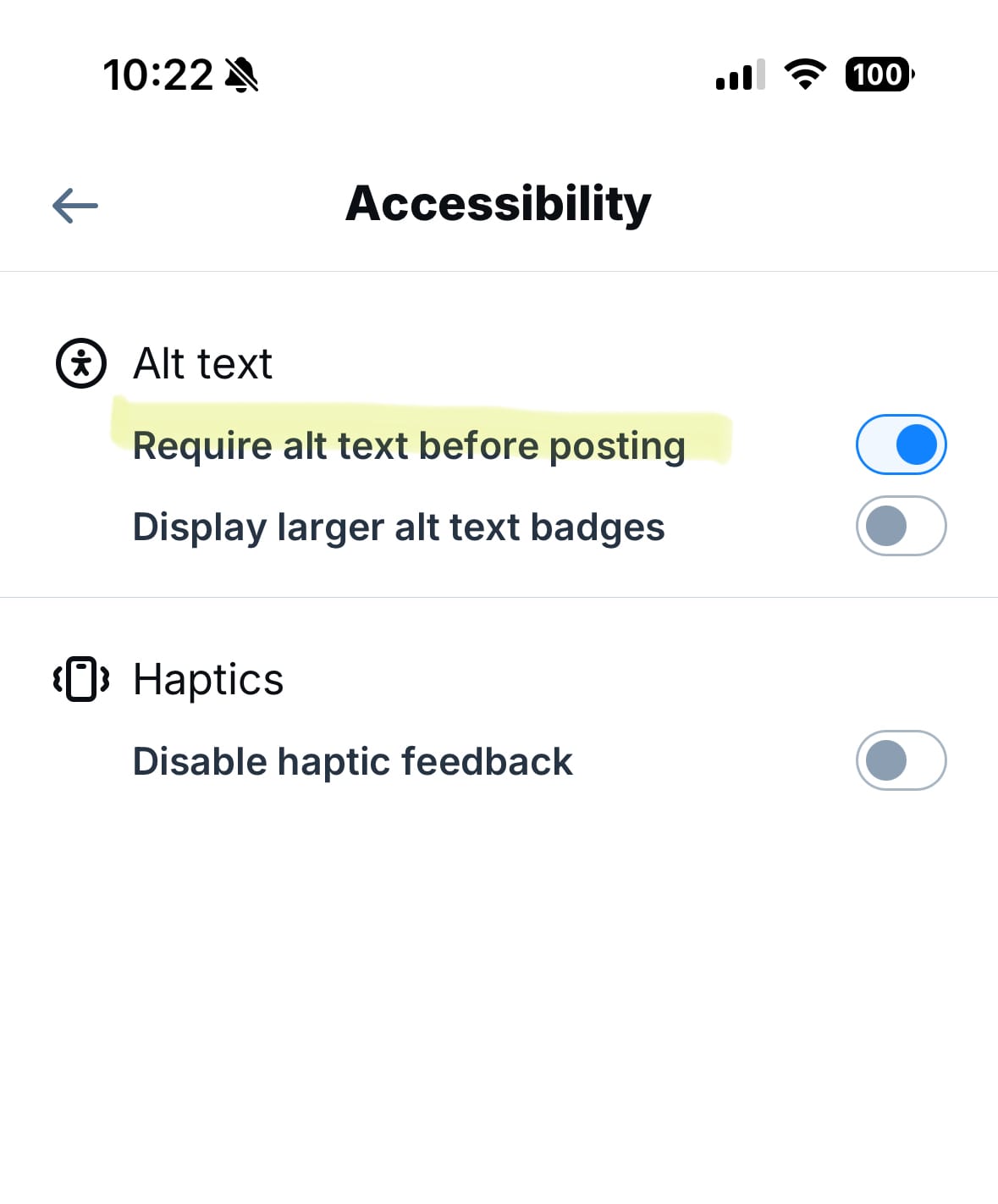
Om ni lägger upp bilder, kom ihåg att lägga till ALT-text. På Bluesky finns en fin inställning som innebär att man inte kan posta utan ALT-text. Rekommenderas!
Jag boostar personligen aldrig inlägg utan ALT-text, och vet att det finns många andra som tänker likadant.
I just figured out how to do a thing in Keynote that I've struggled with for years: Creating a rectangle with only two rounded corners.
See the video. It's so simple it hurts.
How privacy can save your life. Great and hugely important talk by @carissaveliz.bsky.social
Watch it using this privacy-enhanced embed. To maximise privacy with this player, make sure you're not logged into YouTube in the browser you use to watch.
yt.axbom.com?id=xSPRouBvgFE
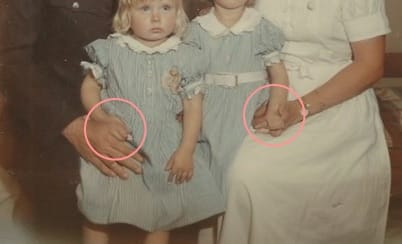
Jag är smått häpen över SVT:s beslut att använda dessa "AI"-genererade filmer i sitt inslag i Rapport i tisdags där de faktakollar uttalanden från partiledardebatten.
För mig är de som tagna ur en skräckfilm, särskilt när något "barn" i en plötslig rörelse vrider huvudet bakåt och åt höger.
Hand på hand är inte Midjourneys starkaste gren.
↩ Replying to @steveportigal.bsky.social
I keep imagining that one of the best forms of resistance is to focus on getting a good night's sleep.
↩ Replying to @cydharrell.bsky.social
Thank you. Yes. So much attention stolen 😭
Life has become about fending off a barrage of absolute shite. Blocking spam, ads, notifications, profiling, scams, phishing, quishing, sales calls, popups, slop, and also now in-your-face sickening "AI" in every single fucking interface.
It's not information overload, it's information assault.
The Wire creator David Simon was recently interviewed on NPR by Ari Shapiro. Partly about "AI". A short exchange from that is being shared all over - and it's good, but the full segment about "AI" is even more rewarding I think.
Full transcript: npr.org/transcripts/1177569966
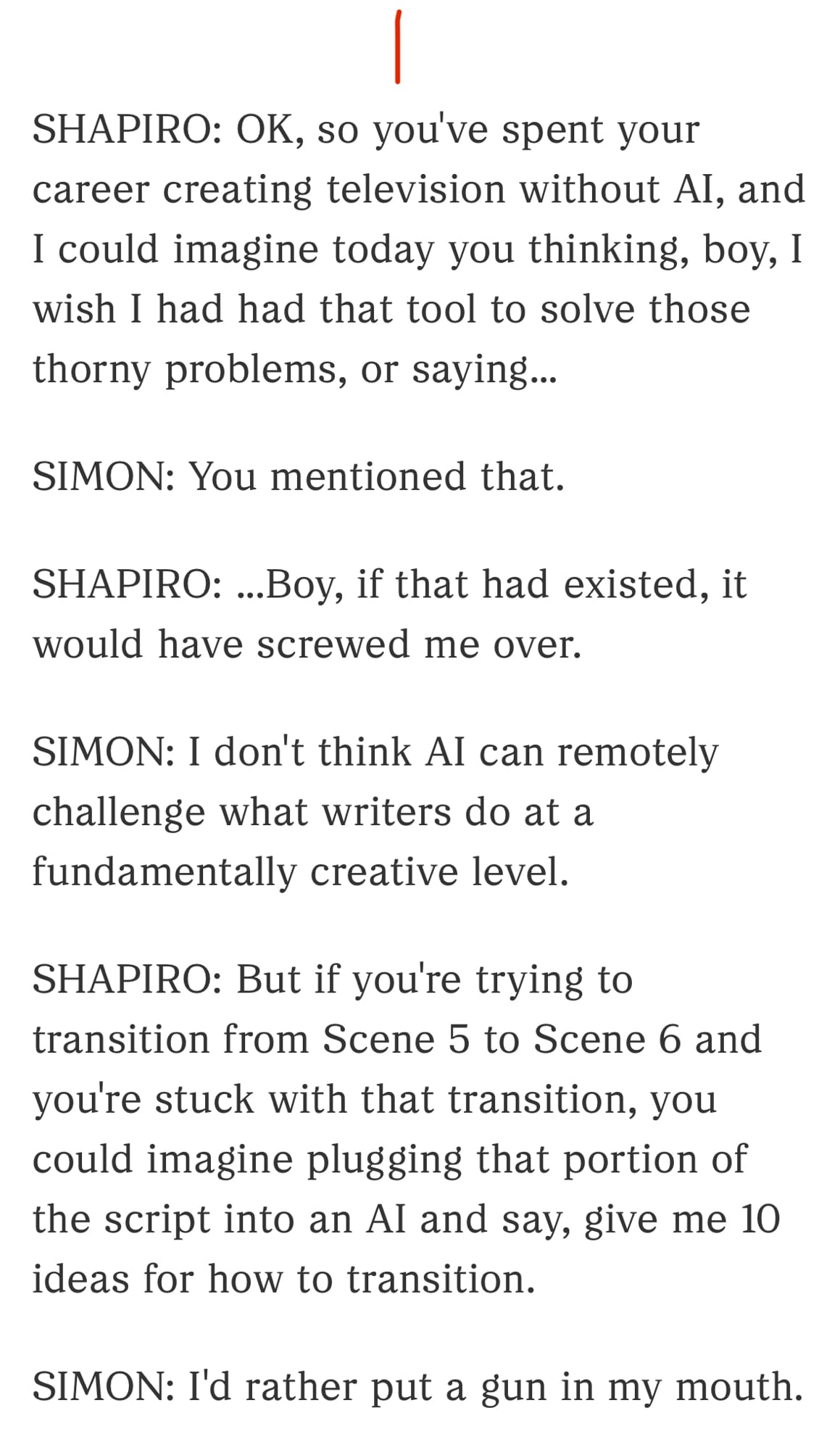
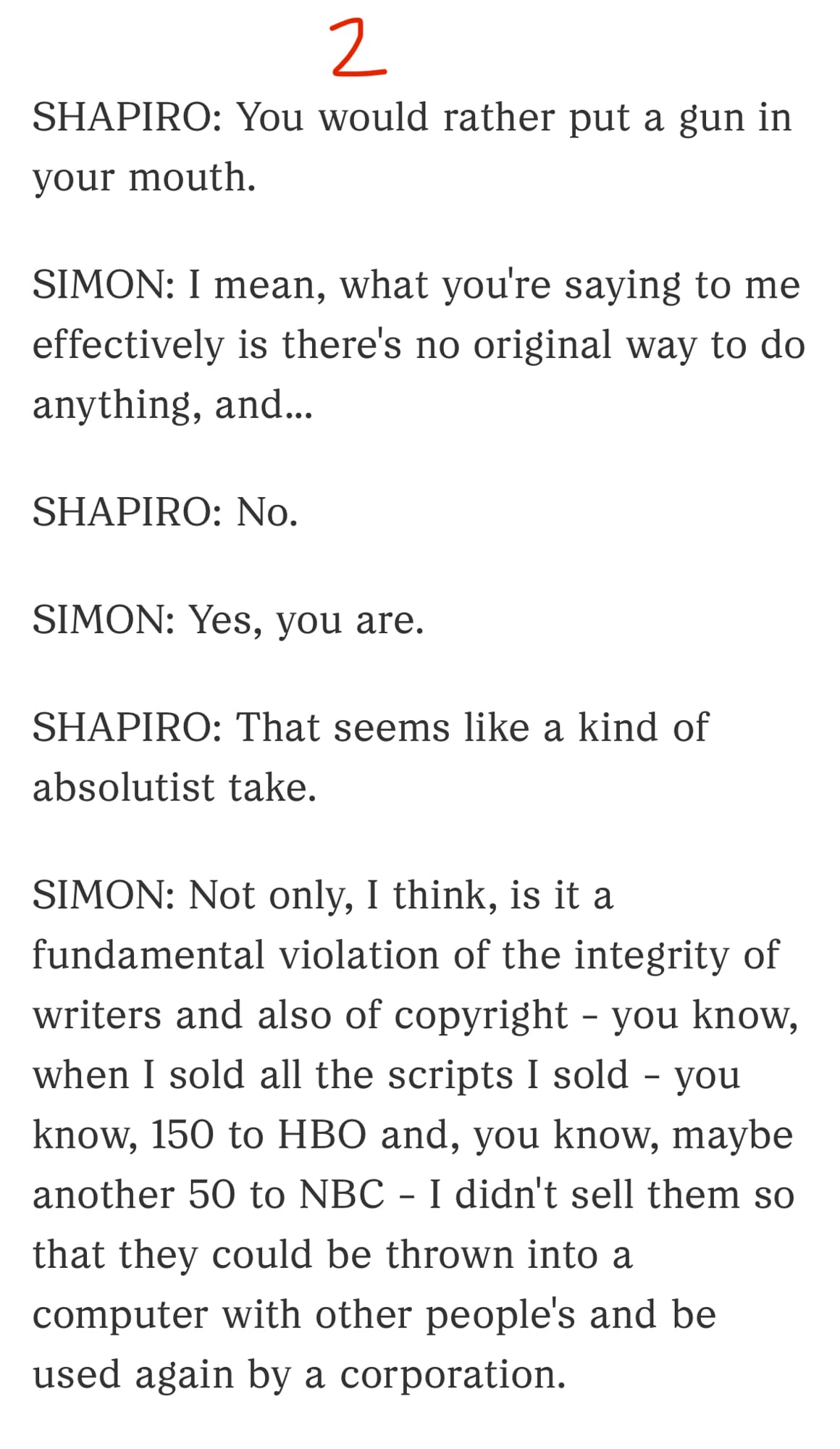
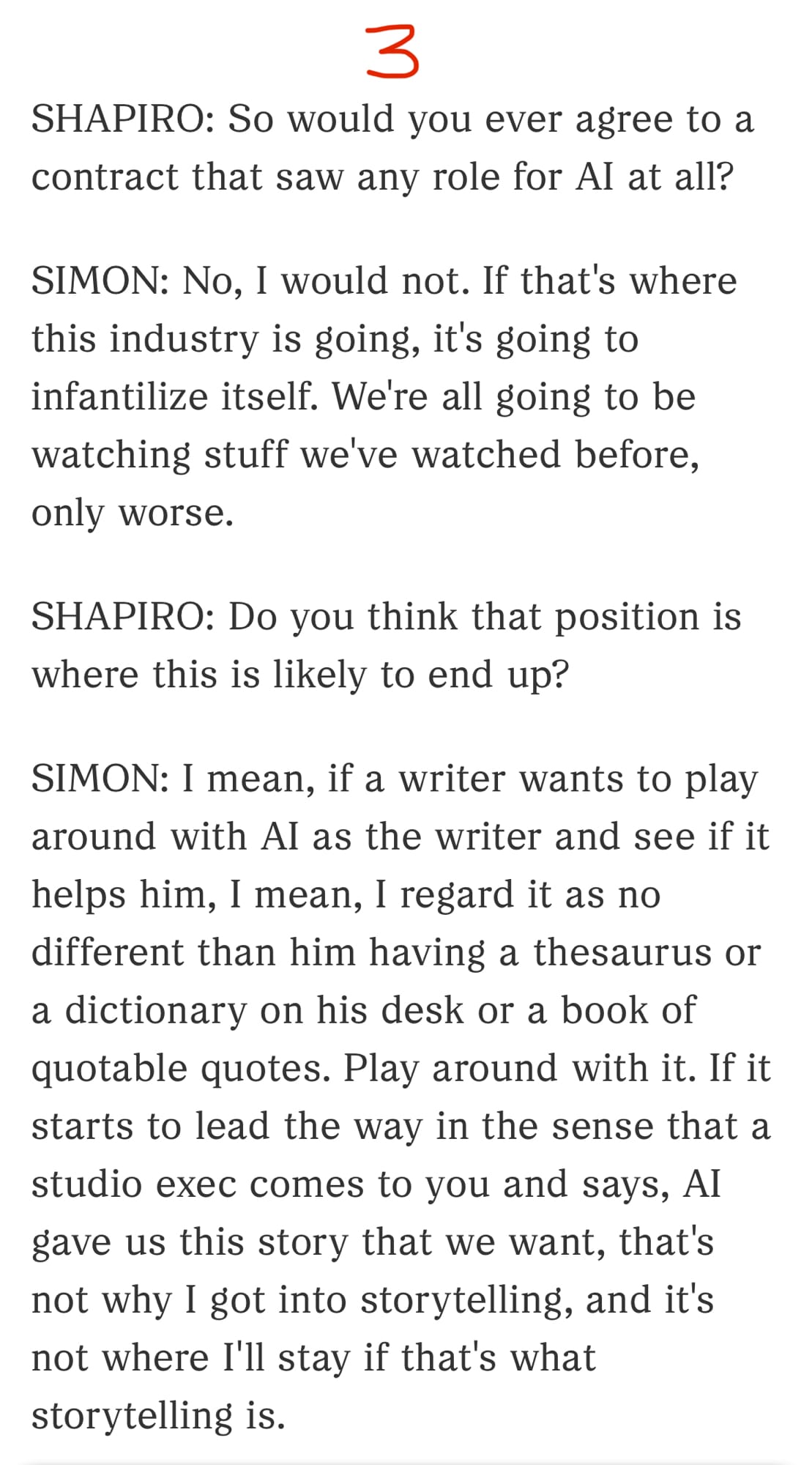
Full segment about "AI" from the NPR interview, with Ari Shapiro interviewing David Simon.
It's funny because when I captioned NPR's audio I realised the transcript on their website is wrong.
David Simon does not say:
"You mentioned that."
He said:
"You imagine that?"
I bet NPR use "AI" for their transcripts, which adds an extra layer of irony.
Regeringen måste riva upp sitt stöd till Chat Control
…och visa att Sverige fördömer massövervakning.
Nu får det räcka.
#ChatControl
axbom.se/regeringen-m...
"USA is no longer a democracy."
@carlheath.se: USA är inte längre en demokrati, enligt professor Staffan I. Lindberg, V-Dem institutet vid GU, under Hasselblad Award Seminar idag. Sedan sensommaren 2025 under gränsen. Oroande mönster syns i Sverige. Dystra tider som förutsätter handling till demokratins försvar. carlheath.se/sa-kom-dagen...
View original post
↩ Replying to @documentalope.bsky.social
Somewhat related :)
If a hammer was like "AI".
axbom.com/hammer-ai/
❤️
@theatlantic.com: Jane Goodall, who died Wednesday at 91, was not just a pioneering scientist, but also an expert at wielding the power of fame, Michelle Nijhuis writes.
View original post
Selling the idea that we need to build enormous, noisy, thirsty, fossil-fueled datacenters to reach information that is available in just so many already printed books.
www.thedrum.com/opinion/2025...
Mark Ritson: ChatGPT’s new ads show even AI can’t deny the brand-building power of TV
↩ Replying to @skyhigh.northsky.social
Haha, someone on the fediverse just told me this. Love the show, haven't seen this week's episode yet.
toolsforthought.social/@billseitz/1...
"AI will take over the world."
This can mean two things:
1. "AI" will become self-aware and decide to control humans.
2. Gen-slop and deepfakes will dominate available content, leading to deskilling, human abuse and eco-harm.
The first idea has no basis, but it's fair to worry about the second.
Happy Petrov Day to those who celebrate. On September 26, 1983, Stanislav Petrov made the correct decision to not trust a computer.
I've attached a short clip from a reenactment of the situation in the documentary The Man Who Saved the World.
1/11
The early warning system at command center Serpukhov-15, loudly alerting of a nuclear attack from the United States, was of course modern and up-to-date. Stanislav Petrov was in charge, working his second shift in place of a colleague who was ill.
2/11
Many officers facing the same situation would have called their superiors to alert them of the need for a counter-attack. Especially as fellow officers were shouting at him to retaliate quickly before it was too late. Petrov did not succumb.
3/11
The computer was indeed wrong about the imminent attack and Petrov likely saved us from nuclear disaster in those impossibly stressful minutes, by daring to wait for ground confirmation. For context one must also be aware that this was at a time when US-Soviet relations were extremely tense.
4/11
I've previously written about three lessons to take away from Petrov's actions:
1. Embrace multiple perspectives
Petrov being an engineer and not a military man speaks to me of how important it is to welcome a broad range of experiences and perspectives.
5/11
2. Look for multiple confirmation points
Stanislav Petrov understood what he was looking for. While he has admitted he could not be 100% sure the attack wasn't real, there were several factors he has mentioned that played into his decision:
6/11
- He had been told a US attack would be all-out. An attack with only 5 missiles did not make sense to him.
- Ground radar gave no supporting evidence of an attack, even after minutes of waiting.
- The message passed too quickly through the 30 layers of verification he himself had devised.
7/11
On top of this: The launch detection system was new (and hence he did not fully trust it).
8/11
3. Reward exposure of faulty systems
If we keep praising our tools for their excellence and efficiency it's hard to later accept their defects. When shortcomings are found, this needs to be communicated just as clearly and widely as successes.
9/11
Maintaining an illusion of perfect, neutral and flawless systems will keep people from questioning the systems when the systems need to be questioned.
We need to stop punishing when failure helps us understand something that can be improved.
10/11
My original post: Three lessons from a man who averted nuclear war by not trusting a computer
axbom.com/lessons-from...
11/11
Three lessons from a man who averted nuclear war by not trusting a computer